ADNOC Pledges $55 Billion in New Projects as UAE Exits OPEC Amid Hormuz Crisis
The state oil giant accelerates its expansion strategy with a record investment plan, while Abu Dhabi's departure from the cartel reshapes global energy dynamics.
UAE —
Key facts
- ADNOC announced AED200 billion ($55 billion) in new project awards for 2026-2028.
- The UAE left OPEC after years of quota disputes; its production capacity is 4.85 million bpd.
- UAE output slumped 45% to 1.89 million bpd in March due to Iran's blockade of Hormuz.
- ADNOC's Habshan gas facility and Bab field were shut after Iranian strikes, supplying 60% of UAE gas.
- ADNOC and OMV formed Borouge Group International, a $60 billion polyolefins joint venture.
- Dr. Sultan Al Jaber received the 2026 Distinguished Global Leadership Award from MEI.
- ADNOC aims for zero methane emissions by 2030 and net zero by 2045.
A $55 Billion Bet on the Future
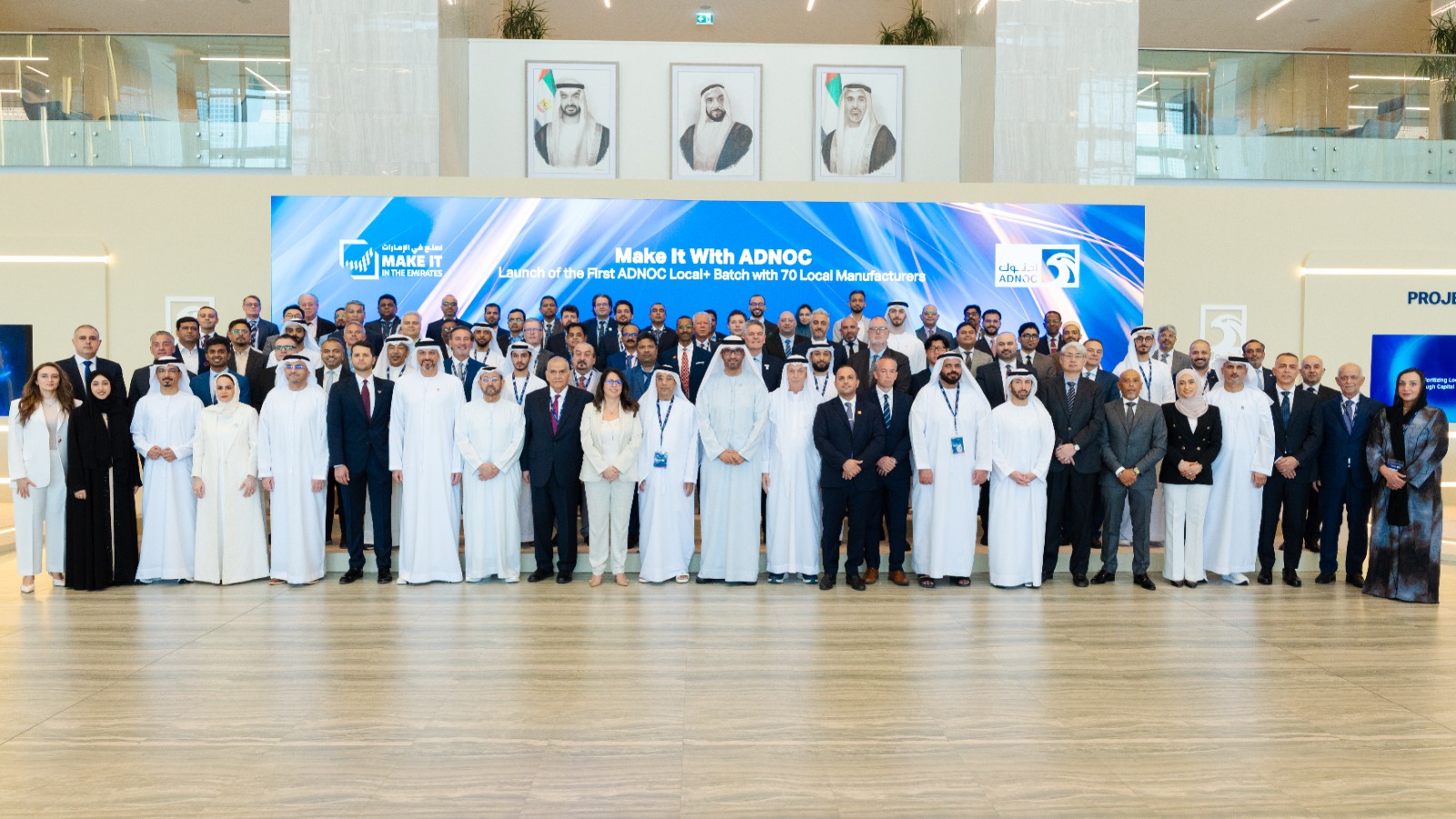
The Abu Dhabi National Oil Company (ADNOC) has unveiled a sweeping investment plan worth AED200 billion ($55 billion) in new project awards for the 2026-2028 period, marking one of the largest capital commitments in the company's history. The announcement came at the fifth edition of the 'Make it in the Emirates' forum, where ADNOC also launched an Industrial Resilience Program designed to strengthen UAE supply chains and accelerate local manufacturing. This spending spree is part of a broader strategic pivot that has seen the UAE exit the OPEC oil cartel after nearly six decades of membership. Abu Dhabi had long chafed under production quotas that limited its output to 3.4 million barrels per day (bpd), while its actual capacity had surged to 4.85 million bpd — a 40% increase over the past six years driven by ADNOC's previous $150 billion investment plan. The timing of the exit, announced just days after the investment pledge, was carefully calibrated. With the Strait of Hormuz effectively closed due to Iran's blockade and strikes against Gulf energy infrastructure, the departure caused almost no market reaction. 'The timing was done at a moment where it couldn't really have a market impact,' said Amena Bakr, head of Middle East Energy and Opec+ Insights at Kpler.
The Quota Grievance That Broke the Cartel
The UAE's frustration with OPEC had been building for years. As the world's seventh-largest oil producer, Abu Dhabi consistently pushed for higher production targets, creating what Helima Croft of RBC Capital Markets described as 'challenging inter-Opec dynamics.' The cartel's assessment of the UAE's true output ceiling was a persistent point of contention, and despite temporary fixes, the underlying tension never dissipated. 'The UAE did have grievances over its quota and it also had grievances over assessment of its capacity. It was addressed at the time, and they decided to carry on and still be part of the group,' a senior official said. But the Iran war and the resulting supply shock — which saw around 8 million bpd of OPEC supply collapse in March alone — provided a breaking point. With an estimated 12 million bpd of regional production currently shut in, the UAE's output nearly halved to 1.89 million bpd. Neil Quilliam of Chatham House noted that the UAE leaving OPEC had always been more about 'timing than intent.' The departure, he argued, was inevitable once the strategic calculus shifted.
Resilience Amid Crisis: ADNOC's Dual Response
As the conflict escalated, ADNOC faced direct attacks on its infrastructure. Iranian forces targeted the Habshan gas facility, operated by ADNOC Gas, and the Bab field, forcing both sites to shut down. These facilities supply 60% of the UAE's natural gas, creating a significant supply risk. However, ADNOC had already invested in a critical workaround: the Habshan-Fujairah pipeline, which allows Abu Dhabi to export crude directly to the Arabian Sea, bypassing the Strait of Hormuz entirely. 'Weaponizing Hormuz is economic terrorism against every nation,' Dr. Sultan Al Jaber, ADNOC's Managing Director and Group CEO, said in a statement. The company continues to monitor developments closely, coordinating with UAE authorities to ensure the safety of its workforce. The Industrial Resilience Program, with its five initiatives, is designed to reinforce business continuity capabilities and develop sustainable industrial capacity across strategic sectors.
A New Global Champion in Petrochemicals
Amid the turmoil, ADNOC has pressed ahead with a major corporate restructuring. Together with Austria's OMV, it announced the executive leadership team and Supervisory Board of Borouge Group International AG, a $60 billion joint venture that combines their shareholdings in Borouge Plc and Borealis, followed by the acquisition of NOVA Chemicals. The new entity, housed under ADNOC's global investment division XRG, creates a polyolefins champion with significant scale. XRG has also partnered with the Egyptian Natural Gas Holding Company through its joint venture Arcius Energy to develop the Harmattan gas field, with estimated investments of $500 million and a target completion date of 2028. These moves underscore ADNOC's ambition to expand beyond its traditional upstream role and secure a foothold in downstream and international markets.
Financial Firepower and Decarbonisation Goals
ADNOC's investment capacity has been bolstered by a series of financial maneuvers. In September 2024, it launched its first-ever bond sale, raising $4 billion through its wholly-owned debt vehicle ADNOC Murban. Previous equity placements include a $1 billion block sale of ADNOC Distribution shares in 2020, following its 2017 IPO, and the public listings of ADNOC Drilling in 2021 and ADNOC Trading in 2023. The company also attracted significant investments from US asset managers BlackRock and KKR, Italian firm Eni, and Singapore's sovereign wealth fund GIC in 2019. Despite its hydrocarbon focus, ADNOC has set ambitious environmental targets: zero methane emissions by 2030 and net zero emissions by 2045, to be achieved through investments in green energy and decarbonisation technologies. The company operates across the entire energy value chain, from exploration and production to refining and marketing, through subsidiaries including ADNOC Drilling, ADNOC Distribution, ADNOC LNG, and ADNOC Gas Processing.
The Geopolitical Stakes of a Post-OPEC UAE
The UAE's exit from OPEC marks a historic shift in the global oil order. Abu Dhabi had been a member since 1967, four years before the country gained independence, and its departure leaves the cartel without one of its most influential Gulf producers. The move also signals a deeper alignment with the US and other Western allies, as the UAE seeks to secure its energy infrastructure against Iranian threats. Dr. Sultan Al Jaber, who also serves as UAE Minister of Industry and Advanced Technology and Executive Chairman of XRG, recently received the 2026 Distinguished Global Leadership Award from the Middle East Institute in Washington D.C., dedicating it to President Sheikh Mohamed bin Zayed Al Nahyan and the country's frontline workers. The recognition underscores Abu Dhabi's growing role on the world stage, even as it navigates one of the most volatile periods in modern energy history.
The bottom line
- ADNOC's $55 billion investment plan is the largest in its history, aimed at boosting production capacity and supply chain resilience.
- The UAE's OPEC exit was driven by long-standing quota disputes and accelerated by the Iran war, which crippled regional output.
- Iranian attacks shut down facilities supplying 60% of UAE gas, but the Habshan-Fujairah pipeline provides a strategic bypass.
- The Borouge Group International joint venture with OMV creates a $60 billion polyolefins giant, advancing ADNOC's global ambitions.
- ADNOC has raised billions through bonds and equity listings, while targeting net zero emissions by 2045.
- The UAE's departure from OPEC reshapes the cartel's dynamics and signals a shift in Gulf energy alliances.

Aaron Hardie's historic all-round performance powers Peshawar Zalmi to second PSL title

Smaran Ravichandran Makes IPL Debut for Sunrisers Hyderabad as Nitish Kumar Reddy Sidelined by Illness
Hyderabad Kingsmen Chase Fairytale Finish Against Peshawar Zalmi in PSL 11 Final