Dubai Airport Faced 114 Missile Alerts During Regional War, CEO Reveals
Paul Griffiths details how the world's busiest hub kept operating through a conflict that forced flights into a single air corridor and cut passenger numbers by a fifth.
UAE —
Key facts
- Dubai International Airport (DXB) received 114 missile alerts during the conflict, about three per day.
- Passenger traffic in Q1 2026 fell 20.6% year-on-year to 18.6 million, after 95.2 million in 2025.
- The airport handled 32,000 aircraft movements and 213,000 tonnes of cargo between late February and April 30.
- Flights were restricted to 541 movements per day for most of April due to a single air corridor via Muscat.
- A drone attack on a fuel tank ignited a fire, causing temporary flight disruptions but no injuries.
- Dubai Airports worked with the GCAA and neighboring flight information regions, especially Muscat, to reroute traffic.
- Civil defense teams controlled the fuel tank fire with no reported injuries, though several flights were diverted.
A Hub Under Siege
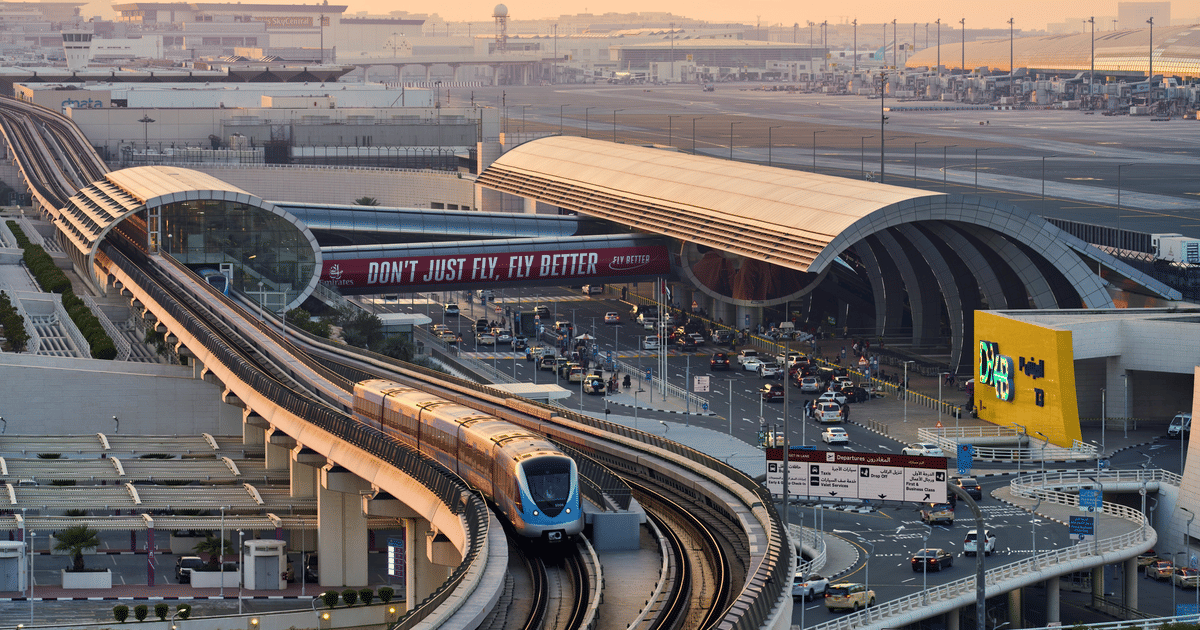
Dubai International Airport endured 114 missile alerts over weeks of regional conflict, its chief executive disclosed, offering the first detailed account of how the world's busiest international hub kept operating while under direct threat. Paul Griffiths, CEO of Dubai Airports, said the alerts came at a rate of about three per day, and that the intelligence provided by the military and government was "absolutely fantastic" in enabling a rapid response. "We did believe earlier in the conflict that military targets would be the priority, but when we started to see other airports in the region in conflict, we believed, obviously, that this is likely to happen to us," Griffiths told Gulf News. "So, we took a lot of precautions to make absolutely sure we could keep our customers and our staff safe and secure. And fortunately, those measures proved very successful." The airport, which served 95.2 million passengers last year, came under multiple attacks by Iran during the US-Israel-Iran war, including a drone strike on a fuel tank that ignited a fire and caused temporary flight disruptions. Civil defense teams controlled the blaze with no reported injuries, though several flights were diverted.
Rerouting Through a Single Corridor
The conflict forced a dramatic restructuring of regional airspace, with flights that would normally use multiple paths funnelled through a single corridor. Griffiths explained that the airport worked closely with the General Civil Aviation Authority (GCAA) and neighboring flight information regions, particularly Muscat, to devise an alternative route through Omani airspace that had limited capacity. "All the flights in the region… had to go through one airspace corridor. That's why the limitation of those 541 movements which we had for most of April at DXB was so significant," he said. From that corridor, aircraft were rerouted east towards Asia and Australasia or west via Saudi Arabia into Europe, often adding to journey times. "Some of those flight times were extended, of course, and it was the restriction on capacity that was the biggest problem to overcome," Griffiths added. The bottleneck meant that for most of April, DXB could handle only 541 aircraft movements per day, a sharp reduction from normal operations.
Safety Procedures Refined in Real Time
Griffiths described how safety protocols were developed and improved during the crisis, with staff becoming increasingly efficient at moving people to secure locations. "We were able to put people in positions of safety very quickly… we got very, very slick and organised in being able to take remedial action to ensure that people were escorted very quickly to positions of safety, and that was our priority," he said. The CEO emphasized that the intelligence received from military and government sources was critical to the airport's ability to respond. The alerts triggered immediate lockdowns and evacuations of vulnerable areas, but the airport never fully shut down, maintaining passenger services throughout the period. Between late February and April 30, despite the disruptions, Dubai's airports supported more than 32,000 aircraft movements and handled 213,000 tonnes of cargo, underscoring the resilience of the hub even under sustained threat.
Passenger Numbers Drop by a Fifth
The toll on traffic became clear when Dubai Airports released its first-quarter passenger numbers. DXB welcomed 18.6 million travellers in Q1 2026, a 20.6% decline compared to the same period the previous year. The drop reflects the impact of flight restrictions, rerouted journeys, and traveler caution during the conflict. Despite the decline, the airport remained operational and continued to serve as a critical link for global travel. The 32,000 aircraft movements and 213,000 tonnes of cargo handled during the conflict period demonstrate that while passenger numbers fell, the hub's role in logistics and connectivity persisted. The first-quarter figures come after a record 95.2 million passengers in 2025, highlighting the scale of the disruption. Griffiths did not provide a timeline for when traffic might recover to pre-conflict levels.
Wider Regional Context
The attacks on Dubai International Airport were part of a broader conflict involving the US, Israel, and Iran, which saw multiple airports in the region come under fire. Griffiths noted that the airport's leadership had anticipated the threat after seeing other hubs targeted, prompting early precautionary measures. The drone attack on a fuel tank was one of the most visible incidents, causing a fire that was quickly contained by civil defense teams. No injuries were reported, but the event caused temporary flight disruptions and diversions, underscoring the vulnerability of critical infrastructure even when defenses hold. The reliance on a single air corridor through Muscat highlighted the fragility of regional airspace management during conflict, with neighboring countries cooperating to maintain some level of connectivity despite the constraints.
Outlook and Open Questions
Griffiths did not specify when normal operations might resume or whether the single-corridor restriction would be lifted soon. The capacity limit of 541 movements per day remains a significant constraint, and the CEO acknowledged that extended flight times and reduced capacity were the biggest challenges. The airport's ability to maintain cargo operations, handling 213,000 tonnes during the conflict, suggests that logistics chains were less disrupted than passenger travel. However, the 20.6% drop in passenger numbers raises questions about traveler confidence and the long-term impact on Dubai's aviation hub status. As regional tensions persist, Dubai Airports will need to continue refining its emergency protocols and working with international partners to ensure the airport can remain open even under sustained threat. The experience of 114 missile alerts has provided a playbook that may be relevant for other global hubs facing similar risks.
A Test of Resilience
The detailed account from Griffiths offers a rare inside look at how a major international airport managed to function while under direct attack. The combination of real-time intelligence, rapid safety drills, and close coordination with military and civil aviation authorities allowed DXB to avoid a full shutdown. Yet the cost was clear: a fifth of passenger traffic lost, flights squeezed into a single corridor, and journey times extended. The airport's experience during the US-Israel-Iran war may serve as a case study for how critical infrastructure can be protected in conflict zones, but it also highlights the economic and operational toll that such protection exacts. For now, Dubai International Airport remains open, but the scars of the conflict — in reduced capacity, diverted flights, and a sharp drop in passengers — will take time to heal. The question of whether the hub can regain its pre-conflict momentum depends on the broader geopolitical landscape and the speed at which normal airspace operations can be restored.
The bottom line
- Dubai International Airport faced 114 missile alerts during the US-Israel-Iran war, averaging three per day, but remained operational throughout.
- Flights were restricted to a single air corridor via Muscat, limiting DXB to 541 movements per day for most of April.
- Passenger traffic in Q1 2026 fell 20.6% year-on-year to 18.6 million, after a record 95.2 million in 2025.
- A drone attack on a fuel tank caused a fire and temporary flight disruptions, but no injuries were reported.
- The airport handled 32,000 aircraft movements and 213,000 tonnes of cargo between late February and April 30, showing resilience in cargo operations.
- CEO Paul Griffiths credited close cooperation with the GCAA, military, and Omani authorities for enabling the airport to stay open.

Khaleej Times Digital Edition Replicates Print Experience for UAE Readers

Iran Drone Swarm Strikes ADNOC Tanker in Strait of Hormuz as UAE Issues Missile Alerts

Iran Fires Missiles at US Destroyer Near Hormuz as Executions Continue
