UAE to Witness Rare Blue Moon and Meteor Shower in May
Two full moons in one month, a meteor shower from Halley's Comet, and a Venus-Moon conjunction highlight May's celestial calendar.
UAE —
Key facts
- First full moon on May 2, second on May 31.
- Blue Moon occurs when two full moons appear in a single calendar month.
- Eta Aquarid meteor shower peaks on May 5-6, producing up to 50 meteors per hour.
- Meteors originate from Halley's Comet, which last visited in 1986 and returns in 2061.
- Moon-Venus conjunction visible on May 18 after sunset.
- May's second full moon is also a micromoon, 252,360 miles from Earth.
- Ibrahim Al Jarwan of Emirates Astronomical Society confirmed the dates.
Two Full Moons in May
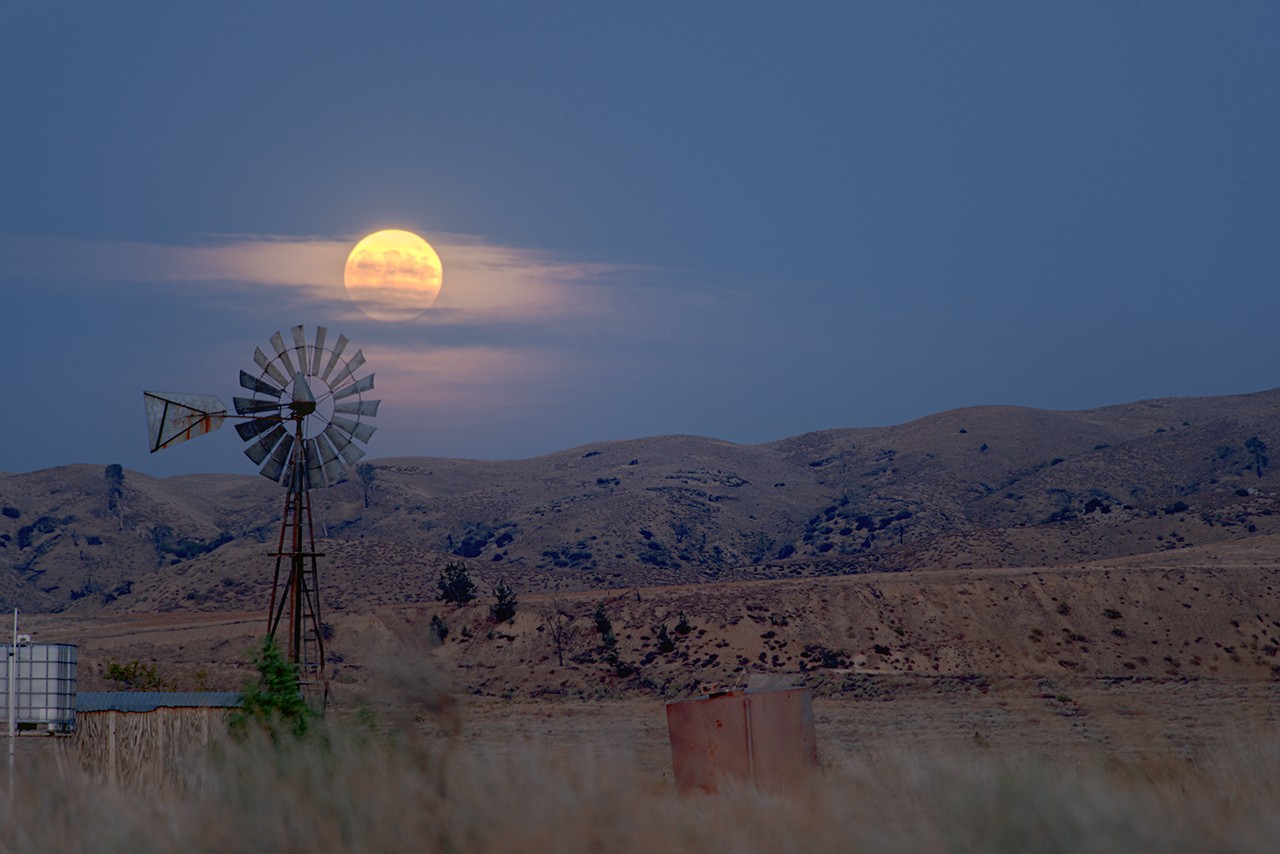
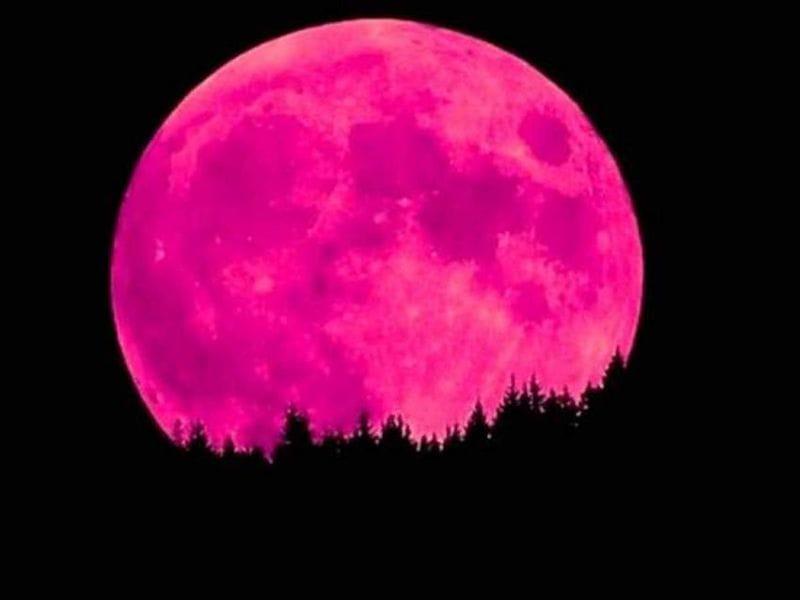
The United Arab Emirates is set for a rare celestial event this month: two full moons within the same calendar month, a phenomenon known as a Blue Moon. The first full moon rises on May 2, followed by a second on May 31, Chairman of the Board of Directors of the Emirates Astronomical Society and member of the Arab Union for Astronomy and Space Sciences. This occurrence is a quirk of the lunar calendar. The moon's orbit around Earth takes approximately 29.5 days, just shy of the 31 days in May. When a full moon occurs early in the month, the calendar allows for a second full moon before the month ends. Despite its name, the moon will not appear blue; the term simply denotes the second full moon in a month, similar to traditional names like Harvest Moon or Hunter's Moon.
The Mechanics of a Full Moon
A full moon happens when Earth sits directly between the sun and the moon, allowing sunlight to fully illuminate the lunar disc. This alignment typically occurs once a month, but occasionally, the calendar permits a second occurrence. Such events arise roughly every two to three years, making them notable but not exceedingly rare. In the UAE, typically clear skies offer excellent viewing conditions, especially at moonrise shortly after sunset. With binoculars or a small telescope, observers can make out finer surface details, including craters and ridges. Astronomically, the phenomenon carries no unusual effects; the moon's influence remains governed by its gravitational pull, driving the familiar cycle of tides regardless of how often it reaches full phase within a single month.
Meteor Shower from Halley's Comet
Before the second full moon, skywatchers can enjoy the Eta Aquarid meteor shower, peaking on the nights of May 5 and 6. These shooting stars originate from Halley's Comet, which last passed through the inner solar system in 1986 and will not return until 2061. Every year, Earth passes through the comet's dusty trail, and tiny particles burn up in our atmosphere, creating bright streaks across the sky. The Eta Aquarids appear to come from the constellation Aquarius, which gives the shower its name. These meteors are fast, racing into Earth's atmosphere at about 40 miles per second, and can leave behind glowing trails that linger after the flash. At peak, the shower can produce up to about 50 meteors per hour under ideal skies. The best time to watch is in the hours before dawn, looking generally toward the eastern sky. However, bright moonlight this year may wash out some of the fainter meteors.
Venus-Moon Conjunction and Micromoon Details
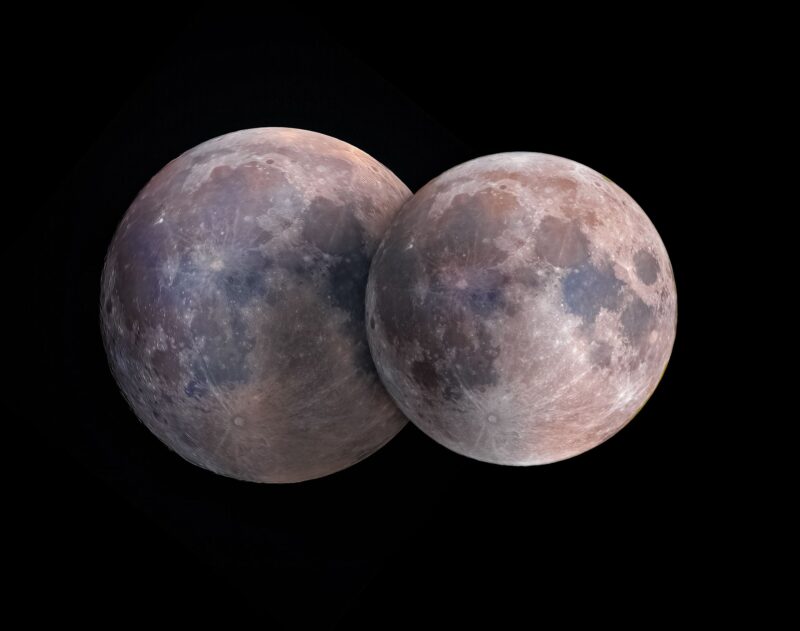
On May 18, look west just after sunset to see a brilliant meetup between the moon and Venus. This conjunction offers a striking visual pairing of the two brightest celestial objects in the night sky. The second full moon on May 31 is also a micromoon, meaning it occurs near the moon's farthest point from Earth in its orbit, known as apogee. The moon's orbit is not a perfect circle, so it has a nearest point (perigee) and a farthest point (apogee) each month. A full micromoon appears about 12-14% smaller than a full supermoon and about 7% smaller than a full moon at average distance. There is no strict definition of how close to apogee the moon must be to qualify as a micromoon, leading to some disagreement among sources. For instance, the May 1 full moon is a micromoon, while Timeanddate.com considers the May 31 full moon as the next micromoon. Both sources agree that the full Strawberry Moon of June 29 is a micromoon. The May 31 full moon will be 2026's most distant full moon, at 252,360 miles (406,135 kilometers) away, compared to the moon's average distance of 238,900 miles (384,472 km).
Viewing Tips and What to Expect
For the best chance of seeing the meteor shower, go somewhere dark, let your eyes adjust for about 20 to 30 minutes, and avoid bright lights, including your phone screen. The peak is expected around May 5 to 6, but moonlight may reduce visibility. For the Blue Moon and micromoon, clear skies in the UAE provide favorable conditions, especially at moonrise shortly after sunset. While the Blue Moon carries no special astronomical significance, it serves as a reminder of the dynamic nature of our lunar calendar. The event is a treat for casual observers and seasoned astronomers alike, offering a chance to appreciate the moon's ever-changing dance with Earth.
Looking Ahead: More Micromoons in 2026
Depending on the definition used, 2026 may feature two or three full micromoons. AstroPixels lists three: May 1, May 31, and June 29. Timeanddate.com lists only two: May 31 and June 29. The new moon on December 9 will also be a micromoon, the most distant new moon of the year at 251,460 miles (404,687 kilometers) away. As with supermoons, there are no hard and fast rules for what constitutes a micromoon. The late Fred Espenak's AstroPixels website defines micromoons as full or new moons near apogee, while Timeanddate.com uses its own criteria. This ambiguity underscores the evolving nature of astronomical nomenclature and the importance of clear definitions.
The bottom line
- May 2026 features two full moons (May 2 and May 31), a Blue Moon, which occurs roughly every 2-3 years.
- The Eta Aquarid meteor shower peaks May 5-6, originating from Halley's Comet, with up to 50 meteors per hour.
- A micromoon occurs on May 31, when the moon is at its farthest from Earth, appearing 12-14% smaller than a supermoon.
- The moon-Venus conjunction on May 18 offers a striking evening sight.
- Clear skies in the UAE provide excellent viewing conditions for all events.
- Definitions of micromoon vary, leading to disagreement on how many occur in 2026.

Lakers on Brink of Infamy as Rockets Force Game 6 After Another Comeback

LeBron James Leads Lakers to Overtime Win, 3-0 Series Lead Over Rockets

Icc Cwc League 2: where things stand
