Global Oil Market Forces US Gas Prices to Record $4.23 Despite Domestic Production Boom
The Iran war's blockade of the Strait of Hormuz has pushed Brent crude to $114.60, and American motorists are feeling the pinch at the pump.
UAE —
Key facts
- US average gas price hit $4.23 per gallon on Wednesday, a record since the Iran war began.
- Brent crude stands at $114.60, up nearly 25% from its April 17 low.
- Gas prices have risen $1.25 per gallon (over 40%) since the war started in late February.
- AAA recorded the biggest single-day increase in over a month, with prices rising $0.07.
- The US produces over 13 million barrels of crude oil per day but imports about 6 million barrels daily.
- Only 8% of US oil imports come from the Middle East.
- West Texas Intermediate crude rose from $67 on February 27 to about $105 on March 30.
- Consumer confidence remains subdued, with The Conference Board index below pre-pandemic and post-2024 election levels.
A Record at the Pump
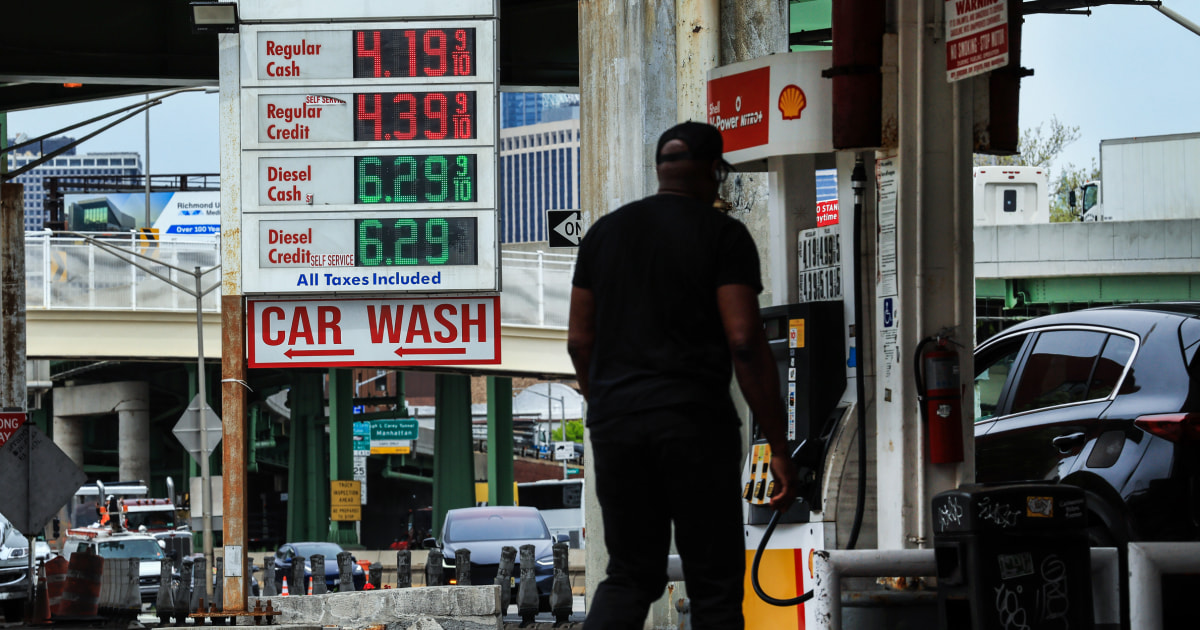
The average price of a gallon of gasoline in the United States has surged to $4.23, the highest level since the outbreak of the Iran war.as oil prices continued their upward trajectory amid a dual blockade of the Strait of Hormuz by the United States and Iran. The price of Brent crude, the international benchmark that influences US gasoline prices, now stands at $114.60 — a jump of nearly 25 percent from the recent low seen on April 17. It sits just a few dollars shy of the recent high of $118. A day earlier, AAA recorded the largest single-day increase in more than a month, with prices rising seven cents.
The Strait of Hormuz Blockade
The core driver of the price surge is the conflict over the Strait of Hormuz, a narrow waterway through which a significant portion of the world's oil passes. Both the United States and Iran have imposed blockades, crippling the transit of crude and petroleum products out of the Persian Gulf. President Donald Trump, in a speech to the nation on April 1, downplayed the impact of the war on American consumers. "The United States imports almost no oil through the Hormuz Strait and won't be taking any in the future," he said. "We don't need it. We haven't needed it and we don't need it."
Why a Global Market Defies Domestic Production
America is the world's leading oil producer, churning out more than 13 million barrels of crude oil per day as of January. The country exports more oil than it imports, and only 8 percent of its imported oil comes from the Middle East. Yet gas prices have soared. "It's a global market," said Mark Zandi, chief economist of Moody's Analytics. "So, oil literally flows to the highest price. If a tanker can get a higher price in Malaysia than it can in Rotterdam than it can in Rio de Janeiro, it's going to go to Malaysia." The war has reduced supply to regions heavily dependent on Middle Eastern oil, such as parts of Asia and Europe, driving up prices worldwide. "Everybody's competing for the same barrel of oil," said James Cox, managing partner at Harris Financial Group.
The Squeeze on Retailers and Consumers
Many gas stations have been absorbing part of the price increase by reducing their own profit margins to keep prices below the psychologically important $4 threshold, chief energy adviser to Gulf Oil. But that strategy has limits. "This is the most serious squeeze, in terms of margin suppression, we've seen for retailers since 2020," he said. So far, the impact has been concentrated among lower-income households, according to a whose data was largely compiled before the recent run-up. Despite the surge, households are still spending less of their budgets on gasoline than during peaks in 2008, 2011 and 2012. But those buffers may erode if higher fuel costs spill into other necessities.
The Risk of Broader Inflation
Bank of America analysts warned that a significantly bigger risk arises if higher gasoline and oil prices leak into other necessities such as grocery and utility prices — though they noted little evidence of that so far. "While there may be capacity for some to 'ride out' a gasoline shock by relying more on credit card borrowing, this appears somewhat limited — particularly for lower-income households," they wrote. Consumer confidence remains subdued. an uptick in its principal index on Tuesday, likely tied to the Iran ceasefire announced earlier in the month that sent stock prices to record levels. However, the index remains well below both its pre-pandemic levels and the readings seen after President Trump's electoral victory in November 2024.
Stalled Peace Talks and an Uncertain Outlook
Peace talks between Iran and the United States appear to have stalled, prolonging the conflict that has now entered its third month. The war has crippled oil supply in the region through the closure of the Strait of Hormuz, heightened danger for shipping, and collateral damage to oil infrastructure. The surge in oil prices has compounded typical seasonal increases as refineries undergo maintenance and the spring-summer driving season begins. With no resolution in sight, the pressure on global oil markets — and on American motorists — shows no sign of abating.
The bottom line
- US gas prices hit a record $4.23 per gallon due to the Iran war and Strait of Hormuz blockade.
- Despite being the world's top oil producer, the US is not immune to global oil price spikes.
- Brent crude rose nearly 25% from its April low, reaching $114.60.
- Gas stations are absorbing margin cuts to keep prices below $4, but that strategy is unsustainable.
- Lower-income households are already feeling the impact, and broader inflation risks loom if fuel costs spread to other goods.
- Consumer confidence remains low despite a ceasefire-driven uptick, with indices below pre-pandemic and post-2024 election levels.

UAE Fuel Prices Jump Up to 10% in May 2026 as Global Oil Instability Bites
UAE Schools Get Nine-Day Eid Al Adha Break Before Final Exams

Mammootty and Mohanlal Reunite in 'Patriot' as Advance Sales Top Rs 9 Crore Worldwide