Iran’s new supreme leader vows to impose toll regime on Strait of Hormuz, defying US blockade
Mojtaba Khamenei, in his first statement since taking office, declares a new chapter for the Gulf and warns foreign powers they have 'no place except at the bottom of its waters'.

UAE —
Key facts
- Mojtaba Khamenei became supreme leader on March 9 after his father Ali Khamenei was killed in US-Israeli strikes on February 28.
- Iran has imposed a new toll system on the Strait of Hormuz, through which about one-fifth of global oil typically transits.
- The US counter-blockade since April 13 has cut vessel traffic to as low as three ships a day, down from 120–140 normally.
- Oil prices have surged above $120 a barrel, reaching near $125 after Trump admitted no short-term solution.
- A senior Iranian lawmaker said Tehran has received its first revenue from the strait tolls.
- Khamenei has not been seen in public since his appointment; reports say he was gravely wounded in the February 28 strikes.
- Pakistan-mediated talks between Iran and the US remain at an impasse.
Defiant message marks Persian Gulf Day
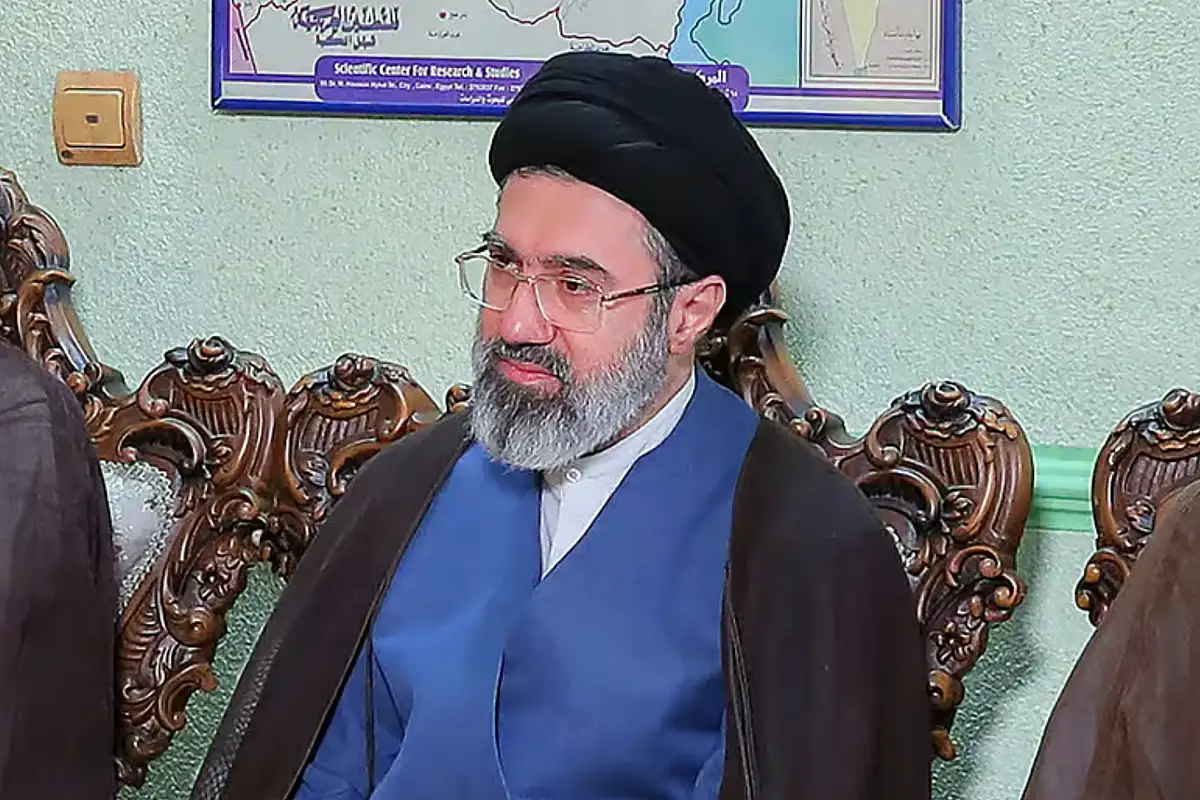
Iran’s supreme leader, Ayatollah Mojtaba Khamenei, broke weeks of public silence on Thursday with a written statement read on state television, marking Persian Gulf Day. He declared that a 'new chapter is unfolding for the Persian Gulf and the Strait of Hormuz' and that the United States had suffered a 'disgraceful defeat' in its military campaign against Iran. The statement came two months after the US and Israel launched a massive bombing campaign on February 28 that killed Khamenei’s 86-year-old father and predecessor, Ali Khamenei. Mojtaba Khamenei, who was appointed supreme leader on March 9, has not been seen or heard in public since; reports suggest he was severely injured in the strikes but remains mentally sharp.
Iran asserts control over strategic waterway
Khamenei’s message hailed what he called a 'new legal framework and management' of the Strait of Hormuz, the narrow chokepoint through which roughly one-fifth of the world’s oil passes. He vowed to eliminate what he described as 'the enemy’s abuses of the waterway' and predicted that the new regime would bring 'comfort and progress for the benefit of all the nations of the region'. Since the outbreak of the Middle East war, Iran has allowed only a trickle of ships through the strait, effectively imposing a de facto blockade. Last week, a senior Iranian lawmaker confirmed that Tehran had received its first revenue from tolls levied on vessels transiting the waterway. The move is seen as a bid to extract economic compensation for the damage inflicted by the US-Israeli strikes.
US counter-blockade and oil price shock
The US responded on April 13 by mounting a counter-blockade designed to stop oil tankers moving in or out of Iranian ports, seizing up the Islamic republic’s oil industry. Vessel traffic through the strait has plummeted to as low as three ships a day, compared with the normal 120–140. The standoff has pushed global oil prices above $120 a barrel, with Brent crude nearing $125 after President Donald Trump acknowledged on Wednesday that he saw no short-term way out of the impasse. The price surge, reminiscent of the first weeks of Russia’s full-scale invasion of Ukraine in 2022, is putting pressure on Trump ahead of crucial midterm elections. It also strains his Gulf allies, who rely on the waterway to export their own oil and gas. the US military continues to present Trump with options for resuming strikes.
Khamenei vows to protect nuclear and missile programs
In his statement, Khamenei also pledged that Iran would guard its 'modern technological capacities – from nano to bio to nuclear and missile – as their national capital'. He described these as part of the nation’s 'identity, spiritual, human, scientific, industrial, and advanced technologies' that Iranians consider their patrimony. The vow comes amid heightened international concern over Iran’s nuclear ambitions and its missile arsenal, which have been central to the conflict with the US and Israel. Khamenei’s language suggests that any future negotiations will not include limits on these programs, which he framed as non-negotiable national assets.
Diplomatic impasse and regional implications
Pakistan-mediated talks between Tehran and Washington remain at an impasse, with no sign of either blockade being lifted. The strait’s closure has effectively become a double-edged sword: while Iran extracts toll revenue, it also chokes its own oil exports. The US counter-blockade has compounded the damage, leaving Iran’s oil industry largely idle. Khamenei’s statement explicitly rejected any role for outside powers in the Gulf. 'Foreigners who maliciously covet it from thousands of kilometres away have no place there except at the bottom of its waters,' he said. The remark underscores Iran’s determination to assert regional sovereignty and to frame the toll regime as a legitimate assertion of control over its maritime borders.
Uncertain future for the Gulf’s energy lifeline
With both sides dug in, the Strait of Hormuz remains the world’s most volatile energy chokepoint. The combination of Iranian tolls, the US counter-blockade, and the absence of a diplomatic breakthrough keeps oil prices elevated and global markets on edge. Trump’s admission of no short-term solution suggests that the standoff could persist for months, with potential consequences for the global economy and for domestic politics in the United States and its Gulf allies. Khamenei’s defiant message, delivered from seclusion, signals that Iran is prepared to endure further hardship rather than back down. The new supreme leader has staked his authority on a policy of confrontation, leaving little room for compromise as the region braces for the next phase of the crisis.
The bottom line
- Mojtaba Khamenei’s first public statement as supreme leader confirms Iran’s intent to maintain control over the Strait of Hormuz through a new toll regime.
- The US counter-blockade has reduced strait traffic to near-zero, but Iran claims it has already collected its first toll revenue.
- Oil prices have surged above $120 a barrel, with no diplomatic resolution in sight, putting pressure on Trump and Gulf allies.
- Khamenei explicitly ruled out any foreign role in the Gulf and vowed to protect Iran’s nuclear and missile programs as national capital.
- The standoff has created a dual blockade that hurts both Iran’s oil exports and global energy supplies, with no clear exit strategy from either side.
UAE Schools Navigate Exam Scrapping After Iran War as Eid Break Offers Brief Respite

US Embassy in London Urges Citizens to Avoid Schools and Churches as UK Threat Level Raised to 'Severe'

Israel Deploys Iron Dome and Laser Defense to UAE as Iran War Reshapes Gulf Alliances