Saudi Arabia Drives GCC Equity Recovery with $953 Million Inflow in April
The Kingdom attracted nearly $1 billion in foreign portfolio investment, offsetting persistent outflows from the UAE, Qatar, and Kuwait.

UAE —
Key facts
- GCC equities saw combined net foreign inflows of $406 million in April 2026.
- Saudi Arabia attracted $953 million, the largest share of regional inflows.
- The UAE experienced net outflows of $383 million in April.
- Qatar and Kuwait recorded outflows of $94 million and $54 million, respectively.
- The MSCI indices for UAE, Qatar, and Kuwait rose month-on-month in April.
- Middle East travel and tourism GDP grew 5.3% in 2025, outpacing the global average of 4.1%.
- Saudi Arabia's travel and tourism GDP expanded 7.4% in 2025, nearly double the global rate.
- Business travel spending in Saudi Arabia surged over 55% in 2025.
Capital Returns to Riyadh
Foreign portfolio investors poured $953 million into Saudi Arabian equities in April 2026, leading a regional recovery that saw combined net inflows of $406 million across the Gulf Cooperation Council (GCC) states. The data, compiled by Iridium Advisors, marks a sharp reversal from March, when the U.S.-Iran conflict triggered significant outflows. Saudi Arabia's dominant position in the regional equity market absorbed capital that fled smaller Gulf bourses. The United Arab Emirates, Qatar, and Kuwait continued to register net outflows of $383 million, $94 million, and $54 million, respectively, even as their benchmark indices posted monthly gains.
A Concentrated Recovery
The April figures reveal an uneven stabilization. While the MSCI UAE, Qatar, and Kuwait indices rose month-on-month — an early sign of improving sentiment — foreign capital remained heavily concentrated in Saudi Arabia. Iridium Advisors noted that the recovery is fragile and that GCC foreign flows are likely to remain volatile, highly sensitive to negative news tied to the Strait of Hormuz blockade, isolated military activity, and uncertainty around any peace agreement. cautioned that companies should not assume they must wait for a full recovery before acting. The next stage of normalization may arrive with little warning and may not unfold uniformly across markets, sectors, or individual companies.
Travel and Tourism Surge Underpins Confidence
Beyond equity markets, Saudi Arabia's broader economic momentum is reinforced by a booming travel and tourism sector. The World Travel & Tourism Council (WTTC) reported that the Middle East's travel and tourism GDP grew 5.3% in 2025, exceeding the global average of 4.1%. Saudi Arabia, the region's largest travel and tourism economy, contributed $178 billion to GDP, accounting for 46% of the Middle East total. The Kingdom's travel and tourism GDP expanded 7.4% in 2025, nearly double the global sector growth rate and roughly 40% higher than the regional average. International visitor spending rose 8.2%, significantly outperforming the global average of 3.2%.
Business Travel as a Catalyst
Business travel has emerged as a particularly strong driver of Saudi Arabia's economic expansion, with spending increasing by over 55% in 2025. This surge highlights the Kingdom's growing role as a global hub for business, events, and investment. Across the Middle East, business travel spending rose 23% in 2025, making it one of the strongest-performing segments in the sector. The WTTC attributed this growth to increased demand for in-person engagement and the region's expanding role in hosting major international events, conferences, and investment activity. The UAE's travel and tourism sector reached $68.5 billion in GDP in 2025, with international visitor spending of $56.9 billion.
Regional Resilience Amid Geopolitical Risks
Despite the March shock from the U.S.-Iran conflict, the Middle East's travel and tourism sector has demonstrated exceptional resilience, according to the stated that recovery is expected to be swift once long-term stability returns to the region, supported by strong fundamentals, sustained investment, and its strategic role in global connectivity. Iridium Advisors echoed this cautious optimism, noting that the equity market data points to an early stabilization. However, the concentration of inflows in Saudi Arabia underscores the uneven nature of the recovery, with other Gulf markets still bleeding capital.
Outlook: Volatility and Opportunity
The next phase of normalization in GCC equity markets remains uncertain. Iridium Advisors warned that flows will remain highly sensitive to geopolitical developments, particularly any escalation related to the Strait of Hormuz or military activity. At the same time, the report suggested that normalization could arrive with little warning, catching unprepared investors off guard. For Saudi Arabia, the combination of strong equity inflows and a booming travel sector provides a buffer against regional instability. The Kingdom's ability to attract nearly $1 billion in foreign portfolio investment in a single month, even as neighbors saw outflows, signals deepening investor confidence in its economic transformation agenda.
The bottom line
- Saudi Arabia attracted $953 million in foreign equity inflows in April 2026, leading a GCC-wide recovery from March's outflows.
- The UAE, Qatar, and Kuwait continued to experience net outflows despite rising benchmark indices.
- Middle East travel and tourism GDP grew 5.3% in 2025, with Saudi Arabia contributing $178 billion and 46% of the regional total.
- Business travel spending in Saudi Arabia surged over 55% in 2025, reflecting its emergence as a global business hub.
- GCC foreign flows remain highly sensitive to geopolitical risks, particularly the Strait of Hormuz blockade and military activity.
- The recovery is uneven, with capital concentrated in Saudi Arabia while other Gulf markets lag.







Aaron Hardie's historic all-round performance powers Peshawar Zalmi to second PSL title
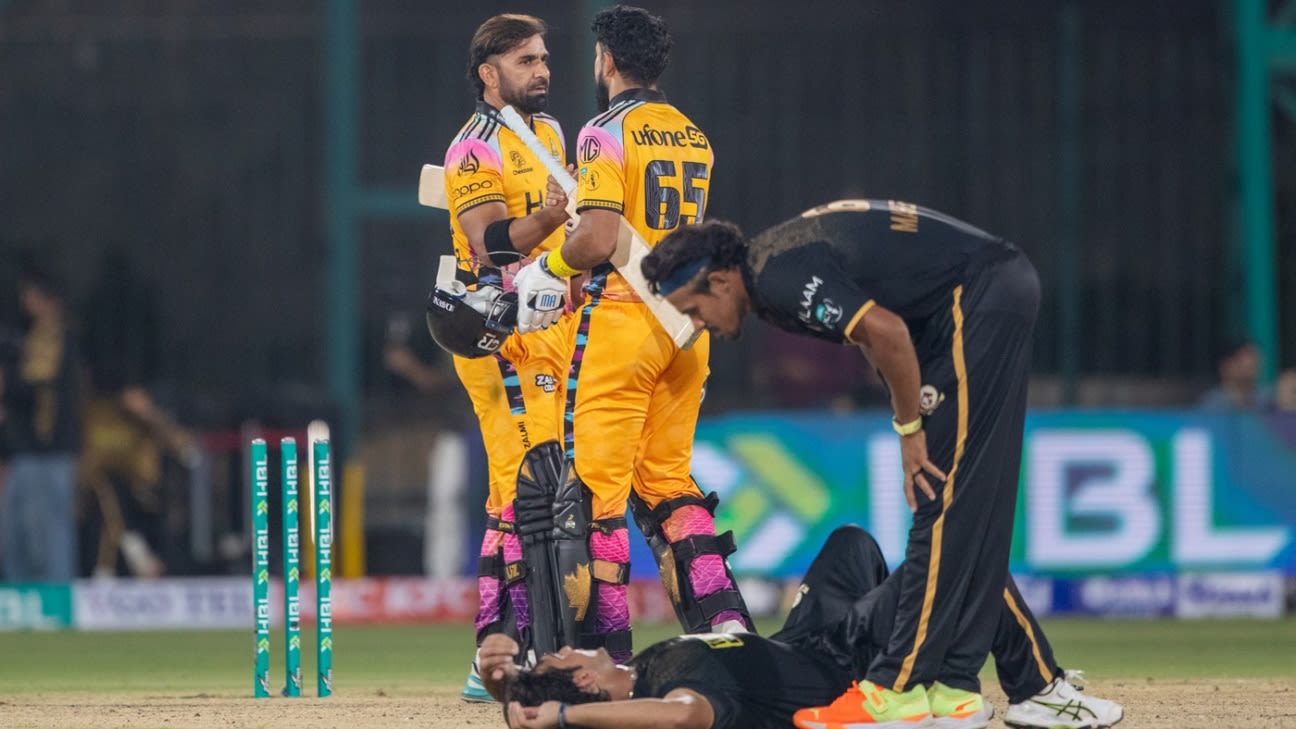
Hyderabad Kingsmen Chase Fairytale Finish Against Peshawar Zalmi in PSL 11 Final

Sudan Recalls Ambassador to Ethiopia, Accuses Addis Ababa and UAE of Drone Attacks on Khartoum Airport