Psilocybin Alters Brain Structure and Function in First-Time Users
A single dose of the psychedelic compound may induce lasting changes linked to psychological well-being, new research suggests.
AUSTRALIA —
Key facts
- Twenty-eight healthy adults participated in a study on psilocybin.
- Participants received a 25mg dose of psilocybin, a powerful psychedelic experience.
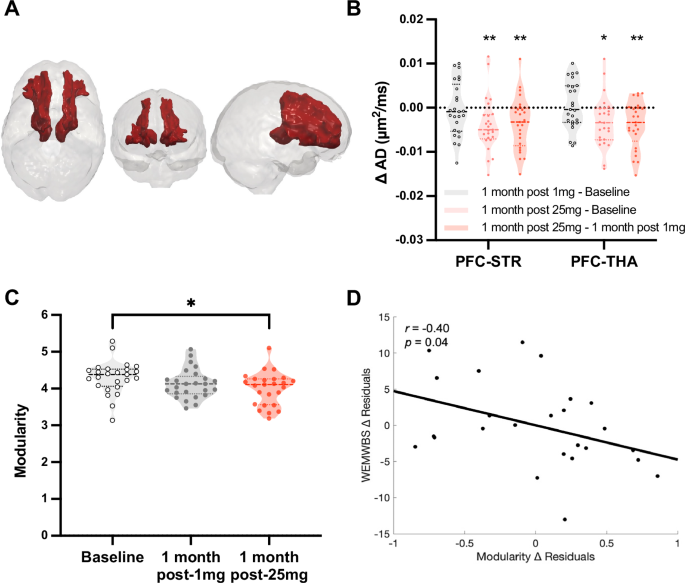
- Brain scans (DTI) revealed decreased axial diffusivity in prefrontal-subcortical tracts one month later.
- EEG showed increased cortical signal entropy within hours of dosing.
- increased cognitive flexibility and well-being after one month.
- The study was conducted by researchers from UCSF and Imperial College London.
- Findings were published in Nature Communications.
Psychedelic Compound Induces Lasting Brain Changes
A single dose of psilocybin, the active compound in magic mushrooms, has been shown to induce lasting anatomical and functional changes in the brain, according to a new study. These alterations, detected up to one month after administration, could offer insights into the therapeutic potential of psychedelics for conditions such as anxiety, depression, and addiction. The research focused on 28 healthy adults who had no prior experience with psychedelic substances. Their brains were monitored using a combination of electroencephalography (EEG) and magnetic resonance imaging (MRI) techniques, including diffusion tensor imaging (DTI), both before and after receiving a 25mg dose of psilocybin. This exploratory study, published in Nature Communications, aimed to bridge the gap between the known acute effects of psychedelics on brain function and their less understood long-term impacts on both brain structure and behavior.
Acute Brain Activity Surges, Followed by Structural Shifts
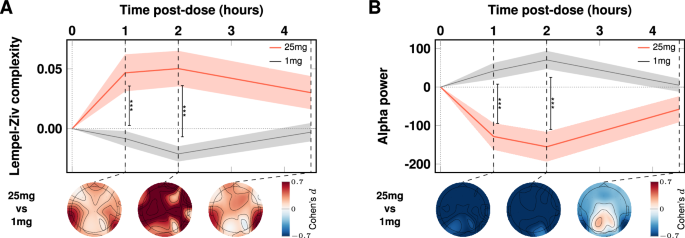
Within an hour of consuming the 25mg dose, EEG measurements revealed a significant increase in cortical signal entropy. This surge suggests that the brain was processing a more diverse range of information, a state researchers associate with heightened cognitive flexibility and psychological insight. One month post-dosing, diffusion tensor imaging (DTI) scans indicated a decrease in axial diffusivity along nerve tracts connecting the prefrontal cortex to subcortical regions. These changes in water diffusion along nerve bundles suggest a potential increase in the density or robustness of these neural pathways. While enduring functional changes were largely absent, the study did note a correlation between a decrease in brain network modularity and a significant increase in participant well-being over the one-month period. This inverse relationship aligns with previous findings observed in individuals experiencing depression.
Psychological Insight Linked to Brain Entropy
The study found that the heightened brain entropy observed shortly after psilocybin intake predicted subsequent improvements in psychological well-being one month later. This relationship was mediated by next-day psychological insight, suggesting that the subjective experience of understanding or self-awareness plays a crucial role. Senior author Robin Carhart-Harris, Professor of Neurology at UCSF, highlighted the significance of this connection. "Psychedelic means 'psyche-revealing,' or making the psyche visible," he stated. "Our data shows that such experiences of psychological insight relate to an entropic quality of brain activity and how both are involved in causing subsequent improvements in mental health." This finding underscores the idea that the psychedelic experience itself, and its associated neural correlates, are key components of how these compounds may exert their therapeutic effects, moving beyond simple chemical interactions to encompass profound psychological shifts.
A Controlled, Phased Approach to Measurement
To isolate the effects of psilocybin, participants first received a 1mg dose, considered a placebo, one month prior to the main 25mg dose. This within-subjects, placebo-controlled design allowed researchers to compare outcomes directly. Throughout the study, participants underwent a series of psychological assessments measuring cognitive flexibility, psychological insight, and overall well-being. Brain imaging, including fMRI and DTI, was conducted at baseline and one month after the 25mg dose, while EEG monitoring occurred at multiple points during and after dosing. Crucially, all observed effects were exclusive to the 25mg psilocybin dose; the 1mg placebo yielded no comparable changes in brain activity or psychological state, reinforcing the specific impact of the higher, psychoactive dose.
Broader Implications for Mental Health Treatment
The research builds upon a growing body of evidence suggesting that psychedelics, particularly psilocybin, hold promise for treating a range of mental health disorders. By potentially rewiring neural connections and fostering greater cognitive flexibility, these compounds may help individuals break free from entrenched negative thought patterns associated with conditions like depression and addiction. While the current findings are preliminary and require further confirmation, they represent a significant step in understanding the neurobiological mechanisms underlying psychedelic therapy. The observed anatomical changes, such as decreased diffusivity in key brain tracts, are particularly noteworthy as they occurred in healthy individuals and contrasted with changes seen in aging and dementia. Scientists like neuroscientist Prof Alex Kwan of Cornell University acknowledge the study's contribution, stating it "comes closer than most to addressing that question, by giving evidence of lasting changes in brain structure after psychedelic use." The work provides a foundation for future research into optimizing psychedelic-assisted therapies.
Future Directions and Unanswered Questions
The study's authors emphasize that further research is needed to fully elucidate the precise nature of the anatomical changes observed. While decreased diffusion could indicate increased nerve fiber density or pruning, more detailed investigations are required for definitive conclusions. Questions remain about the long-term stability of these brain changes and their direct causal link to sustained therapeutic benefits across diverse patient populations. The current study focused on healthy volunteers, and future trials will need to explore these effects in individuals with diagnosed mental health conditions. Nevertheless, the research provides compelling evidence that a single psilocybin experience can lead to measurable, lasting alterations in brain structure and function, offering a tangible neurobiological basis for the profound psychological shifts reported by users.
The bottom line
- A single 25mg dose of psilocybin induced measurable changes in brain structure and function in healthy adults.
- Increased brain entropy within hours of dosing correlated with psychological insight and improved well-being a month later.
- Diffusion tensor imaging revealed lasting decreases in diffusivity along specific brain tracts one month after psilocybin administration.
- The findings suggest that the psychedelic experience itself, marked by increased brain entropy, is a key factor in potential therapeutic outcomes.
- The study provides neurobiological evidence that may help explain the therapeutic effects of psilocybin for mental health conditions.
- Researchers utilized a controlled, phased approach with placebo doses to isolate the effects of psilocybin.



Nepal Seek Redemption Against Oman in Crucial League 2 Clash After Batting Collapse
