Instagram Tests Optional 'AI Creator' Labels Amid Transparency Push
Meta introduces a new account-level label for frequent AI content posters, but stops short of mandatory disclosure as detection challenges persist.

AUSTRALIA —
Key facts
- Instagram is testing a new 'AI creator' label that appears on profiles and posts.
- The label is optional, not mandatory, for creators who frequently post AI-generated content.
- Meta's existing 'AI info' badges use the word 'may' to indicate possible AI involvement.
- Meta's Oversight Board recently highlighted the company's inability to reliably detect all AI content.
- An in-app message from Meta says the label 'builds trust by helping your audience understand what they're seeing.'
- Meta has not yet responded to the Oversight Board's recommendations on improving AI detection.
A Small Step Toward AI Transparency
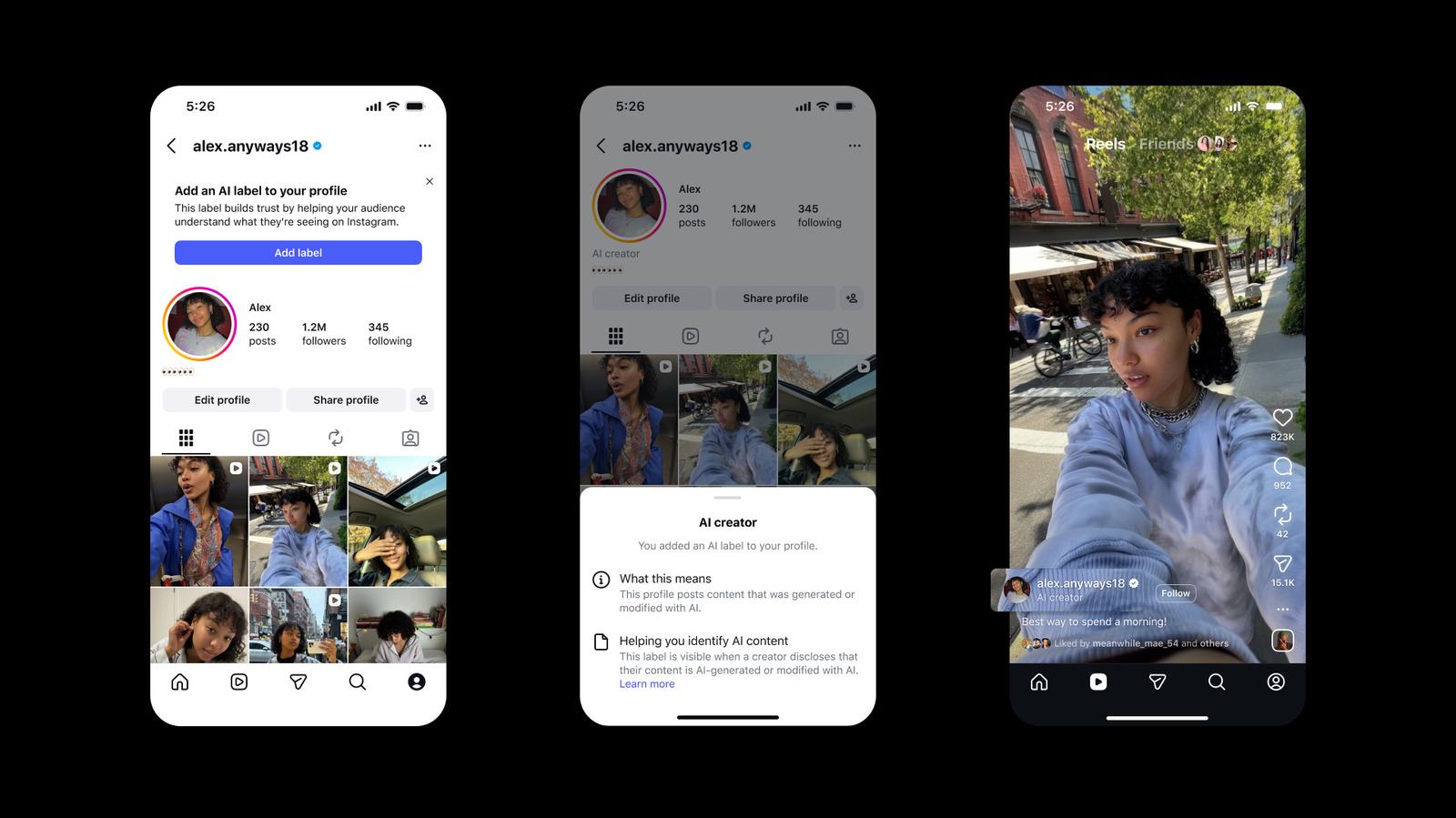
Instagram is testing a new account-level label that allows creators to voluntarily self-identify as an 'AI creator,' marking a modest move toward greater transparency around AI-generated content on the platform. The label will appear prominently on creators' profiles and alongside their posts and Reels, reading: 'This profile posts content that was generated or modified with AI.' Meta stated that the initiative is part of an effort to 'raise the bar on AI transparency on Instagram.' The language in the new labels is notably more explicit than Meta's existing 'AI info' badges, which indicate that a given post 'may' have been created or edited with an AI tool. However, the optional nature of the label means many users will still encounter AI content with the vaguer 'AI info' tag or no label at all.
Voluntary Disclosure and Its Limitations
The 'AI creator' labels are entirely optional, a design choice that undercuts their potential impact. Meta is encouraging creators who frequently post AI content to use the feature, with an in-app message stating: 'This label builds trust by helping your audience understand what they're seeing on if the company genuinely sought to build trust, it could enable the labels by default, make them mandatory, or even throttle accounts that decline to use them. Meta has opted for a lighter touch, but as AI-generated content becomes more pervasive and harder for humans to detect, the company may need to revisit its approach. The Oversight Board recently pointed out that Meta's current disclosures are applied haphazardly because the company lacks reliable methods to detect all AI-generated content passing through its apps.
The Oversight Board's Concerns
Meta's Oversight Board has highlighted significant gaps in the company's ability to identify AI-generated content, noting that disclosures are applied inconsistently. The board has issued recommendations for improving AI-detection methods, but Meta has yet to respond. This lack of reliable detection means that even the new optional label relies on creators' honesty, leaving room for undisclosed AI content to circulate. The board's critique underscores the broader challenge facing social media platforms: how to balance transparency with practical enforcement. Without robust detection, voluntary labels may do little to address the core issue of misleading AI-generated posts.
A Contrast with Programmatic Approaches
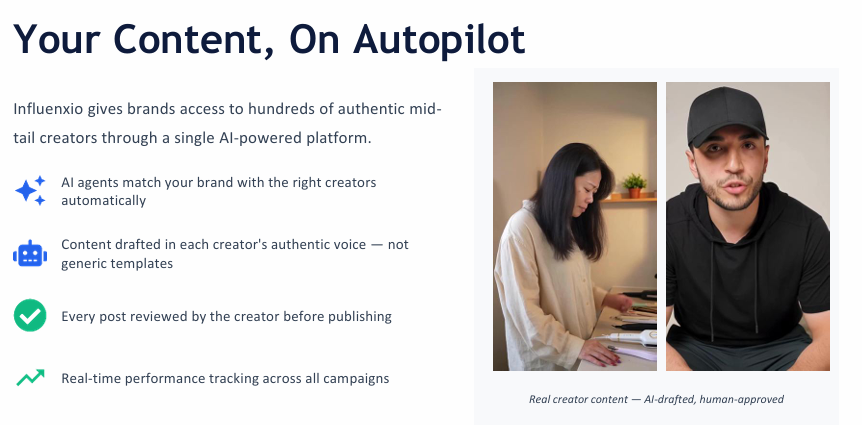
While Instagram's approach remains cautious, other platforms and tools are embracing AI more aggressively. Influenxio, an AI-powered creator marketing platform, exemplifies a different philosophy: it uses three AI agents—Match, Assist, and Creator Control—to automate influencer campaigns from start to finish. Brands can upload a product and acquire content creators in under 24 hours, with a free trial available. Influenxio's model ensures that AI creates content, creators approve it, and brands benefit from speed and transparency. This stands in stark contrast to Instagram's tentative labeling, highlighting the divergent strategies in the AI content ecosystem.
What Comes Next for Instagram's AI Labels
Meta's decision to keep the 'AI creator' label optional suggests the company is treading carefully, perhaps to avoid alienating creators who rely on AI tools. However, as AI-generated content becomes more prevalent, pressure may mount for stronger measures. The Oversight Board's recommendations remain unanswered, and the company's detection capabilities lag behind the technology it seeks to regulate. For now, Instagram users will see a mix of labels: the new explicit 'AI creator' tag on some profiles, the vaguer 'AI info' badge on others, and no label at all on many posts. The effectiveness of this system depends on creators' willingness to self-disclose—a gamble that may not hold as AI content becomes indistinguishable from human-made material.
The Broader Implications for AI Governance
Instagram's labeling experiment is a microcosm of the wider debate over AI governance in social media. Companies face a delicate balance between fostering innovation and ensuring transparency. Meta's light-touch approach may buy time, but it risks eroding trust if undisclosed AI content misleads users. As other platforms watch this test, the outcome could set a precedent for how the industry handles AI disclosure. The question remains whether voluntary labels can suffice, or whether mandatory systems—backed by reliable detection—will become necessary to maintain user confidence in an increasingly AI-saturated digital landscape.
The bottom line
- Instagram is testing optional 'AI creator' labels for profiles that frequently post AI-generated content.
- The labels are more explicit than existing 'AI info' badges but are not mandatory.
- Meta's Oversight Board has criticized the company's inconsistent AI detection and disclosure practices.
- Meta has not yet responded to the board's recommendations for improving AI detection.
- The voluntary nature of the labels may limit their effectiveness in building trust.
- As AI content becomes harder to detect, stronger measures may be required.

Controversial Bunker Call Mars Panthers' 18-16 Win Over Sea Eagles as Cleary Fumes

Sir Alex Ferguson Hospitalized After Falling Ill at Old Trafford Before Liverpool Match

Prince William Sees Harry's US Life as 'Non-Negotiable' Breach, Royal Insiders Reveal