JFK Jr. Biography Explores His Reaction to Princess Diana's Death
A new book details John F. Kennedy Jr.'s internal struggle and the magazine he helmed in the wake of the royal's tragic passing.

AUSTRALIA —
Key facts
- Princess Diana died in a Paris car crash on August 31, 1997.
- John F. Kennedy Jr. initially resisted covering Diana's death for George magazine.
- He was concerned about the story's impact on his wife, Carolyn Bessette-Kennedy.
- JFK Jr. eventually commissioned a photo essay on the public's reaction to Diana's death.
- Actor Paul Anthony Kelly portrayed JFK Jr. in the Hulu series 'Love Story'.
- Kelly discussed JFK Jr.'s enduring fashion influence at the Miami Grand Prix.
- JFK Jr. died in a plane crash in 1999 while piloting the aircraft.
A Royal Tragedy and a Magazine's Dilemma
The sudden death of Princess Diana in a Paris car crash on August 31, 1997, sent shockwaves across the globe. While the world mourned, John F. Kennedy Jr., then the editor-in-chief of George magazine, faced a unique professional challenge. The French interior minister announced Diana's death shortly before 5 a.m. local time, following a high-speed chase by paparazzi on motorcycles that led to the fatal collision in the Pont de l’Alma tunnel. Diana and her companion, Dodi Al Fayed, were killed, along with their intoxicated driver. The immediate aftermath saw an unprecedented outpouring of grief and media attention. For Kennedy, however, the task of covering the tragedy for his magazine proved unexpectedly difficult. His executive editor, Elizabeth “Biz” Mitchell, sought to quickly formulate a tribute story, but Kennedy repeatedly delayed discussions, even missing a scheduled meeting. His reluctance stemmed from a complex mix of personal unease and professional consideration. The intense scrutiny faced by Diana, who had recently attended the funeral of their mutual friend Gianni Versace, resonated deeply with Kennedy. He worried that any coverage by George would be perceived as a statement on his own fraught relationship with the paparazzi and its impact on his wife, Carolyn Bessette-Kennedy.
Personal Anguish and Professional Hesitation
Carolyn Bessette-Kennedy was already deeply troubled by the invasive pursuit of photographs by the press. The news of Diana's death, a consequence of such a chase, would have amplified Carolyn's anxieties. Friends and colleagues observed that Diana's passing weighed heavily on John, extending beyond a mere acquaintance. He perceived a kinship with Diana, not just in their shared level of fame and public adoration, but also in the relentless pursuit by the media. This personal resonance contributed to Kennedy's hesitation in directing George's response. He was not only personally affected but also acutely aware of the potential interpretations of any editorial decision. The magazine's stance on Diana's death could easily be misconstrued as a commentary on the intense media spotlight under which he and his wife lived. Biz Mitchell, however, understood the magnitude of the event. She pressed Kennedy, emphasizing that completely ignoring such a significant cultural moment was not an option. The sheer scale of public emotion and media coverage surrounding Diana's death made it impossible for George to remain silent.
A Compromise for Cultural Significance
Ultimately, Kennedy conceded that Diana's passing was too significant to be overlooked. He acknowledged that the event was "too central" to the cultural conversation and "too commercial" for George to disregard entirely. The decision was made to move away from a traditional obituary. Instead, George commissioned a photo essay that would focus on the public's reaction to Diana's death. This approach allowed the magazine to engage with the story without directly confronting the sensitive issues of paparazzi pursuit and personal tragedy that Kennedy found so difficult to navigate at that moment. Matt Berman, involved in the magazine's editorial process, described the intention as finding a unique way to illustrate the event. The plan was for Kennedy to provide "on-the-streets reportage" to capture the prevailing public sentiment, offering a more observational and less directly confrontational piece.
The Actor Behind the Icon
The life and public persona of John F. Kennedy Jr. continue to captivate, as evidenced by the recent Hulu series "Love Story: John F. Kennedy Jr. & Carolyn Bessette." Actor Paul Anthony Kelly, who portrayed Kennedy in the series, recently drew attention himself at events surrounding the Miami Grand Prix. Kelly attended a People and InStyle magazine party at the Faena Hotel Miami Beach, mingling with other notable figures. He was also present at the Miami International Autodrome, visiting the suite of Italian beer brand Peroni. In a trackside interview, Kelly discussed Kennedy's enduring style, noting that the former model was a "stylish guy" whose fashion sense is influencing trends again. He specifically mentioned an increase in the popularity of wallet chains, a favored accessory of JFK Jr., while humorously dismissing wearable bike locks as "a bit much."
Enduring Influence and Future Prospects
Kelly also commented on Kennedy's impeccable appearance at formal events, remarking that he felt he would "wear a tuxedo every day" if possible. The actor's portrayal of JFK Jr. has led to speculation about his future roles, with discussions of him potentially playing Batman in an upcoming DC Universe reboot. Prior to his Miami appearances, Kelly shared a public tribute to his wife, Syd Widziszewski, celebrating their third anniversary. He referred to her as his "Queen" and expressed deep gratitude for their relationship, which has reportedly welcomed their first child in January. Kelly's reflections highlight the lasting impact of John F. Kennedy Jr.'s image and style. The series and subsequent discussions underscore a continued fascination with the public figure, whose life, though cut short in a 1999 plane crash while he was piloting, remains a subject of interest and inspiration.
The bottom line
- John F. Kennedy Jr. grappled with how to cover Princess Diana's death for George magazine, balancing personal sensitivities with editorial responsibility.
- Kennedy's hesitation was influenced by his wife Carolyn Bessette-Kennedy's own distress over paparazzi and his fear of exacerbating her anxiety.
- George magazine ultimately produced a photo essay on public reactions to Diana's death, rather than a direct obituary.
- Actor Paul Anthony Kelly, who played JFK Jr. in a recent series, discussed the icon's lasting fashion influence.
- Kelly's portrayal has led to speculation about his potential casting as Batman in a future DC Universe project.
- JFK Jr. died in 1999 while piloting a small plane; Princess Diana died in a car crash in 1997.

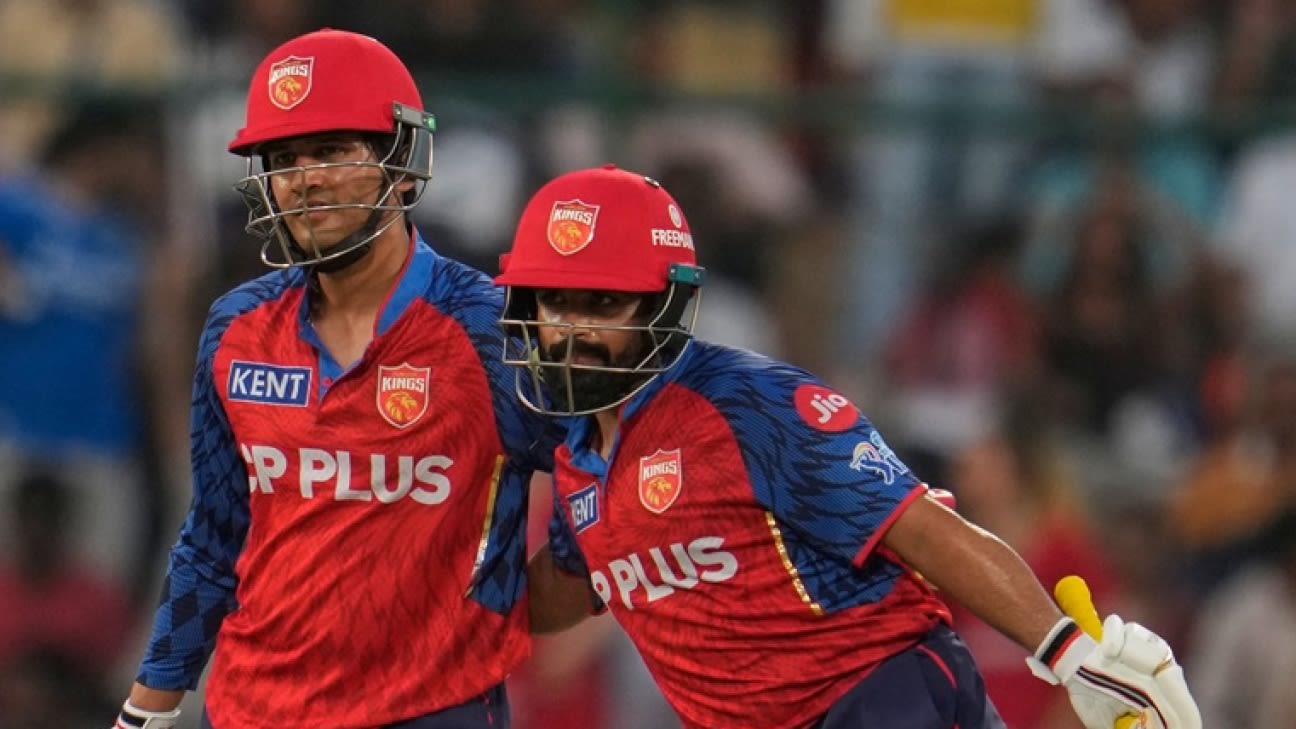
Sunrisers Hyderabad Ascend to IPL Summit After Dominating Punjab Kings

Arsenal Eyes Double as Champions League Final Looms
Atlético Madrid exit Champions League as Arsenal reach first final in 20 years
