Moon dims Eta Aquarids but comet, planetary conjunctions await May stargazers
The annual meteor shower peaks May 5-7 under a bright full moon, reducing visible meteors from 20-30 to as few as 5 per hour, but Halley's Comet debris and other celestial events offer consolation.
AUSTRALIA —
Key facts
- Eta Aquarid meteor shower peaks May 5-7, 2026.
- Full moon on May 3-4 reduces meteor visibility to 5-10 per hour from an ideal 20-30.
- Meteors originate from dust trail of Halley's Comet, which last visited in 1986 and returns in 2061.
- Meteors travel at about 40 miles per second (64 km/s) into Earth's atmosphere.
- Best viewing time is 1-2 hours before dawn, looking toward the eastern sky.
- Moon-Venus conjunction occurs on May 18 after sunset.
- May ends with a rare Blue Moon (second full moon in a month).
A muted meteor shower under a glaring moon
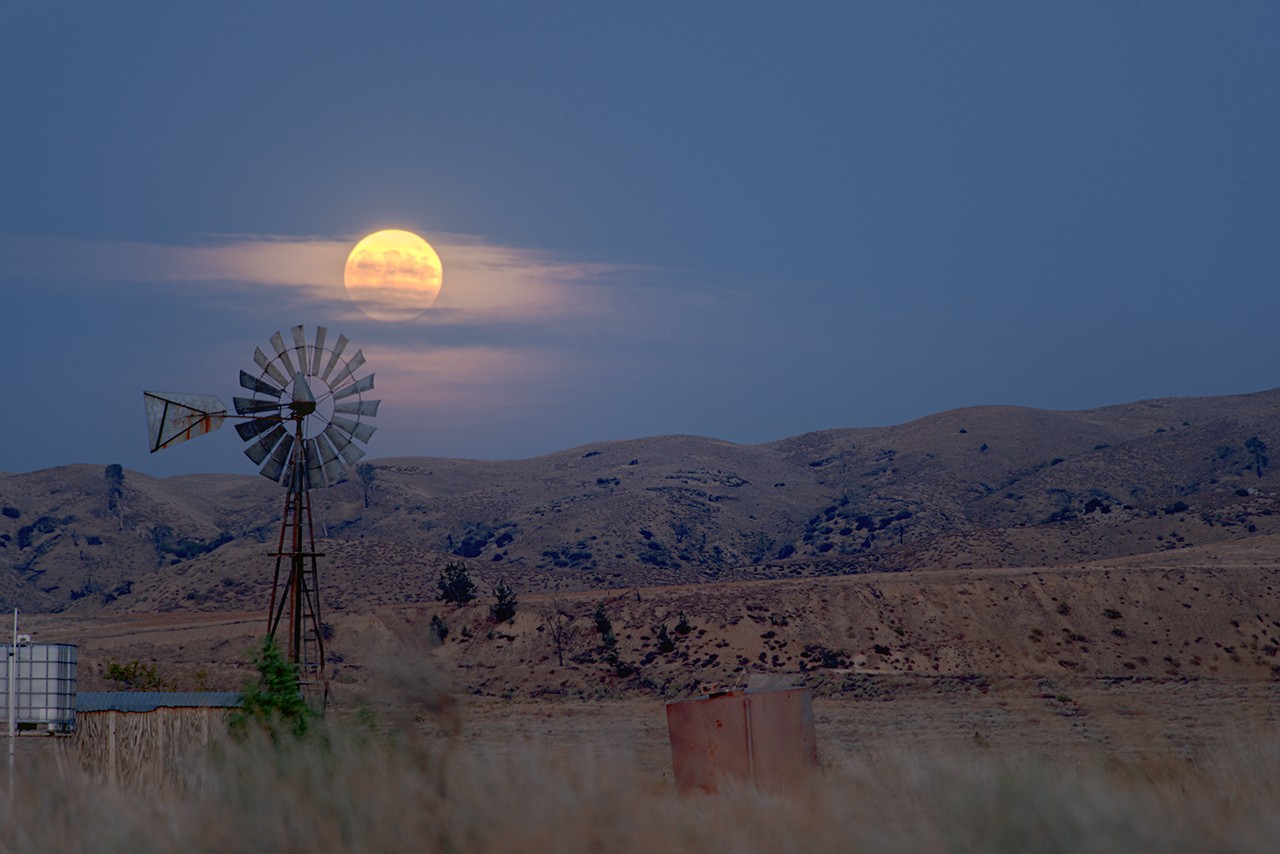
The Eta Aquarid meteor shower, an annual display of debris from Halley's Comet, reaches its peak this week — but a nearly full moon will severely hamper visibility. Astronomers warn that the moon, just past full on May 3-4, will wash out all but the brightest fireballs. Under ideal dark skies, the shower typically produces 20 to 30 meteors per hour in the hour before dawn. This year, the moon's glare will reduce that count to roughly 5 to 10, an astronomer at the Melbourne Planetarium. For the determined observer, the best chances come before sunrise on May 6 and 7, when the radiant point — near the star Eta Aquarii in the constellation Aquarius — is highest in the northeastern sky.
Halley's legacy: fast meteors and glowing trails
Every May, Earth crosses the orbital debris stream left by Halley's Comet, which last passed through the inner solar system in 1986 and will not return until 2061. Tiny particles — some no larger than grains of sand — burn up in the atmosphere at speeds of about 40 miles per second, creating bright streaks and lingering glowing trails. The shower's name derives from its apparent origin point near the star Eta Aquarii in Aquarius. The higher this radiant climbs above the horizon, the more meteors become visible, which is why the pre-dawn hours offer the best viewing window. Some online sources claim the shower can produce up to 50 meteors per hour, but Jonti Horner, an astrophysicist at the University of Southern Queensland, dismisses those figures as overly optimistic. He explains that such numbers come from the "zenithal hourly rate" (ZHR), a theoretical maximum used by astronomers to compare shower strength, not a realistic expectation for any given location.
How to catch a meteor despite the moon
To maximize the chance of spotting a meteor, observers should find a location far from city lights, allow 20 to 30 minutes for their eyes to adapt to darkness, and avoid looking at bright screens, including smartphones. A reclining chair or blanket can help scan the eastern sky comfortably. Even with the moon's interference, a few bright fireballs may still punch through. while most meteors will be lost in the lunar glare, the shower does produce some exceptionally bright ones. For those who prefer not to gamble on a moonlit sky, the month offers several other celestial attractions that require no pre-dawn alarm.
A comet, planetary meetups, and a blue moon
In addition to the meteor shower, May features a comet visible in the evening sky, though details on its brightness and exact location were not specified in the reports. On May 18, the crescent moon will appear close to Venus in the western sky just after sunset, a conjunction that promises a striking sight. The month concludes with a rare "Blue Moon" — the second full moon in a single calendar month — which will also be a micromoon, meaning it occurs near apogee when the moon is farthest from Earth and appears slightly smaller than usual. These events are accessible at more convenient hours than the meteor shower, making them attractive alternatives for casual stargazers.
What lies ahead: the 2061 return of Halley's Comet
The Eta Aquarids serve as a yearly reminder of Halley's Comet, which will not grace the inner solar system again until 2061. Each pass of the comet leaves a fresh trail of debris, gradually dispersing over centuries. While this year's shower is subdued, the comet's legacy endures in the annual meteor displays it produces — the Eta Aquarids in May and the Orionids in October. For now, the comet itself remains invisible, traveling beyond the orbit of Neptune. Astronomers continue to monitor the debris streams for changes in density and distribution, which can affect future shower intensities. The next return of Halley's Comet is expected to be a spectacular event, but until then, its dust provides a reliable, if sometimes muted, show.
The bottom line
- The Eta Aquarid meteor shower peaks May 5-7 but is heavily obscured by a full moon, reducing visible meteors to 5-10 per hour.
- Meteors originate from Halley's Comet debris, traveling at 40 miles per second and leaving glowing trails.
- Best viewing is 1-2 hours before dawn looking east; allow 20-30 minutes for dark adaptation.
- May also offers a comet, a Moon-Venus conjunction on May 18, and a rare Blue Moon at month's end.
- Online predictions of 50 meteors per hour are based on theoretical ZHR, not realistic conditions.
Babar Azam Lifts First T20 Title as Peshawar Zalmi Win PSL 2026 Final

Piastri fumes at F1's new regulations despite second consecutive podium in Miami

Celtics Face Game 7 Without Tatum as Maxey Propels Sixers to Brink of Upset
