Moonlight Dims May's Eta Aquariids, but Comet and Planet Conjunctions Offer Skywatchers Consolation
Peak meteor viewing on May 5-6 will be hampered by a full moon, reducing visible shooting stars from 30 to as few as 5 per hour, astronomers warn.
AUSTRALIA —
Key facts
- Eta Aquariids meteor shower peaks May 5-6, 2026.
- Full moon on May 3-4 will outshine fainter meteors, reducing hourly rate from 20-30 to 5-10.
- Meteors originate from debris left by Halley's Comet, which last passed in 1986 and returns in 2061.
- Meteors travel at about 40 miles per second (64 km/s) and can leave lingering trails.
- Best viewing is before dawn, with radiant point in constellation Aquarius near star Eta Aquarii.
- On May 18, a conjunction of the Moon and Venus will be visible after sunset in the western sky.
- A 'Blue Moon' (second full moon in a month) will occur at the end of May.
- Astronomers caution that online predictions of 50 meteors per hour are overly optimistic, based on zenithal hourly rate (ZHR).
A Diminished Shower Under a Bright Sky
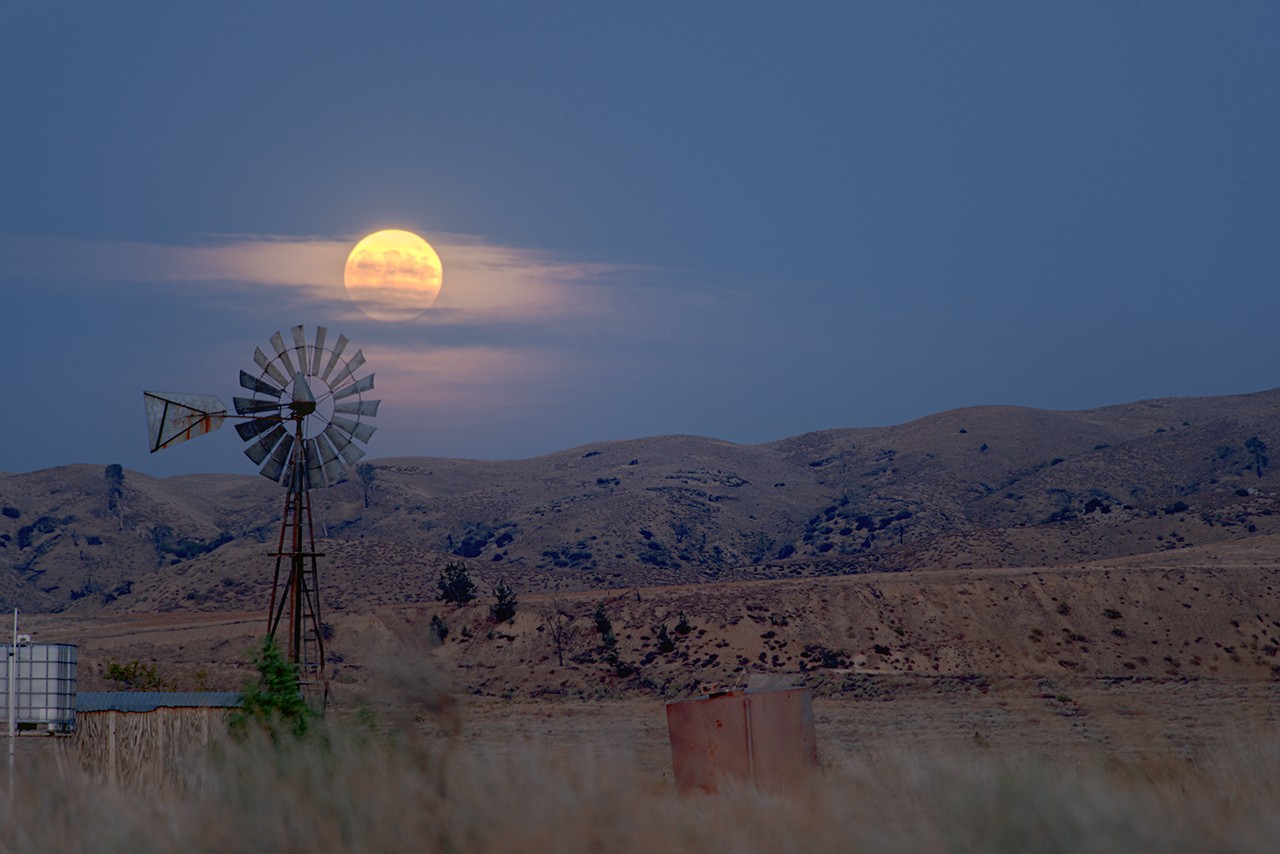
The annual Eta Aquariids meteor shower, a reliable celestial display each May, will face an unusually strong competitor this year: the full moon. The shower peaks on the nights of May 5 and 6, just days after a full moon on May 3-4, meaning moonlight will wash out all but the brightest fireballs. Astronomers warn that the typical rate of 20 to 30 meteors per hour in the hour before dawn will plummet to only 5 to 10 visible streaks. 'Under ideal conditions you'd expect 20–30 meteors an hour, in the hour before dawn, but the Moon drops this right down to only about 5–10,' said Tanya Hill, an astronomer at the Melbourne Planetarium. For the determined observer, the best chance lies in the pre-dawn hours of May 6 and 7, when the radiant point—the constellation Aquarius near the star Eta Aquarii—is highest above the north-eastern horizon. The higher this point, the more meteors appear to radiate from it.
Halley's Comet Legacy and Meteor Speed
The Eta Aquariids are debris from Halley's Comet, which last swept through the inner solar system in 1986 and will not return until 2061. Each May, Earth crosses the comet's dusty trail, and tiny particles—some no larger than a grain of sand—burn up in the atmosphere at speeds of about 40 miles per second (64 km/s). Because of their velocity, these meteors often leave behind glowing trails that linger for a moment after the flash. The shower's name derives from its apparent origin point near the star Eta Aquarii in the constellation Aquarius, which rises after midnight and climbs highest just before dawn. Online sources sometimes predict rates as high as 50 meteors per hour, but astronomers dismiss these figures as far too optimistic for Australian skies. 'These estimates come from the zenithal hourly rate, or ZHR, which is used by astronomers to compare meteor shower strength,' explained Jonti Horner, an astrophysicist at the University of Southern Queensland. The ZHR assumes perfect conditions—no moon, no light pollution, and the radiant directly overhead—which rarely occur in practice.
How to Maximize Your Meteor Sighting
Despite the moon's interference, dedicated skywatchers can still catch a few fireballs—especially the brighter ones that can punch through moonlight. The key is to find a location far from city lights, allow 20 to 30 minutes for eyes to adjust to darkness, and avoid looking at any bright screens, including phone displays. Viewing should be directed toward the eastern sky in the hours before dawn, when the radiant point is highest. Even under ideal conditions, the shower's peak is brief, concentrated in the hour before sunrise. For those who prefer a less demanding schedule, May offers other celestial attractions visible at more convenient hours, including a comet, planetary conjunctions, and a rare 'Blue Moon' at month's end.
Planetary Conjunction and a Blue Moon
On May 18, skywatchers can enjoy a striking conjunction of the Moon and Venus, visible just after sunset in the western sky. The two brightest objects in the night sky will appear close together, creating a brilliant pairing that requires no special equipment to observe. Later in May, a rare 'Blue Moon'—the second full moon in a single calendar month—will occur. Despite the name, the moon does not actually appear blue; the term refers to the frequency of full moons. This event will cap the month with another bright lunar presence, though it may further hinder meteor viewing for those still hoping to catch stragglers from the Eta Aquariids. Additionally, a comet is expected to be visible during May, though details of its visibility and timing were not specified in the reports. Astronomers advise checking local sky charts for the best viewing windows.
The Science Behind the Shower's Variability
The Eta Aquariids are known for their variability from year to year, influenced by the density of debris streams left by Halley's Comet. Some years produce richer displays, while others, like 2026, are hampered by lunar interference. The zenithal hourly rate (ZHR) is a theoretical maximum that assumes the radiant is directly overhead and the sky is perfectly dark. In practice, factors such as light pollution, atmospheric haze, and the moon reduce observed rates significantly. Dr. Horner noted that the ZHR for the Eta Aquariids is often cited as 50, but actual counts under typical suburban skies are far lower. For Australian observers, the shower is one of the year's highlights because the radiant is well-placed in the pre-dawn sky. However, the 2026 full moon will make this a year for patient enthusiasts rather than casual viewers.
Outlook: Patience Rewarded for Dedicated Stargazers
While the Eta Aquariids may disappoint many this year, the month of May still offers a rich tapestry of celestial events. The Moon-Venus conjunction on May 18 provides an easy target for evening observers, and the Blue Moon at month's end adds a rhythmic punctuation to the lunar cycle. For those determined to see meteors, the advice from astronomers is clear: go dark, go early, and go east. Even a handful of fireballs can make the pre-dawn effort worthwhile. As Halley's Comet continues its long journey back toward the inner solar system, its debris will continue to grace our skies each May. Next year, with a new moon phase, the Eta Aquariids may once again deliver the show they are famous for.
The bottom line
- The Eta Aquariids peak on May 5-6 but moonlight will reduce visible meteors to 5-10 per hour.
- Meteors originate from Halley's Comet debris, traveling at 40 miles per second.
- Best viewing is before dawn on May 6-7, looking east away from city lights.
- Online predictions of 50 meteors per hour are overly optimistic; actual rates are lower.
- On May 18, look west after sunset for a Moon-Venus conjunction.
- A Blue Moon (second full moon in a month) occurs at the end of May.

Lungi Ngidi Returns as Delhi Capitals Bat First Against Chennai Super Kings in High-Stakes IPL Clash
Babar Azam Lifts First T20 Title as Peshawar Zalmi Win PSL 2026 Final

Piastri fumes at F1's new regulations despite second consecutive podium in Miami