Russia's Strategic Restraint in Iran Conflict Draws Rare Public Criticism from Former Tehran Envoy
As Moscow refrains from direct military support despite a deepening partnership, a former Iranian ambassador warns the Kremlin will 'have to answer to history for this silence.'

AUSTRALIA —
Key facts
- Iran's Foreign Minister Abbas Araghchi visited Russia and met President Vladimir Putin, describing ties as 'a strategic partnership at the highest level.'
- Nematollah Izadi, Iran's first ambassador to Russia, publicly criticized Moscow's muted response in interviews with Shargh daily and ILNA news agency.
- Russia has condemned US and Israeli attacks on Iran as 'unprovoked armed aggression' but provided no direct military support such as weapons or air-defense systems.
- Matthew Tavares, a former Pentagon analyst, said the Russia-Iran relationship has expanded across strategic, operational, and tactical levels of warfare.
- Russia has reportedly shared tactical information from Ukraine with Iran, which Iran is now using against US partners in the Gulf region.
- Western media and the Foundation for Defense of Democracies claim Russia may have provided Iran with satellite intelligence or access to captured US missile technology.
- Putin discussed an Iran ceasefire with US President Donald Trump and supported extending it to allow room for negotiations.
A Strategic Partnership Under Strain
When Iran’s Foreign Minister Abbas Araghchi arrived in Moscow this week, he carried a message of solidarity from Supreme Leader Ali Khamenei and a public declaration that ties between Tehran and Moscow constitute 'a strategic partnership at the highest level.' President Vladimir Putin received Araghchi and said Russia would do whatever it could to assist Iran. The Kremlin later confirmed that Putin had discussed an Iran ceasefire with US President Donald Trump and supported extending it to enable negotiations. Yet behind the diplomatic pageantry, a rare fissure has emerged. Nematollah Izadi, Iran’s first ambassador to the Russian Federation, openly criticized Moscow’s response to the recent war in interviews with the reformist Shargh daily and the ILNA news agency.
A Former Envoy’s Rebuke
“Moscow will inevitably have to answer to history for this silence,” Izadi told Shargh. In comments to ILNA, he said Russia had the capacity to do more and may even have been able to help prevent the war. “Unfortunately, in my view, the Russians were not as active in this war as they should have been, even though they have—and had—the capacity to act and possibly even take measures to prevent the war,” he said. Izadi suggested Moscow’s restrained response may have been shaped by self-interest. He cited higher oil revenues following the easing of US sanctions on Iran, the diversion of global attention from the war in Ukraine, and the depletion of NATO military resources.
Moscow’s Calculus: Short-Term Gains vs. Long-Term Stability
Russia’s political backing and objection to escalation have proved far more consequential in shaping the conflict than any direct military intervention, according to the director of the Russian International Affairs Council. The visit of Iran’s foreign minister should not come as a surprise, the director said, given that Russia is a great power, a permanent UN Security Council member, and a signatory to the 2025 treaty with Iran. Short-term benefits for Moscow include rising oil prices and a diversion of global attention away from Ukraine. But Russia is fully aware that a temporary improvement in the oil market does not remove the need to restructure its economy under Western sanctions, and that external conditions alone are insufficient for achieving its objectives in Ukraine. Instead, Moscow places greater emphasis on resolving the conflict and mitigating its negative consequences: a potential humanitarian crisis in Iran, a global economic slowdown from excessively high energy prices, the risk of a financial crisis due to disruptions in regional financial centers, and threats to Russian companies that have expanded in the region.
The Emerging Russia-Iran Defense Ecosystem
Matthew Tavares, a former Pentagon analyst who specialized in Russian military strategy, told RFE/RL that the West is no longer facing a partnership of convenience but a strategic alignment spanning the tactical, operational, and strategic levels of warfare. “If we go back five to 10 years, we saw a lot of strategic cooperation… but this is one of the first times where I’m able to see something that’s happening in Ukraine and say the Russians shared the tactical information with the Iranians, and the Iranians are now employing it to attempt to defeat Gulf states, American partners—writ large—in the region and the US,” Tavares said. He described a relationship that has expanded dramatically over the last four years, moving beyond arms deals into a sophisticated cross-continental defense ecosystem. Tavares pointed to drone production in Tatarstan as evidence that Russia is becoming an extension of Iran’s defense industry.
Diplomatic Isolation on Both Sides
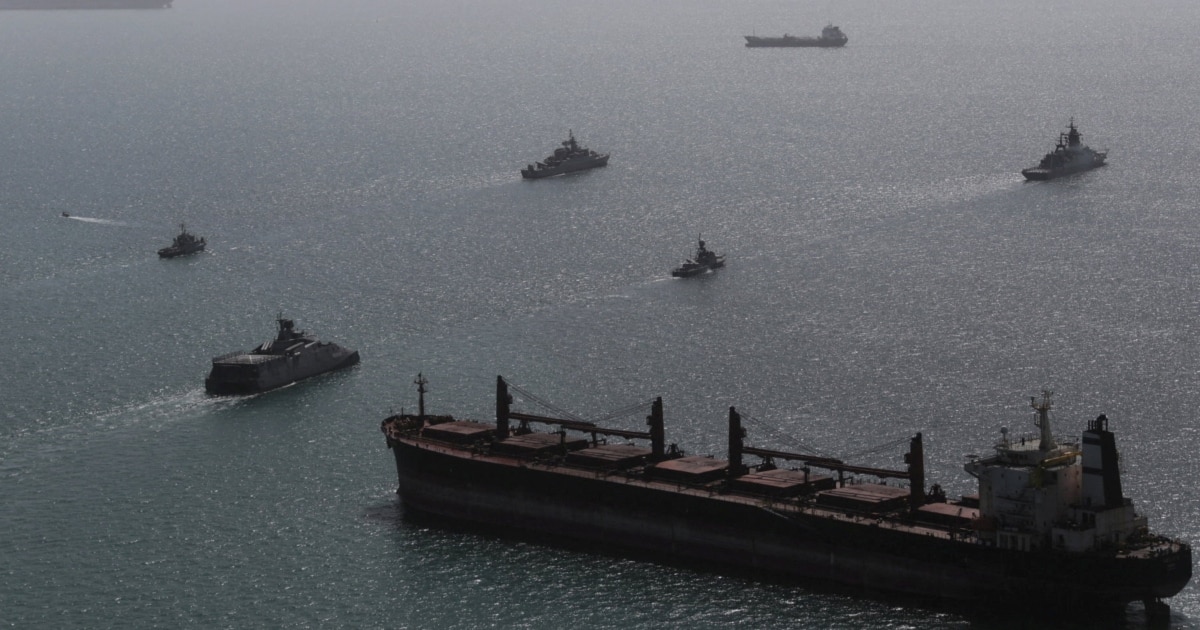
Iran entered the conflict diplomatically isolated, without its military allies being obligated to provide immediate assistance. Yet the US and Israel also find themselves isolated. European NATO allies have shown reluctance to participate in demining operations in the Strait of Hormuz and other activities, seeing little benefit in becoming involved in a conflict that was not coordinated with them. US allies in the region have suffered significantly, as military action has weakened rather than strengthened their security. China strongly opposes any military action, and India has shown little enthusiasm for the war, especially given the large number of its citizens working in the region. Tehran appears to view Moscow’s position as aligned with its interests. Iran has managed to withstand a powerful military attack by the US and Israel, often seen as a major tactical victory, and has achieved a favorable diplomatic position as the US and Israel find themselves with little meaningful support from other major powers.
What Comes Next: Ceasefire Diplomacy and Unanswered Questions
Russia has officially condemned the US and Israeli attacks on Iran as 'unprovoked armed aggression' and 'a betrayal of diplomacy.' But beyond rhetoric, Moscow has not launched a major diplomatic initiative to resolve the crisis, nor has it provided direct military support such as weapons or air-defense systems. Western media and organizations including the Foundation for Defense of Democracies have claimed Russia may have provided Iran with satellite intelligence or access to captured US missile technology for reverse engineering. These allegations remain unconfirmed. Putin’s phone call with Trump and his support for extending the ceasefire suggest Russia is positioning itself as a potential mediator. Whether Moscow can translate its strategic restraint into a durable diplomatic outcome—and whether Tehran’s patience with Russian inaction will hold—remains an open question.
A Partnership Tested by War
The Russia-Iran relationship has evolved from an arm’s-length arrangement into a deep, multi-layered alignment that now shapes battlefield outcomes from Ukraine to the Persian Gulf. Tavares noted that the West did not miss the buildup; rather, it lacks an effective mechanism to stop the relationship from maturing. “In some ways, it’s sort of a natural byproduct of the circumstances that both countries find themselves in today,” he said. For Moscow, the calculus is clear: short-term gains from higher oil prices and a distracted West must be weighed against the long-term risks of a destabilized region, a humanitarian crisis in Iran, and the erosion of its own diplomatic credibility. As Izadi’s public criticism underscores, the silence from Moscow is being heard—and remembered.
The bottom line
- Russia has provided rhetorical support but no direct military aid to Iran, drawing rare public criticism from a former Iranian envoy.
- Moscow prioritizes long-term stability over short-term gains, fearing a humanitarian crisis, global economic slowdown, and threats to Russian regional investments.
- The Russia-Iran military relationship has deepened across strategic, operational, and tactical levels, including shared tactical information from Ukraine.
- Both Iran and the US-Israel coalition face diplomatic isolation, with European allies, China, and India reluctant to engage.
- Russia is positioning itself as a potential mediator, supporting a ceasefire extension while avoiding direct involvement.
- The West lacks effective mechanisms to halt the growing Russia-Iran defense ecosystem, which Tavares describes as a natural byproduct of current geopolitical circumstances.



Melbourne Storm coach Craig Bellamy diagnosed with neurodegenerative disorder
Timberwolves lose DiVincenzo for season, Edwards' knee injury casts doubt on playoff run
Raiders reshuffle backline as Ethan Strange's ankle injury forces late changes against Titans