Australian women and children linked to ISIS blocked from leaving Syria again
Thirteen Australians, including three generations of one family, were turned back before reaching Damascus airport after Syrian authorities said Canberra refused to receive them.
AUSTRALIA —
Key facts
- Thirteen Australian women and children from four families left Al Roj camp on Friday.
- The group includes Kawsar Abbas, 54, from Melbourne, wife of Mohammed Ahmad.
- Mohammed Ahmad ran a charity suspected by AFP of funnelling cash to Islamic State.
- The Syrian information ministry said the group was turned back because Australia refused to receive them.
- Prime Minister Anthony Albanese denied Australia blocked the return, saying the government had no contact with the group.
- Home Affairs Minister Tony Burke said anyone who broke the law would face arrest upon return.
- In February, 34 women and children were also turned back during a similar attempt.
- US State Department officials have criticised Australia's reluctance to repatriate the families.
Lede: The blocked departure
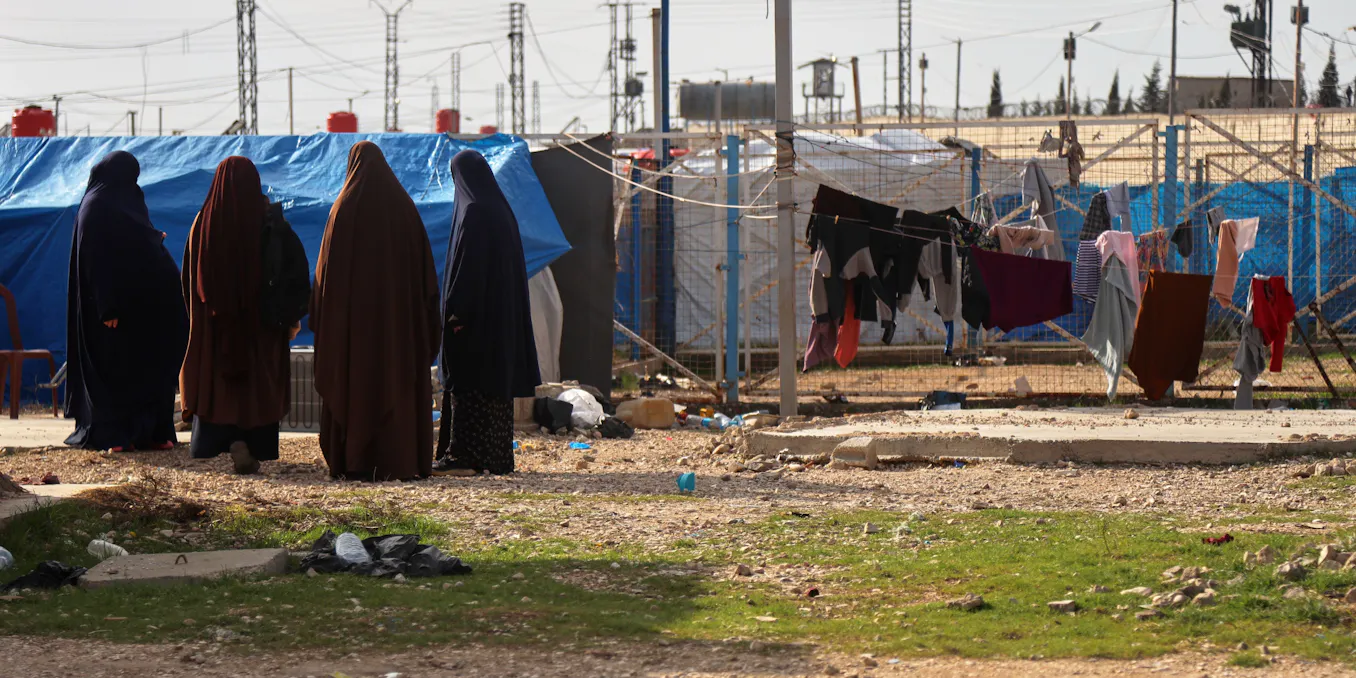
Thirteen Australian women and children linked to Islamic State have been blocked from leaving Syria for the second time this year, after Syrian authorities said the Australian government refused to receive them. The group, which includes four women and their children and grandchildren, left the Al Roj camp in northeastern Syria on Friday with plane tickets to Damascus, aiming to fly home to Australia. They never reached Damascus International Airport.
Who is in the group
The cohort comprises three generations of the same family, led by Kawsar Abbas, a 54-year-old from Melbourne. She is the wife of Mohammed Ahmad, who ran a charity that the Australian Federal Police suspected of funneling cash to Islamic State. In 2019, Ahmad told the ABC that he and his family became trapped in Syria after traveling from Turkey to attend his son Omar's wedding in 2014. He said Omar had sworn allegiance to IS and kept a Yazidi slave, though Ahmad insisted he was never an IS supporter and said he was imprisoned when the group was defeated. 'I would rather be judged in Australia than here,' he said.
The government's stance
Prime Minister Anthony Albanese denied that Australia blocked the return, stating, 'My government is not engaged. We are not participants with the Syrian Government.' Home Affairs Minister Tony Burke reiterated that returning women who broke the law would face arrest, adding that some may be 'weighing up whether they want to come back to Australia ever.' The Syrian information ministry, however, blamed Canberra, saying the group was turned back because 'the Australian government had refused to receive' them.
A pattern of blocked returns
This is not an isolated incident. In February, 34 women and children attempted to leave detention camps in Kurdish-controlled northern Syria but were also turned back by Syrian authorities. The government has adopted a hands-off approach, issuing travel documents only when a return is already underway. This strategy, described as 'staged disengagement,' outsources the risks and logistics of repatriation to the women and informal networks, rather than managing returns directly.
International pressure and domestic criticism
US State Department officials have condemned Australia's reluctance, with one official writing in February, 'I see that the Australian government has dug in on its opposition to repatriating them from the camp.' Albanese responded that the US position is not new. Domestically, Opposition Home Affairs spokesman Jonathon Duniam demanded the government actively prevent the group's return, calling them 'a danger to our community.' The Syrian information ministry said a solution requires coordination with international parties.
What comes next
The women and children remain in limbo, their whereabouts unclear after being turned back. The Australian government has not indicated any change in policy, and the group faces the prospect of indefinite detention in camps or further attempts to return through opaque pathways. The Albanese government's one-off repatriation mission in November 2022 appears to have been an exception, not a precedent.
The broader implications
Australia's approach raises questions about its obligations to citizens stranded in conflict zones. By refusing formal repatriation while not fully preventing independent returns, the government avoids political backlash but leaves vulnerable individuals in precarious situations. The case underscores the tension between national security concerns and humanitarian responsibilities, a dilemma that shows no signs of resolution.
The bottom line
- Thirteen Australian women and children linked to ISIS were blocked from leaving Syria for the second time in 2024.
- The group includes Kawsar Abbas, whose husband ran a charity suspected of funding Islamic State.
- Prime Minister Albanese denied blocking the return, but Syrian authorities said Australia refused to receive them.
- The government's hands-off approach outsources repatriation logistics to the women and informal networks.
- US officials have criticised Australia's reluctance to repatriate, while domestic opposition demands stronger action.
- The families remain in limbo with no clear path to return or resolution.

Leaked Whiteboard Notes Expose Brisbane Lions' Candid Assessments of Essendon Players Ahead of Clash

Bulldogs’ Bontempelli injury scare after 12-point loss to Fremantle

Hayden Young's three goals and Shai Bolton's dagger seal Fremantle's 12-point comeback win over Western Bulldogs
