Texas Hailstone Shatters State Record, Measuring 7.1 Inches
A colossal ice chunk discovered in June is officially the largest ever recorded in the Lone Star State, surpassing the previous record by nearly an inch.

AUSTRALIA —
Key facts
- A hailstone found on June 2, 2024, near Vigo Park, Texas, measured 7.1 inches in diameter.
- The State Climate Extremes Committee officially recognized the hailstone as the largest on record for Texas.
- The previous Texas state record for hailstone size was 6.46 inches, set in 2021.
- Storm chaser Val Castor discovered the hailstone while tracking a supercell thunderstorm.
- Photogrammetry and AI analysis were used to determine the hailstone's precise dimensions.
- Hailstones of this size can cause significant damage to property and vehicles.
- Multiple severe storms produced large hail across Texas in early June 2024.
Record-Breaking Hailstone Confirmed
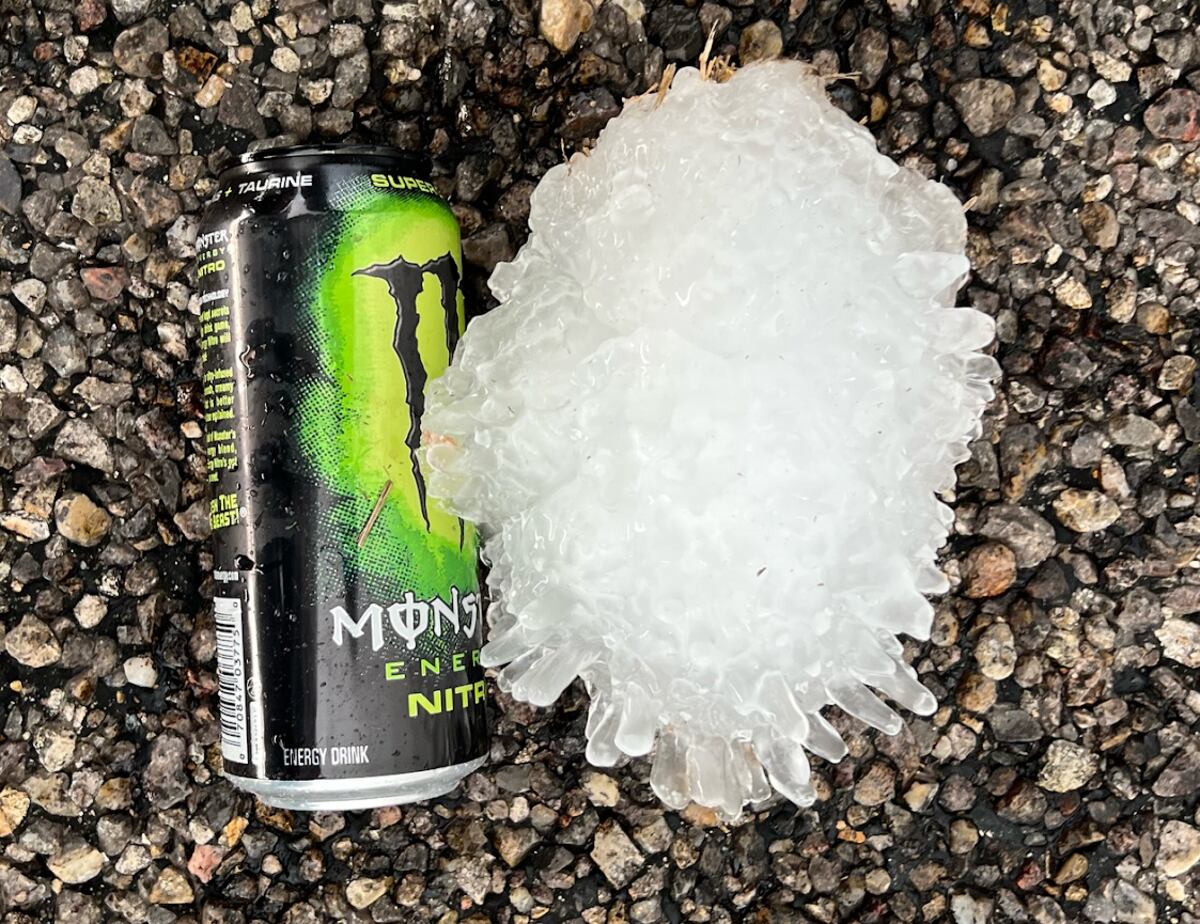
A monumental hailstone, discovered in a roadside ditch near Vigo Park in the Texas Panhandle on June 2, 2024, has been officially certified as the largest ever recorded in the state. Measuring an astonishing 7.1 inches in diameter, this colossal chunk of ice surpasses the previous Texas record by a significant margin. The finding was confirmed by the State Climate Extremes Committee, a body comprised of experts from the National Weather Service, NOAA, and the Office of the State Climatologist of Texas. This gargantuan hailstone is wider than a regulation NFL football and was found partially embedded in mud. Its discovery marks a new benchmark for extreme weather events in Texas, underscoring the potent forces that can manifest during severe thunderstorms. The official recognition by the State Climate Extremes Committee followed a rigorous analysis of photographic evidence and advanced scientific techniques. This ensures the record is based on robust data, solidifying its place in meteorological history.
Discovery Amidst Severe Storms
The record-shattering hailstone was first spotted by storm chaser Val Castor as he pursued a tornadic supercell thunderstorm across the Texas Panhandle. Castor initially noticed softball-sized hail on the ground but was drawn to a larger object in a ditch, which he initially mistook for a gallon jug of milk. Upon closer inspection, Castor realized the immense size of the ice formation. "I've seen lots of large hail in my 35 years of storm chasing, but this was by far the largest," he stated. To document its dimensions, he used a Monster Energy drink can as a reference object in photographs, as he lacked tools to measure the rapidly melting ice. Castor and fellow storm chasers meticulously photographed the hailstone from various angles. This visual evidence was crucial for the subsequent scientific analysis that would confirm its record-breaking size.
Scientific Validation of Size
The photographic evidence collected by storm chasers was submitted to the Insurance Institute for Business and Home Safety (IBHS) for detailed examination. Experts employed photogrammetry, a sophisticated technique that allows for precise 3D measurements to be derived from 2D images, along with AI-based analysis. These advanced methods yielded consistent results, with three separate estimates for the hailstone's diameter ranging from 7.06 to 7.25 inches. The most conservative and reliable measurement was determined to be 7.1 inches. Professor John Nielsen-Gammon at Texas A&M contributed a photogrammetric estimate of 7.16 inches, further supporting the official figure. The State Climate Extremes Committee unanimously voted to accept the Vigo Park hailstone as the new Texas state record, validating the scientific findings and the on-site observations.
Previous Records and Wider Hail Events
The 7.1-inch hailstone significantly eclipses the previous Texas state record of 6.46 inches, which was set by a hailstone discovered in Hondo in 2021. This new record highlights an escalation in the size of hailstones documented in the region. Beyond this singular record-breaking event, early June 2024 saw widespread severe weather across Texas. A supercell storm system entered the Hill Country around 9 a.m., producing quarter- to half-dollar-sized hail in Mason and Llano. Later, a second supercell rapidly intensified over Gillespie County, unleashing golf ball to baseball-sized hail in Willow City, causing roof damage and cracking windshields. Radar estimates suggested that some areas might have experienced grapefruit-sized hail. The across the state, with the largest documented hail size near as baseball-sized. These events were attributed to a late-season cold front that created volatile atmospheric conditions.
Implications of Extreme Hail
Hailstones of the magnitude of the Vigo Park specimen pose a serious threat to property and infrastructure. Their immense size and weight can cause catastrophic damage to homes, including severe roof damage and broken windows. Vehicles are also highly vulnerable, with windshields and body panels easily shattered or dented. Beyond direct property damage, such extreme weather events can impact agriculture, potentially destroying crops and leading to significant economic losses for farmers. The sheer force of large hailstones can flatten fields in a matter of minutes. While the hail experienced across much of Texas during this period was not on the scale of the record-breaking stone, its occurrence serves as a stark reminder of the destructive potential of severe weather, particularly during the spring and early summer months in the region.
Future Weather Outlook
Forecasters anticipate the possibility of additional storms in the coming days, with a potential for heavy rainfall. While severe weather is expected to be somewhat less prevalent in the immediate forecast, the return of activity before the end of the week is not ruled out. Another cold front is anticipated on the horizon, suggesting that the conditions conducive to severe weather may persist. The dynamic nature of Texas weather patterns means that residents must remain vigilant and prepared for a range of atmospheric events. The record-breaking hailstone, though a singular event, underscores the importance of robust weather monitoring and preparedness. As climate patterns evolve, understanding and documenting these extreme occurrences become increasingly vital for public safety and infrastructure resilience.
The bottom line
- A 7.1-inch diameter hailstone discovered on June 2, 2024, near Vigo Park, Texas, is the largest ever recorded in the state.
- The State Climate Extremes Committee officially verified the hailstone's size using photogrammetry and AI analysis.
- The record surpasses the previous Texas mark of 6.46 inches, set in 2021.
- Storm chaser Val Castor found the hailstone while pursuing a supercell thunderstorm, documenting its size with a beverage can.
- Large hail, including baseball-sized stones, was reported in multiple Texas locations during early June 2024.
- Hailstones of this magnitude can inflict severe damage on homes, vehicles, and crops.




Sunrisers Hyderabad Ascend to IPL Summit After Dominating Punjab Kings

Arsenal Eyes Double as Champions League Final Looms
Atlético Madrid exit Champions League as Arsenal reach first final in 20 years
