Black rain falls on Russian town after Ukrainian drone strikes on Tuapse refinery
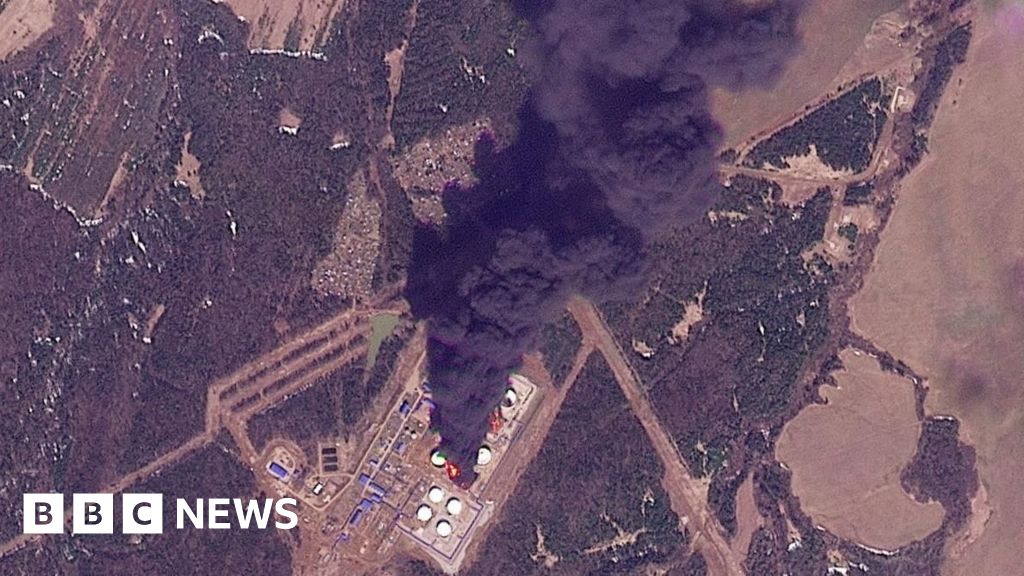
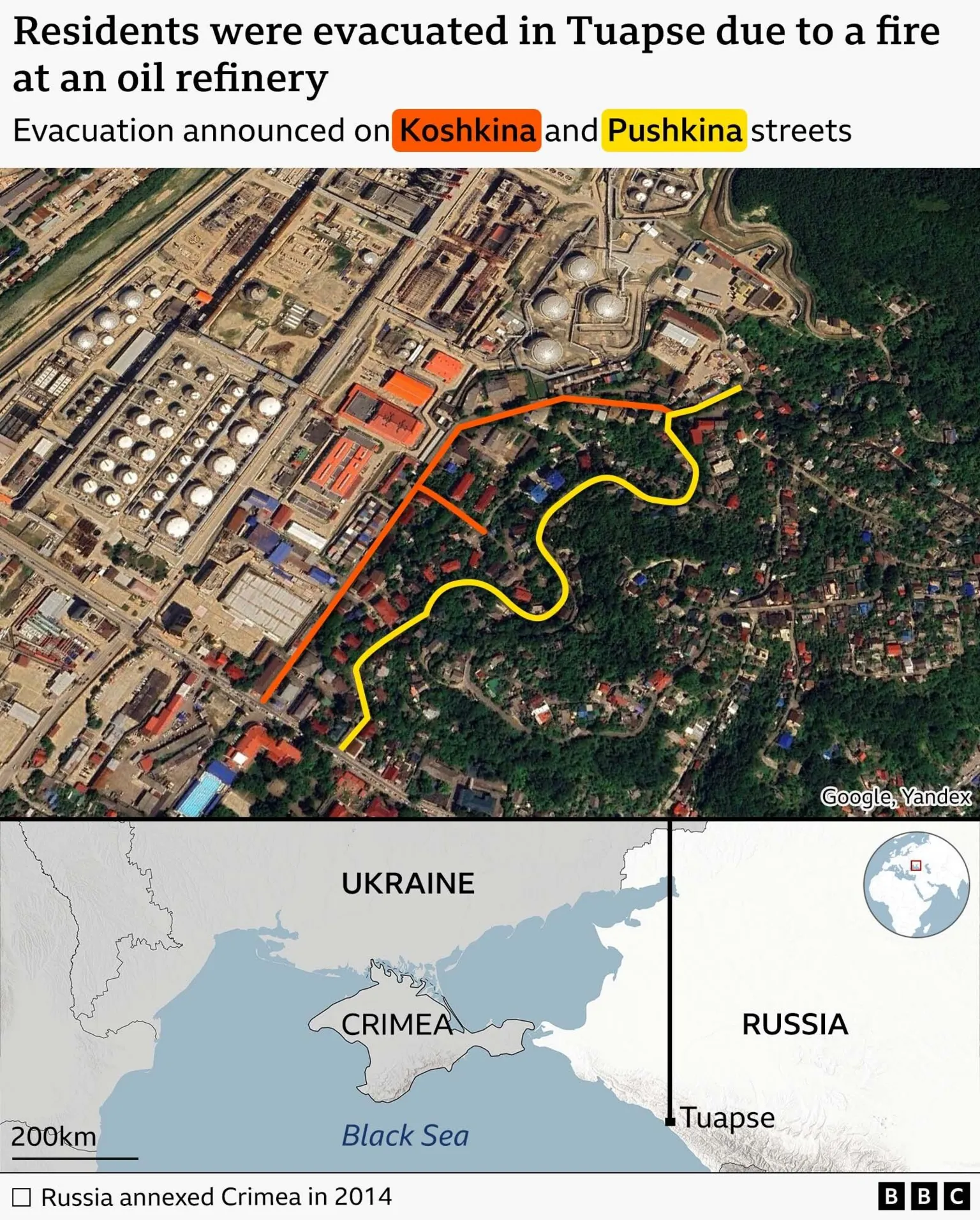
A series of three Ukrainian drone attacks on one of Russia's largest refineries has caused an ecological disaster, with toxic black rain coating the town of Tuapse and animals covered in oil.

AUSTRALIA —
Key facts
- Ukrainian drones struck the Tuapse refinery on April 16, April 20, and a third time in late April.
- The April 16 fire lasted two days; the April 20 fire lasted five days.
- Air analysis showed benzene, xylene, and soot concentrations three times above safe levels.
- Black rain fell on Tuapse, coating cars, animals, and surfaces with oily residue.
- Volunteers set up animal cleanup centres for cats, dogs, and birds covered in oil.
- Ukraine's Security Service (SBU) claimed responsibility for the strikes.
- The Kremlin announced a scaled-back Victory Day parade due to the 'terrorist threat' from Ukraine.
- Putin proposed a one-day ceasefire on May 9 during a 90-minute call with Trump.
Toxic fallout from repeated strikes
When cleanup volunteer Sergei Solovev arrived in Tuapse, on Russia's Black Sea coast, an unpleasant odour hung in the air and everything was coated in a layer of black grime. “I saw train carriages covered in residue from the black rain and animals. It’s all very toxic,” he told Al Jazeera. “And the smell was oily.” Black rain, an unnatural weather phenomenon where water droplets blackened by soot and ash fall from the sky, has now fallen on parts of Russia. It was previously seen in Hiroshima after the 1945 atomic bomb, in Tehran, and in Kuwait during the 1991 Gulf War when oilfields were set ablaze. Over the past couple of weeks, Tuapse has been hit by a series of three Ukrainian drone strikes targeting its refinery, one of the largest in Russia. The attacks, aimed at hurting Russia's oil industry, have caused an ecological disaster in a war that has devastated the environment.
Chronology of attacks and fires
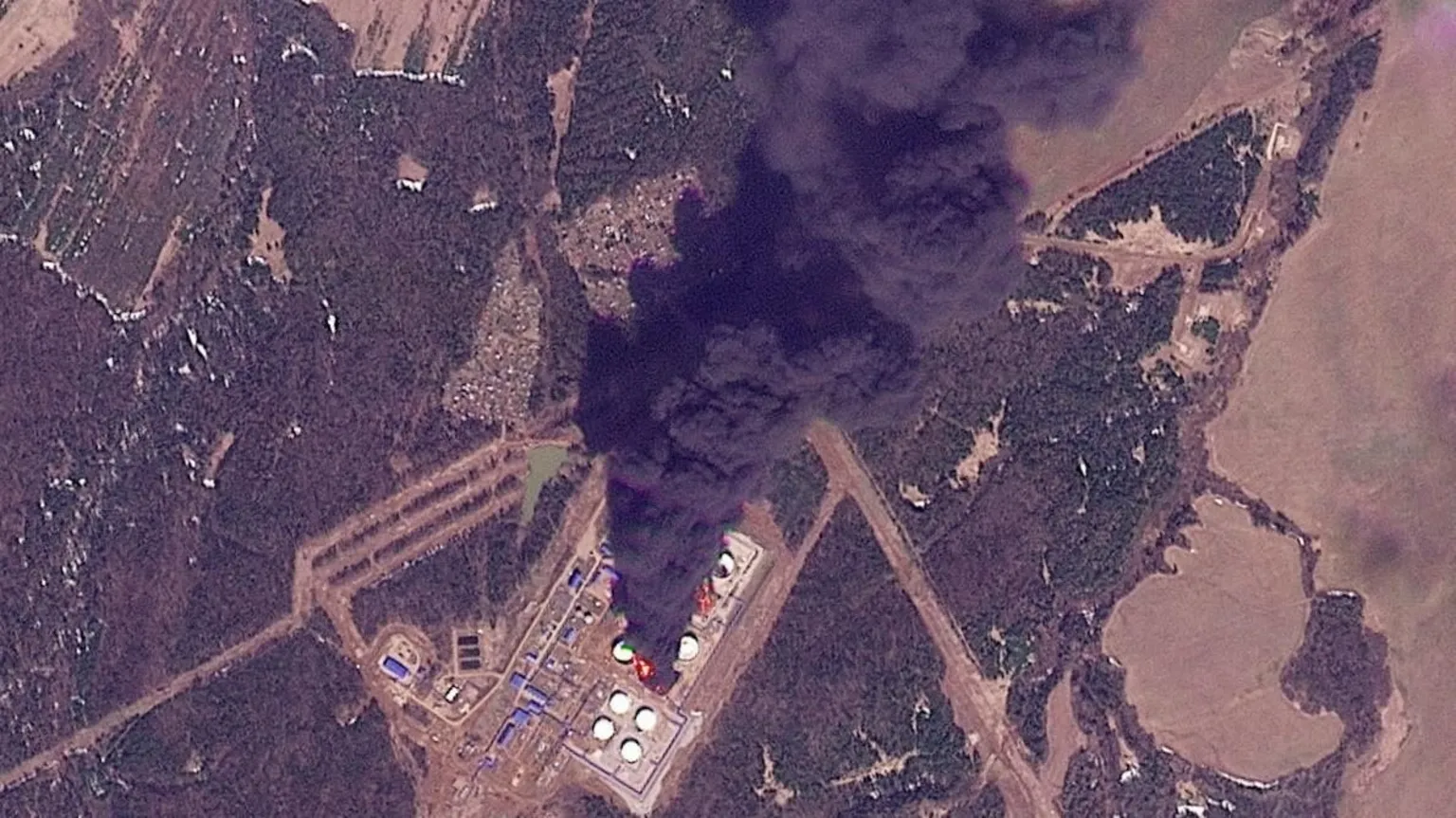
The first strike came on April 16, causing a fire that lasted two days. Four days later, on April 20, the refinery was struck again, leaving a massive plume of thick smoke billowing into the sky. This time, the fire lasted for five days. Smoke from the fire released poisonous chemicals, and a subsequent analysis of the air around the town found that concentrations of benzene, xylene, and soot were three times above safe levels. No more data was published after that, but residents were advised to stay indoors, keep their windows shut, and leave home wearing a mask. Meanwhile, a black rain began to fall. “The rain covered all the cars and animals,” said Elena Lugovenko, a local volunteer. “All the animals are covered in oil. Volunteers have set up animal cleanup centres.”
Impact on wildlife and environment
Volunteers collected distressed animals, including cats, dogs and birds, to wash away the muck before sending them to shelters. Oil spills are particularly dangerous for birds, which find it extremely difficult, if not impossible, to fly. It is also poisonous, and the feathered creatures might accidentally swallow it as they try to preen themselves loose. On local Telegram chat groups, people shared photos of oil slicks in the sea, black puddles on the road and stray animals covered in oily droplets. The ecological toll adds a new dimension to the conflict, highlighting the environmental consequences of targeting industrial infrastructure.
Deepening Ukrainian reach into Russia
The Tuapse attacks are part of a broader campaign by Ukraine to strike Russian oil infrastructure deep inside the country. Ukrainian drones have also hit oil infrastructure in Perm, more than 1,500 km from the front line. Ukraine's Security Service (SBU) said the target in Perm was an Lukoil-owned oil refinery - one of the largest in Russia. Dramatic images shared on social media showed huge columns of black smoke and flames rising into the air, and a chemical emergency alert was issued for some parts of Perm. City authorities later claimed the alert was merely a test. Earlier this week, the SBU said it had hit a strategic hub for Russia's sprawling oil pipeline system, also in Perm. Russian authorities have mostly downplayed the significance of these attacks, but the fact Ukrainian drones can now regularly reach deep into Russian territory is difficult to conceal, and has been a cause for concern for Moscow.
Kremlin scales back Victory Day amid 'terrorist threat'
Despite Moscow's downplaying of the seriousness of the attacks, on Wednesday the Kremlin announced it was paring back its yearly military parade to mark Victory Day - the defeat of Nazi Germany in WW2, on 9 May - due to what it said was the 'terrorist threat' from Ukraine. In a 90-minute phone call with Donald Trump later that evening, Vladimir Putin proposed a one-day ceasefire to be observed that day. 'Trump actively supported this initiative, noting that the holiday marks our shared victory,' against Nazi Germany, Putin's diplomatic advisor Yuri Ushakov said. Ukraine's Volodymyr Zelensky said Kyiv would ask the US for more information about the Kremlin's ceasefire offer. 'We will clarify what exactly this is about - a few hours of security for a parade in Moscow, or something more,' Zelensky said.
Wider context of the oil infrastructure campaign
The attack on the Lukoil facility in Perm is the latest in a series of successful strikes launched by Ukraine on Russian oil infrastructure in response to Russia's continued aggression. Moscow continues to target Ukrainian cities with aerial attacks on a regular basis and on Wednesday night killed at least three people and injured 79, including a child. Ukraine's strategy of hitting Russian oil refineries and pipelines aims to disrupt the Kremlin's war machine and reduce its ability to fund the conflict. The Tuapse refinery, one of Russia's largest, is a key node in the country's energy export network, and its repeated targeting underscores the escalating nature of the war.
Open questions and outlook
The ceasefire proposal by Putin raises questions about whether it is a genuine step toward de-escalation or a tactical move to secure a propaganda victory on Victory Day. Zelensky's cautious response indicates Kyiv is wary of being drawn into a trap. Meanwhile, the environmental damage in Tuapse will take years to remediate, and the health of residents remains at risk from lingering toxins. The black rain serves as a grim reminder of the war's far-reaching consequences, extending beyond the battlefield to the very air and water of Russia's own territory.
The bottom line
- Ukrainian drones struck the Tuapse refinery three times in April, causing fires lasting up to five days and releasing toxic chemicals.
- Air pollution levels of benzene, xylene, and soot reached three times safe limits, leading to a black rain that coated the town.
- Volunteers are cleaning oil-covered animals, highlighting the ecological disaster caused by the attacks.
- Ukraine's strikes on Russian oil infrastructure have reached deep into Russia, including Perm, over 1,500 km from the front line.
- The Kremlin scaled back its Victory Day parade citing the 'terrorist threat' from Ukraine, and Putin proposed a one-day ceasefire on May 9.
- Zelensky said Kyiv would seek clarification from the US on the ceasefire offer, questioning its sincerity.


Melbourne Storm coach Craig Bellamy diagnosed with neurodegenerative disorder

Timberwolves Lose DiVincenzo for Season, Edwards’ Knee Injury Clouds Playoff Run

Raiders reshuffle backline as Ethan Strange's ankle injury forces late changes against Titans