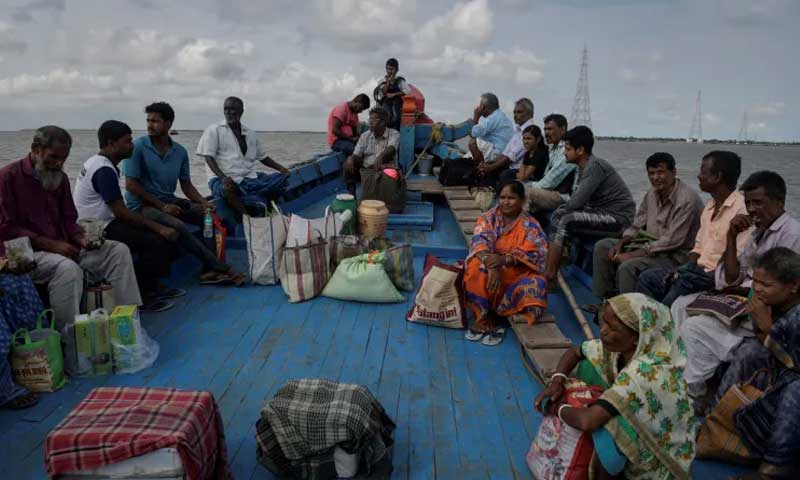
Bangladesh India Border: everything we know so far
India wants to the border with Bangladesh badly — even if it takes venomous snakes or crocodiles.

BANGLADESH —
India wants to the border with Bangladesh badly Bangladesh India Border has emerged this Friday as one of the stories drawing attention in Bangladesh.
Key facts
- India wants to the border with Bangladesh badly — even if it takes venomous snakes or crocodiles.
- New Delhi, India – Indian officials have floated a controversial plan to introduce apex predators such as crocodiles and venomous snakes into riverine stretches along the Bangladesh border, to act as natural deterrents against undocumented migration and smuggling in places where erecting fencing is difficult.
- India’s 4,096km-long (2,545-mile) border with Bangladesh runs through some challenging terrain – and New Delhi has found some stretches impossible to fence.
- In an internal communication dated March 26, India’s Border Security Force (BSF), which patrols international borders with Pakistan and Bangladesh, ordered personnel at its headquarters on the eastern and northeastern fronts to explore “the feasibility of deploying reptiles in vulnerable riverine gaps”.
- India's Border Security Force faces a backlash over a "sinister" proposal to deploy crocodiles and venomous snakes as natural deterrents in riverine gaps along the Bangladesh border.
What we know
Going deeper, New Delhi, India – Indian officials have floated a controversial plan to introduce apex predators such as crocodiles and venomous snakes into riverine stretches along the Bangladesh border, to act as natural deterrents against undocumented migration and smuggling in places where erecting fencing is difficult.
On the substance, India’s 4,096km-long (2,545-mile) border with Bangladesh runs through some challenging terrain
Beyond the headlines, In an internal communication dated March 26, India’s Border Security Force (BSF), which patrols international borders with Pakistan and Bangladesh, ordered personnel at its headquarters on the eastern and northeastern fronts to explore “the feasibility of deploying reptiles in vulnerable riverine gaps”.
More precisely, India's Border Security Force faces a backlash over a "sinister" proposal to deploy crocodiles and venomous snakes as natural deterrents in riverine gaps along the Bangladesh border.
It is worth noting that the government’s latest move to fence the border with Bangladesh has alarmed human rights activists and wildlife conservationists alike in India.
By the numbers
At this stage, the partition of British India in 1947 sliced through the region of Bengal, with people on either side of the border still sharing cultural and ethnic roots.
On a related note, New Delhi has fenced nearly 3,000km of the border.
Going deeper, In the state of Assam, for example, Choudhury said, India set up foreign tribunal courts – quasi-judicial bodies established to determine whether a person suspected of being an illegal migrant is a “foreigner” or an Indian citizen under the Foreigners Act of 1946.
On the substance, Security along the 4000-kilometre border, which runs through plains, hills, forests and rivers, has been a contentious topic for decades.
What they're saying
“It is the Achilles’ heel in the India-Bangladesh border: the river,” he told Al Jazeera. “This core impulse comes from the fact that the BSF has always found that the river on the border is practically impossible to fence.”
“This would be hilarious if it weren’t sinister and dangerous,” said Angshuman Choudhury, a researcher with a focus on northeastern and eastern Indian border states. “It’s absurd, right?”
“This [targeting Muslim Indians] is also a way of continuously keeping Bengali Muslims in the sense of ongoing dread that they might be stripped of citizenship and rendered stateless,” Mander added.
The wider context
On a related note, the India-Bangladesh border runs along the Indian states of West Bengal, Tripura, Assam, Meghalaya and Mizoram.
Going deeper, Crocodiles are not native to the riverine stretches along the India-Bangladesh border, Rathin Barman, chief of strategy and liaison at the Wildlife Trust of India, told Al Jazeera.
On the substance, the swampy stretches along the India-Bangladesh border are also prone to flooding, which could result in poisonous snakes spreading into residential areas, exposing the local communities, particularly those involved in fishing, to grave risk.
Beyond the headlines, INDIA’S BORDER SECURITY FORCE (BSF) is exploring an idea: releasing crocodiles and venomous snakes along riverine stretches of the country’s border with Banglad.
More precisely, the nature of the proposal reinforces a long-standing view in Bangladesh that India views the shared border primarily through a security lens while holding little regard for the human consequences.
The bottom line
- India’s 4,096km-long (2,545-mile) border with Bangladesh runs through some challenging terrain – and New Delhi has found some stretches impossible to fence.
- The government’s latest move to fence the border with Bangladesh has alarmed human rights activists and wildlife conservationists alike in India.
- The India-Bangladesh border runs along the Indian states of West Bengal, Tripura, Assam, Meghalaya and Mizoram.