Hantavirus Spreads on Cruise Ship, WHO Downplays Pandemic Risk
Authorities race to trace dozens of disembarked passengers amid confirmed cases and three deaths.
BANGLADESH —
Key facts
- Five of eight suspected hantavirus cases on the MV Hondius have been confirmed.
- Three individuals have died from the virus, including a 69-year-old Dutch woman.
- At least 29 passengers of 12 nationalities disembarked on April 24, before isolation measures.
- Hantavirus typically spreads from rodents, but human-to-human transmission has been documented in this outbreak.
- The WHO assesses the public health risk of the outbreak as low.
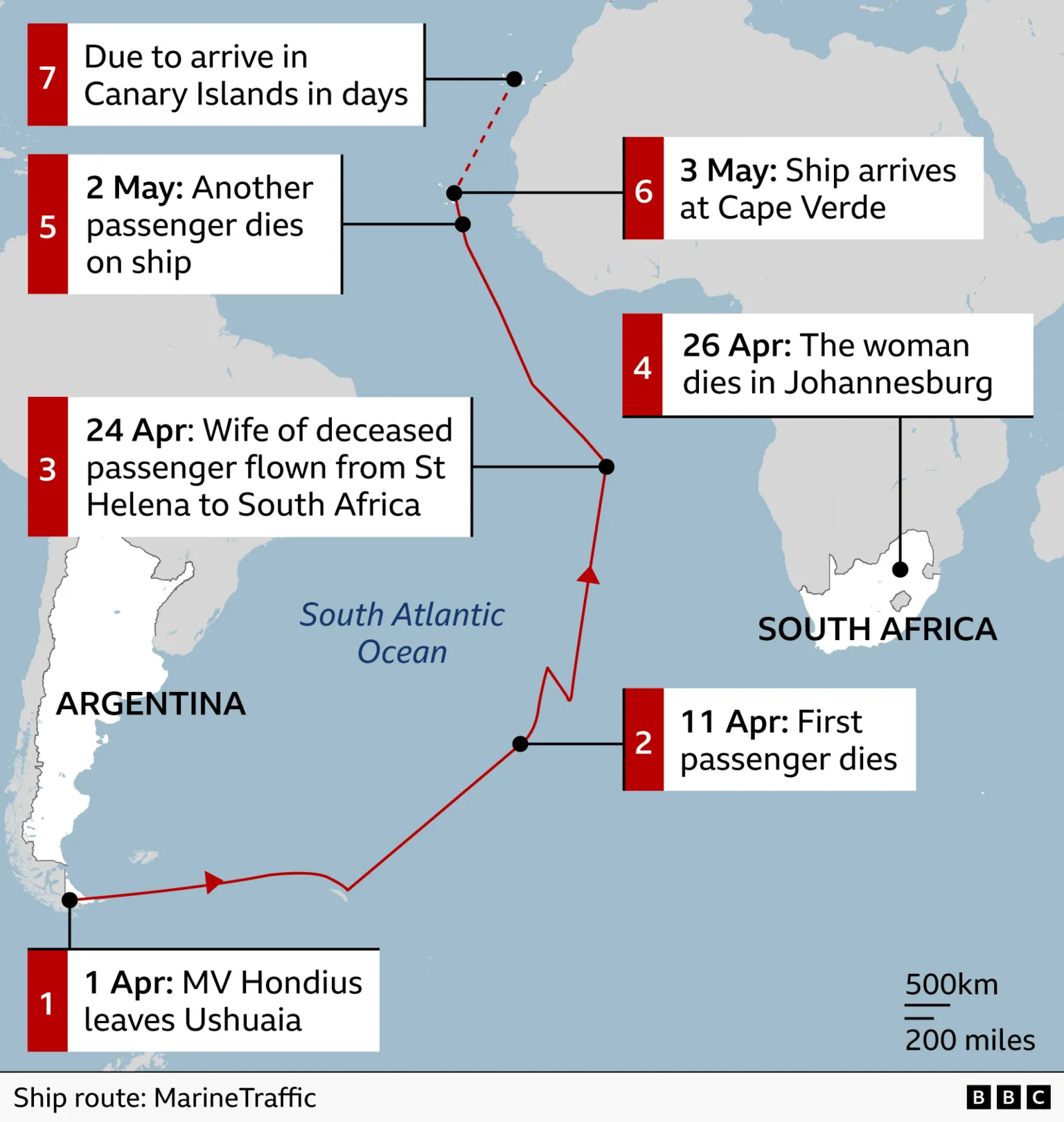
- The cruise ship MV Hondius began its journey on April 1 in Ushuaia, Argentina.
- The incubation period for the Andes virus can be up to six weeks.
Global Health Authorities Mobilize Amid Cruise Ship Outbreak
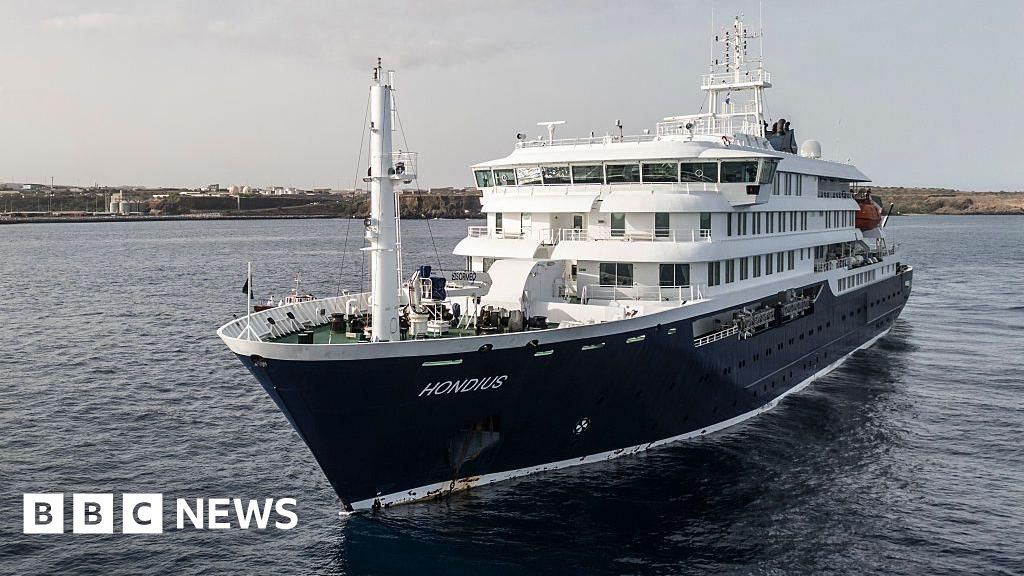
Health authorities worldwide are urgently attempting to locate dozens of individuals who recently disembarked from the Dutch cruise ship MV Hondius, the centre of a concerning hantavirus outbreak. The virus has claimed three lives, prompting a global health alert and a race against time to trace passengers before comprehensive isolation measures were put in place. The luxury vessel, operated by Oceanwide Expeditions, embarked on its voyage on April 1 from Ushuaia, Argentina, with approximately 150 passengers and crew members hailing from 28 different countries. The situation escalated when a significant number of passengers, at least 29 individuals representing 12 nationalities, left the ship on April 24, the same day as the first reported fatality. This departure occurred before the full extent of the outbreak was understood or contained. The World Health Organization (WHO) has moved swiftly to address public concerns, emphasizing that the current situation does not signal the onset of a pandemic. Experts within the UN health agency are drawing a clear distinction between hantavirus and previous global health crises, such as Covid-19, highlighting fundamental differences in transmission patterns.
Confirmed Cases and Fatalities Emerge
As of Thursday, the WHO confirmed that five out of eight suspected hantavirus cases linked to the MV Hondius have been verified. The outbreak has resulted in three confirmed deaths. Among the deceased is a 69-year-old Dutch woman, whose case has been definitively attributed to the virus. Her Dutch husband and a German woman, also found to have the virus, are subjects of ongoing investigation. This outbreak is particularly notable because, while hantavirus typically originates from rodents, this instance marks the first documented human-to-human transmission of the virus. This novel transmission pathway has added a layer of complexity for health officials managing the situation. The ship, which began its journey on April 1, was scheduled to reach Spain's Canary Islands on May 10. The disembarkation of passengers on the island of St Helena on April 24, prior to the full confirmation of cases, has created a challenge for contact tracing efforts.
WHO Reassures on Risk, Details Transmission
Dr. Maria van Kerkhove, an infectious disease epidemiologist at the WHO, stated during a news briefing that the hantavirus outbreak aboard the MV Hondius is fundamentally different from the Covid-19 pandemic. She explained that hantavirus spreads through "close, intimate contact," a much more restricted mode of transmission compared to respiratory viruses like Covid-19 or influenza. In response to the confirmed cases, authorities have implemented precautionary measures on the vessel. "Everyone to wear a mask" has been advised for those on board the MV Hondius. Furthermore, individuals in direct contact with or caring for suspected cases are instructed to "wear a higher level of personal protective equipment." WHO Director-General Tedros Ghebreyesus echoed this sentiment, assessing the overall public health risk as "low." He noted that the initial confirmed cases had a travel history that included Argentina, Chile, and Uruguay, with visits to areas known to harbour rodent species that carry the virus. The WHO is actively collaborating with relevant national authorities to monitor individuals who may have had contact with affected passengers.
Tracing Disembarked Passengers Globally
The departure of at least 29 passengers from the MV Hondius on April 24, following the first fatality, has initiated a global effort to trace their movements. These individuals, representing 12 nationalities, are believed to have returned to their home countries, prompting health agencies in Australia, North America, Europe, and Asia to monitor their well-being. Oceanwide Expeditions confirmed that the 29 individuals and the body of the first deceased passenger disembarked at the British territory of St Helena. The company stated that the first confirmed case was not reported until May 4, underscoring the timing challenge. Most, if not all, of these passengers are thought to have returned home, with reports indicating passengers have gone to Australia, Taiwan, North America, England, and the Netherlands. In Switzerland, a passenger who travelled to the country is reportedly being treated in a Zurich hospital after testing positive for the virus, though Swiss authorities maintain there is no public risk. The US Centers for Disease Control and Prevention (CDC) is monitoring passengers who travelled to Georgia, California, and Arizona. The UK Health Security Agency (UKHSA) is observing two passengers who returned to Britain and are self-isolating, though they are currently asymptomatic. Professor Robin May of the UKHSA suggested that these individuals and others returning to the UK pose minimal risk.
Medical Evacuations and Potential New Cases
Three individuals who exhibited symptoms and were medically evacuated from the ship are currently receiving treatment in the Netherlands. These patients include a 41-year-old doctor, a 65-year-old German passenger, and Martin Anstee, a 56-year-old British expedition guide. Adding to the complexity, the a woman who was not on board the MV Hondius is being tested for hantavirus and is under isolation in an Amsterdam hospital. A positive result for this individual would mark the first known case of infection outside the cruise ship environment related to this specific outbreak. The WHO has highlighted that the incubation period for the Andes virus, a strain of hantavirus, can extend up to six weeks. This extended incubation period means that additional cases may yet emerge among those who were on the ship or had close contact with infected individuals.
Understanding Hantavirus and Its Spread
Hantaviruses are a group of viruses primarily harboured by rodents, which can infect humans and lead to a range of severe illnesses. These can include flu-like symptoms, progressing to Hantavirus Pulmonary Syndrome (HPS) and potentially respiratory failure. The Andes hantavirus, implicated in this outbreak, is known to transmit between humans, but its contagiousness is significantly lower than that of Covid-19. The typical mode of transmission from rodents to humans involves inhaling virus particles from dried rodent urine, feces, or saliva. Less commonly, transmission can occur through bites from infected rodents, or direct contact with rodent excreta followed by touching the face. The distinction between rodent-borne and human-to-human transmission is critical for public health responses. While rodent control is a primary strategy for preventing hantavirus infections, the documented human-to-human spread in this instance necessitates enhanced surveillance and isolation protocols for close contacts.
Navigating the Path Forward
The ongoing efforts to trace and monitor passengers who disembarked from the MV Hondius represent a critical phase in containing the spread of the Andes virus. Health authorities globally are engaged in a delicate balancing act: ensuring public safety without causing undue alarm, particularly given the WHO's assessment of a low overall risk. The situation underscores the interconnectedness of global travel and public health. Even with stringent protocols, the potential for infectious agents to move across borders remains a persistent challenge, necessitating robust international cooperation and rapid information sharing. As more time passes and the incubation period for the Andes virus continues, the focus will remain on vigilance, early detection, and appropriate medical management for any individuals who develop symptoms, thereby mitigating the long-term impact of this cruise ship outbreak.
The bottom line
- The WHO has confirmed five hantavirus cases on the MV Hondius, with three deaths attributed to the virus.
- Human-to-human transmission of hantavirus has been documented for the first time in this outbreak, though it is less contagious than Covid-19.
- Dozens of passengers disembarked before isolation measures were fully implemented, prompting global tracing efforts.
- The WHO assesses the public health risk of the outbreak as low and states it is not comparable to a Covid-19 pandemic.
- The incubation period for the Andes virus can be up to six weeks, meaning more cases may be identified.
- Three individuals have been medically evacuated to the Netherlands for treatment.




Eintracht Frankfurt Set to Dismiss Manager Albert Riera Amidst Squad Discord

Maruti Suzuki Accelerates 2026 Product Offensive with Brezza Facelift and New MPV
/https%3A%2F%2Fsportsmole-media-prod.s3.gra.io.cloud.ovh.net%2Fuploads%2F2026%2F04%2Ficonsport-362644-0332-1-69e8905eedb42068810882.jpg)
Rayo Vallecano Reach First European Final After Beating Strasbourg