Bahrain and Jeddah Races Cancelled: What Might Have Been in F1's New Era
Analysis of how the abandoned Middle Eastern rounds could have unfolded, revealing critical safety and performance challenges with the 2026 regulations.

CANADA —
Key facts
- Formula 1 cancelled the Bahrain and Saudi Arabian Grands Prix shortly after the start of the 2026 season.
- Pre-season testing in Bahrain showed the Sakhir circuit is 'harvest-rich' with many hard braking zones.
- Charles Leclerc's best test lap (1m31.992s) was over two seconds slower than Oscar Piastri's 2025 pole (1m29.841s).
- Drivers must keep engine revs high to maintain turbo spin due to the removal of the MGU-H.
- Leclerc used first gear through Turn 1 instead of second, gaining 2000-3000 rpm, and kept 5% throttle in slow corners.
- Carlos Sainz warned that racing with open wings at 340 kph in Jeddah could cause a high-speed crash.
- The Jeddah circuit features only one hard braking zone (Turn 1); all other corners are high-to-medium speed.
- Bernd Maylander (safety car driver) might have led more laps than the winner in Jeddah due to expected incidents.
A Season Disrupted: The Cancelled Middle Eastern Rounds
Formula 1 was forced to cancel two rounds in the Middle East shortly after the start of the 2026 season, wiping the Bahrain Grand Prix and the Saudi Arabian Grand Prix from the calendar. The decision removed what would have been the third and fourth races of the year, leaving a void in the schedule and depriving fans of a chance to see the new regulations in action on two contrasting circuits. Our reporters have reconstructed how those races might have played out, drawing on pre-season testing data, circuit characteristics, and emerging performance trends.
Bahrain: A Familiar Spectacle with New Energy Demands
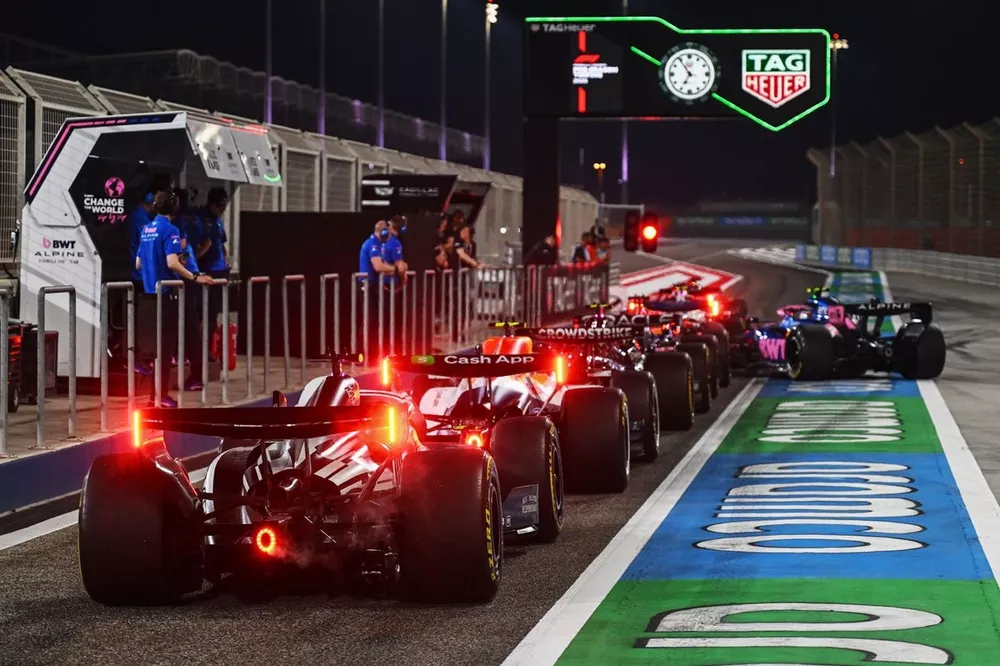
Pre-season testing in Bahrain revealed that the Sakhir circuit is a 'harvest-rich' track, thanks to its collection of hard braking zones that allow cars to recover energy. This characteristic suggested that the race would have resembled the Chinese Grand Prix, where energy management was less of a concern and wheel-to-wheel racing felt less 'artificial' than on energy-poor circuits. However, the tests also highlighted a new challenge: drivers must keep engine revs high to ensure the turbo continues to spin, as the removal of the MGU-H means the turbo can no longer spool instantaneously. A comparison of lap times underscores the performance shift. Charles Leclerc's best lap during testing was a 1m31.992s, while Oscar Piastri's pole position time from 2025 was a 1m29.841s — a gap of over two seconds. The methods to maintain turbo speed were evident: Piastri ran in second gear through the opening corner, while Leclerc used first gear for an extra 2000-3000 rpm, and the Monegasque also kept about 5% throttle through slower corners to sustain engine speed. Despite these adjustments, Bahrain would likely have delivered a familiar racing spectacle, perhaps with more side-by-side moments through Turns 11 and 12 as drivers made different choices on power deployment.
Jeddah: A Safety Nightmare in Waiting
If Bahrain might have reassured those skeptical of F1's new era, Jeddah would have done the opposite. The circuit features only one hard braking zone — at Turn 1 — with every other corner being high-to-medium speed, creating a 'disaster waiting to happen' according to our analysis. The combination of notoriously troublesome sightlines between barriers and drivers operating at part-throttle, super-clipping, or deploying power would have likely led to frequent safety car interventions. Bernd Maylander, the safety car driver, might have led more laps than the race winner, and the medical centre could have been overwhelmed. Carlos Sainz voiced his concerns in China, warning that racing with open wings on the straights at 340 kph would inevitably lead to a big crash at very high speeds. 'Places like Jeddah, with open wings on this... I don't like it, I don't like having to race flat out at 340 kph, with no downforce in the car and the wings open,' he said. On safety grounds, it is probably a net positive that F1 did not go to Jeddah with the regulations still in a nascent stage. Alternatively, drivers might have resorted to running around in a low power state with nowhere to charge up, further diminishing the spectacle.
The Technical Challenge: Turbo Lag Without MGU-H
The removal of the MGU-H has fundamentally altered how drivers must manage the engine. Without this component, the turbo no longer has the capacity to spool instantaneously; maintaining engine speeds — and by association, exhaust output — is critical to keep the turbo rotating. This was evident in Bahrain testing, where drivers employed different gear selections and throttle inputs to sustain revs. The need to keep the turbo spinning adds a layer of complexity to corner exit and straight-line speed, potentially affecting overtaking and race strategy.
What the Cancellation Means for the Season
The cancellation of both races leaves a gap in the calendar and removes two key data points for teams to understand the new regulations. Bahrain's harvest-rich nature would have provided a benchmark for energy recovery, while Jeddah's high-speed layout would have tested the limits of the cars' aerodynamic and power unit configurations. The decision to cancel was likely influenced by safety concerns, particularly for Jeddah, where the combination of high speeds, open wings, and limited braking zones posed an unacceptable risk. The season now continues with fewer rounds, compressing the development race and increasing the importance of every remaining race.
Outlook: Lessons for Future Circuits
The contrasting potential outcomes in Bahrain and Jeddah highlight the challenges facing Formula 1 as it adapts to the 2026 regulations. Circuits with multiple hard braking zones may produce closer racing, while high-speed tracks could become safety hazards or processional affairs. The FIA and F1 will need to consider these factors when scheduling future races, possibly avoiding circuits with predominantly high-speed corners until the regulations mature. For now, the cancellation of the Middle Eastern rounds serves as a reminder that innovation in motorsport often comes with unforeseen consequences.
The bottom line
- Bahrain would have offered a familiar racing spectacle with more side-by-side moments, while Jeddah posed serious safety risks due to high speeds and limited braking zones.
- The removal of the MGU-H forces drivers to maintain high engine revs to keep the turbo spinning, affecting corner exit and power deployment.
- Carlos Sainz explicitly warned that racing with open wings at 340 kph in Jeddah could lead to a high-speed crash.
- Leclerc's test lap was over two seconds slower than Piastri's 2025 pole, indicating a significant performance drop under the new regulations.
- The cancellation of both races removes critical data points for teams and compresses the development race for the remainder of the season.
- Future circuit selection may need to prioritize tracks with hard braking zones to ensure safety and competitive racing under the 2026 rules.




LaCombe's Defensive Mastery and Ducks' Offensive Surge Oust Oilers in Six Games

Canadiens on brink of first series win since 2021 as Bell Centre awaits Game 6

NBA Playoffs: Knicks Seek Series Clincher in Atlanta as Three Game 6s Loom