Heroes of Might & Magic: Olden Era Launches to Over 1.5 Million Wishlists, Reviving Classic Turn-Based Strategy
The prequel set on planet Enroth marks a deliberate return to the series' 1999 peak, with a 25% launch discount and a 'Very Positive' Steam rating.

CANADA —
Key facts
- Olden Era surpassed 1.5 million Steam wishlists before launch, ranking among the platform's top-10 most-wishlisted titles.
- The game launched in Early Access with a 25% discount, quickly reaching top-3 best-sellers on Steam by revenue.
- Developer Unfrozen and publisher Hooded Horse brought on Jon Van Caneghem, former New World Computing executive producer, as a consultant.
- The game is a prequel set hundreds of years before the first Heroes of Might & Magic title, on the planet Enroth.
- Over 1,000 user reviews on Steam at launch gave the game a 'Very Positive' rating.
- The demo during Steam Next Fest achieved strong download numbers and high player retention across multiple sessions.
- Six factions are available: Temple, Hive, Schism, Dungeon, Grove, and Necropolis, each with unique unit trees and abilities.
A Return to Enroth and the 1999 Formula
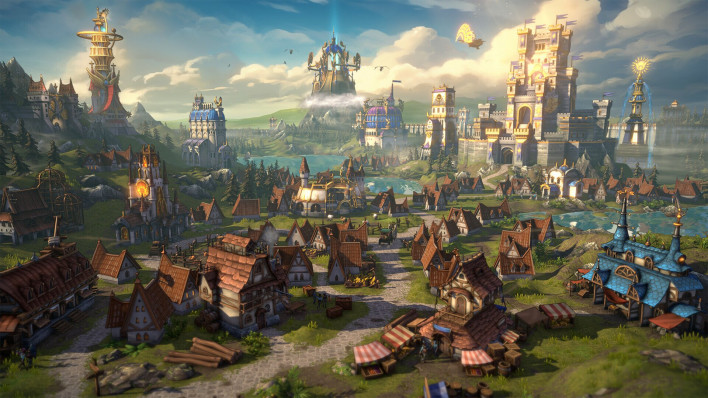
Heroes of Might & Magic: Olden Era launched into Early Access on Tuesday, immediately climbing to the top three best-sellers on Steam by revenue. The game, developed by Unfrozen and published by Hooded Horse, is a deliberate throwback to the series' golden age, specifically the 1999 third installment widely considered the franchise's peak. Set hundreds of years before the original game, Olden Era returns to the planet Enroth, the setting of the early titles. The development team brought on Jon Van Caneghem, the former New World Computing executive producer who oversaw the classic entries, to help steer the project's direction. The move signals a clear rejection of the series' recent trajectory under Ubisoft, which acquired the intellectual property after New World Computing dissolved and released Heroes of Might & Magic VI and VII to critical disappointment.
Pre-Release Momentum and Launch-Day Numbers
The game accumulated over 1.5 million wishlists on Steam ahead of release, placing it among the top ten most-wishlisted titles on the entire platform. That momentum was reinforced during Steam Next Fest, where the demo attracted strong download numbers and high player retention across multiple sessions. Within hours of launch, Olden Era had already garnered more than 1,000 user reviews on Steam, earning a 'Very Positive' rating. The combination of high wishlist counts and strong demo performance illustrates how modern discovery pipelines—particularly demos and platform visibility—can drive momentum for mid-to-large scale game releases.
Core Gameplay: Familiar Mechanics with Modern Refinements
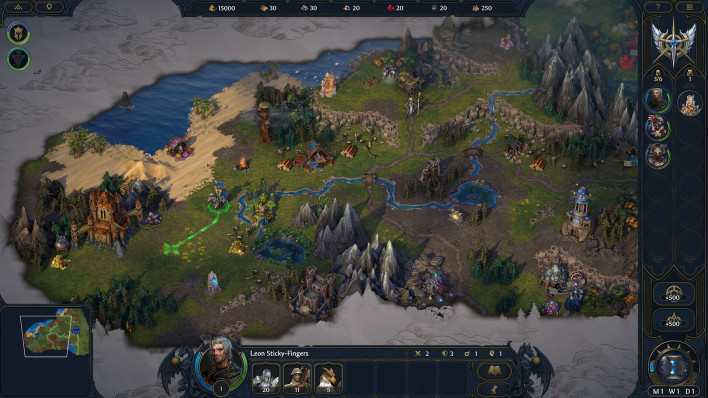
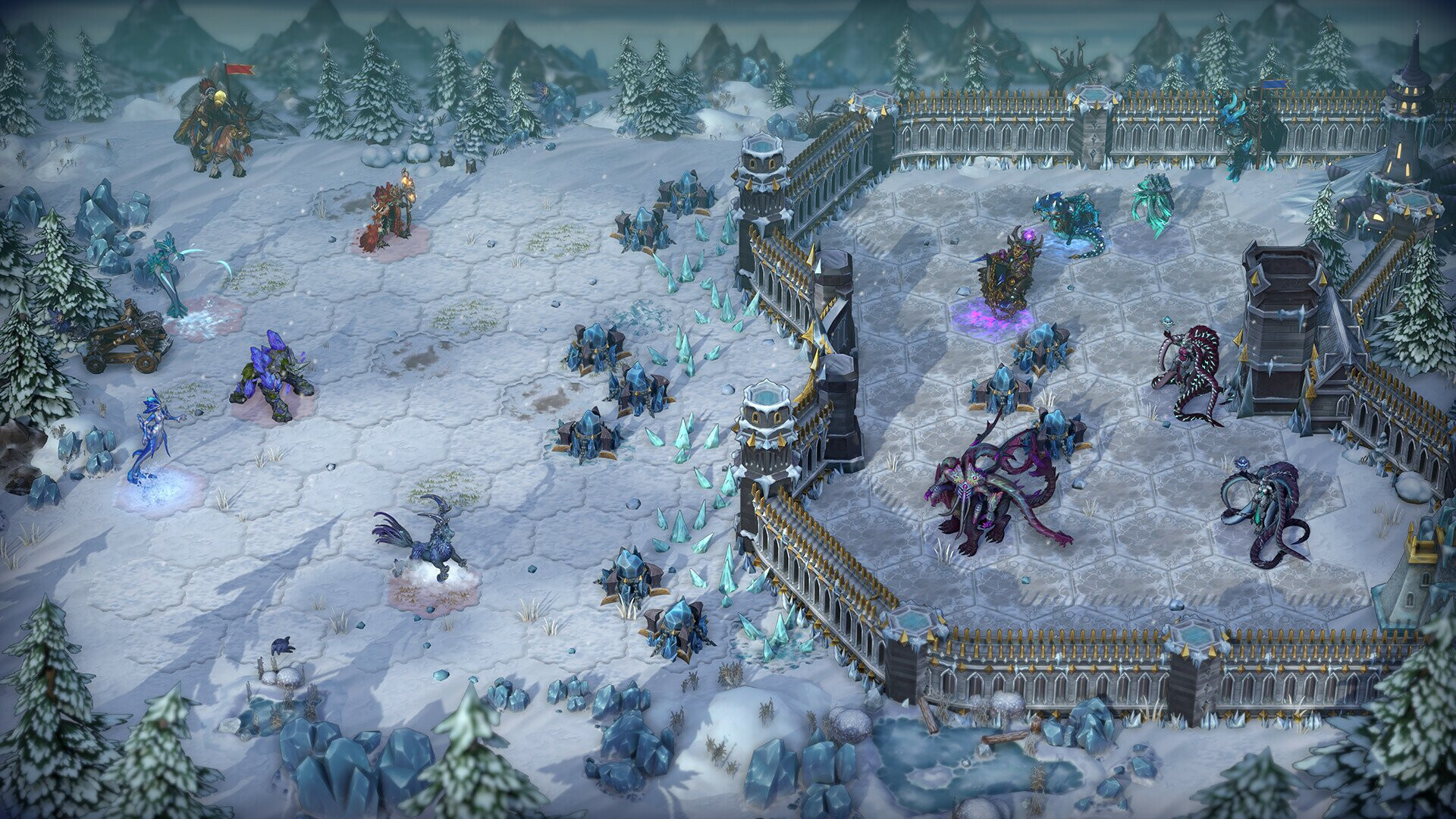
The turn-based strategy loop remains largely unchanged from the classic formula: players manage heroes and towns on a top-down overworld map, sending armies to gather resources, recruit troops, and engage in tactical grid-based battles. Resource management, faction identity, and map-driven progression are all intact, with updates focused on usability, pacing, and visual presentation rather than wholesale reinvention. One notable change is the combat system, which emphasizes initiative order and the ability to delay turns, adding tactical depth. Spells like Web and Ice Bolt that alter movement speed and initiative have become more valuable than in previous entries, where players could rely on simple buffs like Bless and Stoneskin. The battlefield itself includes traps and terrain features, though reviewers note that variety from fight to fight remains limited.
Six Factions, Distinct Identities, and Balance Challenges
Olden Era launches with six factions: Temple (reminiscent of the Haven knights), Hive (a new insectoid demonic force), Schism (an icy cult of elves who brought back extraplanar horrors), Dungeon, Grove, and Necropolis. Each faction has seven unit tiers, with two upgrade paths per unit, offering over 80 possible unit variants. Early feedback highlights the factions' distinct battle identities. The Hive's molten bugs excel in melee but suffer heavy losses, while the Dungeon offers a balanced mix of teleporting dark elves, minotaurs, and dragons. The Grove requires significant investment to unlock its units' full potential, and the Schism's power scales with victories. balance is an ongoing concern in Early Access, with some factions feeling weaker than others and unit upgrade choices not always presenting meaningful trade-offs.
Heroes, Spells, and Settlement Progression: Mixed Reception
Heroes act as army leaders with passive abilities and spells, but reviewers describe them as bland despite strong portrait art. Spells are learned semi-randomly from a shared pool, making it difficult to build a coherent spell-based strategy. The subclass system, which requires collecting five specific skills from a random pool to evolve, has proven frustrating—one reviewer achieved the evolution only twice in 25 hours of play. Settlements serve as bases and offer a linear upgrade path: each turn, players build one structure providing units, spells, fortifications, or economic benefits. While visually distinct across factions, the buildings largely serve the same functions, and unique faction buildings vary significantly in utility. The Temple's Scouting Skyship, which increases vision range, pales compared to the Grove's Mycelium Roots, which allows instant hero travel between cities. The new Law system, a research tree that spends points accumulated through map influence, feels similarly generic, with only faction-specific keywords swapped.
Nostalgia vs. Modern Expectations: The Balancing Act
Players have praised the game's adherence to the classic formula, citing familiar mechanics and faction identity as major draws. The modern UI improvements and technical stability have also been well received. However, early feedback highlights the difficulty of balancing nostalgia with contemporary expectations. Longtime fans expect authenticity, while newer players may look for deeper systemic innovation or quality-of-life enhancements beyond the original formula. One reviewer noted that the feeling of discovery on the map dries up early, replaced by a steady barrage of resource-management decisions. The randomness of point-of-interest placement keeps repeated games fresh, but it also makes long-term strategic goals like equipment set bonuses feel out of reach. The game's long-term viability, analysts suggest, will depend on how it evolves through updates, balancing player feedback with the expectations set by both its legacy and its unusually high pre-release demand.
Early Access as a Foundation, Not a Finish Line
Olden Era's Early Access launch is explicitly a work in progress. The development team has signaled its commitment to iterative updates, tuning balance, and adding content based on community feedback. The game's strong start—both in wishlists and sales—gives Unfrozen and Hooded Horse the financial runway and player base to support a lengthy Early Access period. The series' history looms large. Heroes of Might & Magic III remains a benchmark, and any sequel or prequel will be measured against it. Olden Era's decision to embrace that legacy, rather than flee from it, has won it an enthusiastic initial reception. Whether it can sustain that goodwill through months of updates and eventually deliver a complete experience that satisfies both veterans and newcomers will determine whether this revival becomes a lasting chapter or a fleeting homage.
The bottom line
- Olden Era launched with over 1.5 million Steam wishlists and a 'Very Positive' rating from more than 1,000 reviews, reaching top-3 best-sellers by revenue.
- The game is a prequel set on Enroth, hundreds of years before the first title, and brings back Jon Van Caneghem as a consultant to ensure authenticity.
- Core gameplay remains faithful to Heroes of Might & Magic III, with turn-based exploration, resource management, and tactical hex-grid combat.
- Six factions offer distinct playstyles, but balance and unit upgrade diversity are ongoing Early Access concerns.
- Hero and settlement progression systems have drawn mixed feedback, with random skill pools and generic building functions cited as weak points.
- The game's long-term success hinges on post-launch updates that address player feedback while preserving the classic formula that generated its massive pre-release demand.




Marta Kostyuk Stuns Mirra Andreeva to Win First WTA 1000 Title in Madrid

Lost Oscar Found: Lufthansa Locates Statuette Forced Into Checked Luggage

Delhi Capitals Chase Down 225 to Hand Rajasthan Royals Seven-Wicket Defeat in Jaipur