Bank of Canada holds rate at 2.25% as housing slump and oil war cloud outlook
The central bank warns inflation will peak at 3% in April while the housing market subtracts 0.1 percentage points from GDP growth this year.

CANADA —
Key facts
- Bank of Canada held key overnight rate at 2.25% for fourth consecutive meeting.
- Inflation projected to peak at 3% in April before returning to 2% target early 2027.
- Housing now expected to subtract 0.1 percentage points from 2026 GDP growth, a downgrade from +0.2 points in January.
- March home sales were 20% below the 10-year average, the lowest since the 2009 financial crisis.
- Preconstruction condo sales in Toronto hit lowest level in over three decades.
- Record 4,295 newly completed condo units unsold in Toronto and Hamilton region in Q1 2026.
- Five-year bond yield has risen 25-40 basis points since Middle East conflict began in late February.
- Bank of Canada next rate decision on June 10, 2026.
Central bank holds steady as housing drag and tariff uncertainty mount
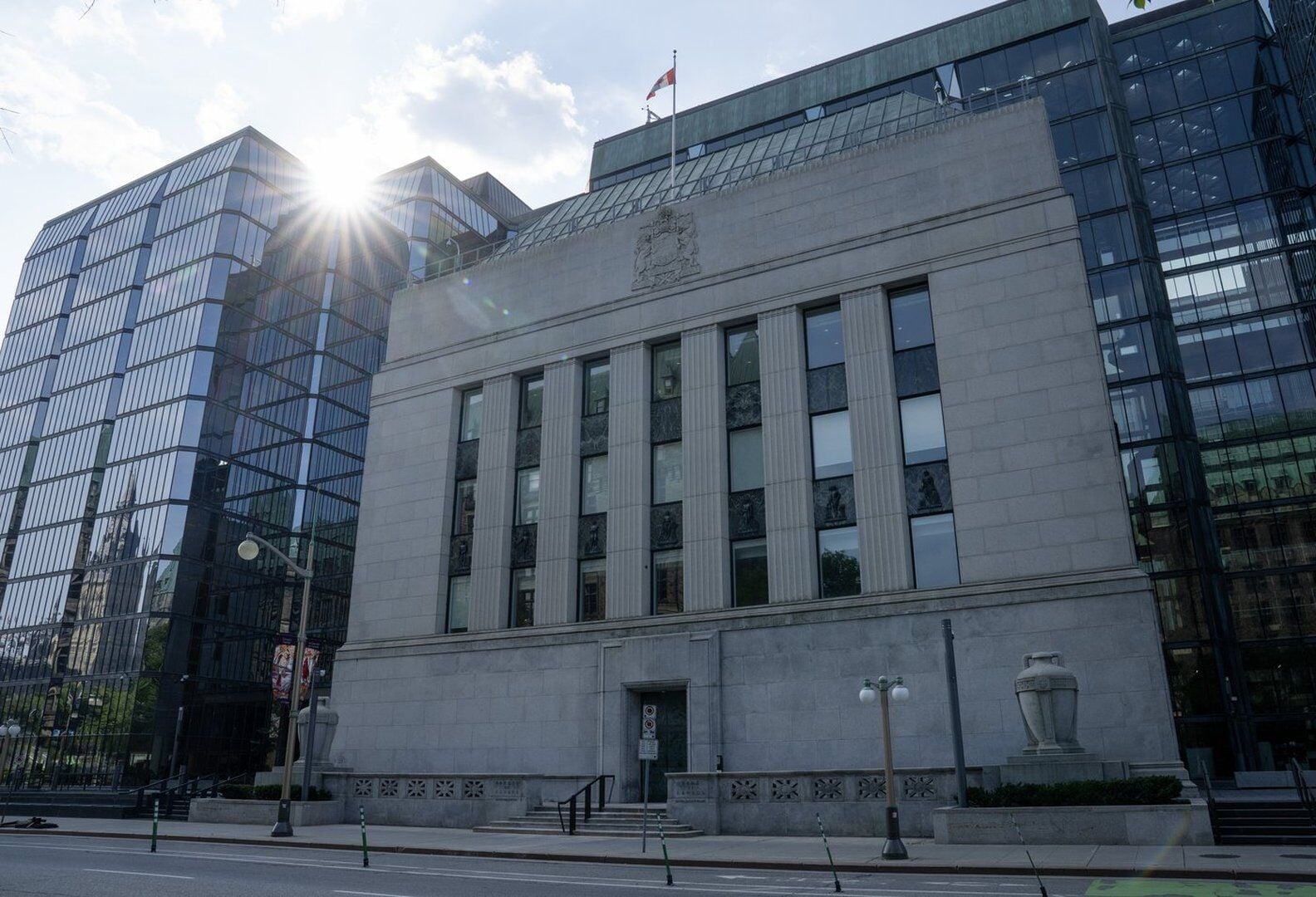
The Bank of Canada left its key overnight lending rate at 2.25 per cent on Wednesday for the fourth straight meeting, a widely anticipated decision that masks deep uncertainty over the path ahead. The central bank now expects the housing downturn to subtract 0.1 percentage points from this year’s gross domestic product growth, a sharp reversal from its January forecast that housing would add 0.2 points. The downgrade, detailed in the bank’s quarterly monetary policy report released Wednesday, reflects a confluence of forces: declining population, persistent affordability challenges, and a glut of small condominiums in major cities that is restraining new construction. noted that unseasonably cold weather had also slowed home sales in recent months.
Housing market in deep slump as sales hit crisis-era lows
Activity across much of the residential real estate sector has been in a slump for years. March home sales were 20 per cent below the 10-year average and the lowest for that month since the 2009 global financial crisis, according to the Canadian Real Estate Association. Preconstruction home sales have been particularly dire, with transactions in Toronto, the country’s largest real estate market, at their lowest level in more than three decades. Developers have been forced to cancel or postpone dozens of projects, leading to a decline in new home construction. The six-month trend in housing starts fell 2.9 per cent from February to March.tral bank said residential investment is expected to remain subdued over the next two years, with housing demand forecast to “grow modestly,” partly due to scant investor interest.
Investor exodus and condo glut deepen the crisis
Investors, who once accounted for at least 70 per cent of preconstruction condo purchases in the Toronto region, have largely disappeared because many have lost money. Preconstruction prices remain higher than those for resale condos, and real estate prices are no longer climbing. Many investors are burning through cash every month as they struggle to find renters or cover mortgage payments, condo fees and property taxes. In the first quarter of this year, a record 4,295 newly completed condo units were unsold in the Toronto and Hamilton region.ude units that developers had to take back because buyers defaulted. As developers finish constructing buildings, thousands more unsold units are expected to flood the market over the next few years. The central bank’s monetary policy report warned that “a substantial inventory overhang of small condominiums in some major centres will restrain new construction.”
Inflation and oil prices complicate rate path
The Bank of Canada projects inflation will peak around three per cent in April before declining to its two per cent target early next year. That forecast assumes U.S. tariffs remain at current levels and oil prices drop from US$90 a barrel in the second quarter of 2026 to US$75 by mid-2027 — a US$15 increase since the bank’s previous monetary policy report. “After more than a year with inflation close to the two per cent target, higher global energy prices are pushing inflation up,” Bank of Canada Governor Tiff Macklem said in his opening remarks. “The surge in gasoline prices combined with still-elevated food price inflation is squeezing more Canadians.” The bank said there is “little evidence” so far that oil prices are affecting the costs of goods and services more broadly, but acknowledged that projections are heavily dependent on trade negotiations with the United States and the war in Iran.
Bond yields rise as geopolitical tensions fuel rate-hike expectations
The Government of Canada’s five-year bond yield has been elevated since the Middle East conflict broke out at the end of February, prompting lenders to increase their fixed mortgage rates by 25 to 40 basis points. The escalation of the Iran conflict and the resulting jump in oil prices have made investors nervous that upward pressure could be placed on inflation, leading to expectations of future key rate hikes. Mortgage experts are advising home buyers and homeowners facing renewal to lock into a rate now. Penelope Graham, a mortgage expert at Ratehub.ca, said the central bank “really has indicated that they’re walking a tight rope right now.” She noted that rate hikes could come if inflation rises due to oil price surges, or rate cuts if tariff changes worsen under the upcoming renegotiation of the United States-Mexico-Canada Agreement. “It can be a really confusing message,” she said.
Growth outlook tempered by tariffs and trade uncertainty
The bank’s growth forecast has remained relatively unchanged compared to January. While consumer and government spending are pushing growth up, U.S. tariffs and trade uncertainty are weighing on exports and business investment. The bank believes GDP will grow at 1.2 per cent in 2026, rising to 1.6 per cent in 2027 and 1.7 per cent in 2028. “The conflict in the Middle East will affect the composition of growth, but the impact on overall growth is expected to be small because higher oil prices increase the value of our energy exports even as they squeeze consumers and many businesses,” Macklem said. The governor suggested that if oil prices come down as expected and U.S. tariffs remain unchanged, the current policy rate could hold, but he did not rule out adjustments. The Bank of Canada will make its next interest rate decision on June 10.
The bottom line
- The Bank of Canada held its key rate at 2.25% for the fourth consecutive meeting, but the path ahead is highly uncertain due to oil price volatility and trade negotiations.
- Housing is now a drag on the economy, subtracting 0.1 percentage points from GDP growth in 2026, a reversal from the positive contribution forecast in January.
- The condo glut in major cities, especially Toronto, is at record levels, with thousands of unsold units and a collapse in investor demand.
- Inflation is expected to peak at 3% in April, driven by higher energy prices, before declining to the 2% target early next year.
- Fixed mortgage rates have risen 25-40 basis points since the Middle East conflict began, and experts advise locking in rates now.
- The next rate decision on June 10 will be pivotal, with the central bank balancing inflation risks against a weak housing market and trade uncertainty.





Product Recall: the numbers behind it
Bayesian Yacht Sinking: Not a Storm, but Possible Crew Error and Design Flaws

L&T sells entire Hyderabad Metro stake to Telangana government in ₹4,000 crore deal