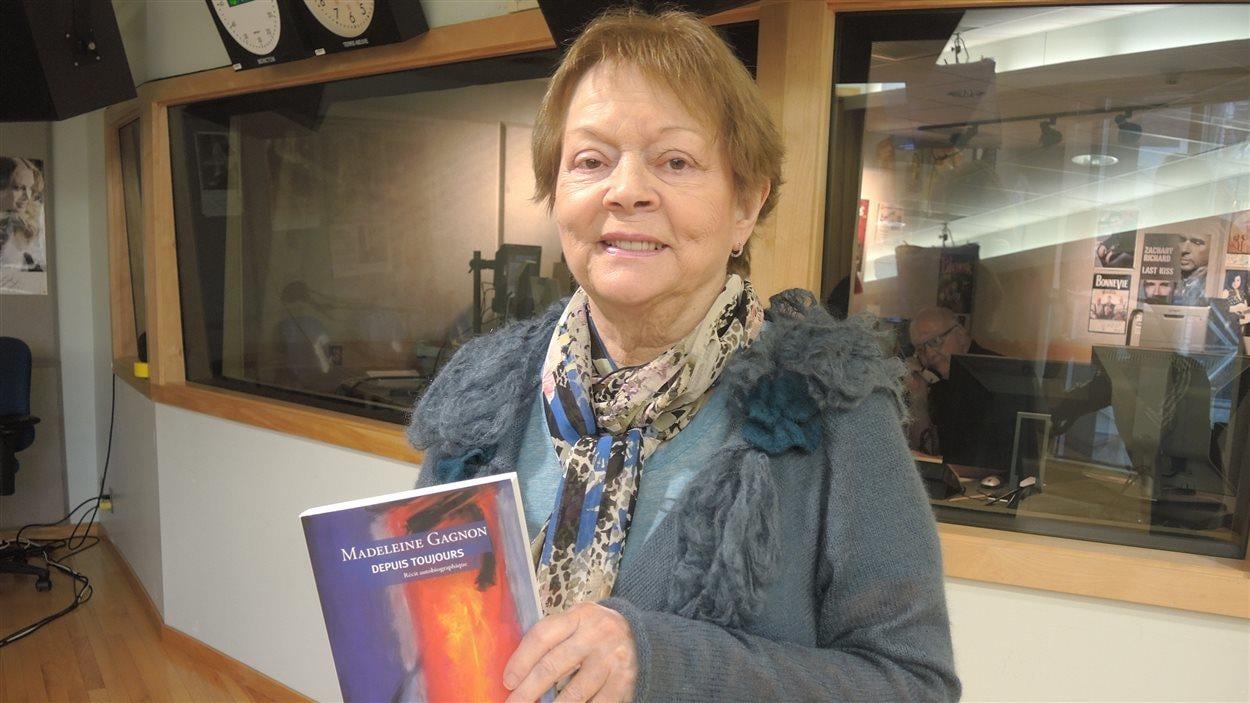
Madeleine Gagnon, Quebec’s poet of feminist and political defiance, dies at 87
The prolific writer, who fused poetry with psychoanalysis and Marxism, leaves behind a body of work that challenged literary and social conventions.

CANADA —
Key facts
- Madeleine Gagnon died at age 87.
- She was born on July 27, 1938, in Amqui, Quebec.
- She published her first book, Les morts-vivants, in 1969.
- She won the Governor General’s Award for poetry in 1991 for Chant pour un Québec lointain.
- She was a founding professor at the Université du Québec à Montréal (UQAM).
- She left behind about 40 books of prose and poetry.
- She was a member of the Académie des lettres du Québec from 1987.
A voice that shaped Quebec literature falls silent
Madeleine Gagnon, one of the most influential voices in contemporary Quebec literature, has died at the age of 87. The poet, essayist, and novelist leaves behind a vast and demanding body of work that intertwined feminism, Marxism, psychoanalysis, and Quebec independence. Her death was confirmed by Radio-Canada. Gagnon’s writing was never comfortable. It demanded attention, refused to coddle the reader, and insisted on the physical and political realities of women’s lives. “If I write rape, if I write death, if I write cry all alone without any reference, no one will recognize anyone and that is how I want to engrave this story: once upon a time, no one,” she wrote in Au cœur de la lettre (1990).
From Amqui to the avant-garde: a life of intellectual rebellion
Born into a family of ten children in Amqui, in the Matapédia region, Gagnon grew up surrounded by nature and a large, hardworking family. Her mother was a teacher before marriage; her father was an accountant at the family sawmill. Despite the conservative milieu, her father encouraged her to pursue university studies, telling her: “Men have been jealous of your abilities, and you belong to the generation that will restore what men have taken from women.” She studied with the Ursulines, earned a bachelor’s degree from a college in Moncton in 1959, a master’s in philosophy from the Université de Montréal in 1961, and a doctorate in letters from the University of Aix-en-Provence in 1968. Her first book, Les morts-vivants, was published in 1969, the same year she joined the founding faculty of UQAM.
A teacher who brought literary creation into the university
At UQAM, Gagnon was a pioneer in integrating creative writing into the university curriculum at a time when it was not standard practice. She also taught Quebec literature and psychoanalysis, a field that was then viewed with suspicion. “Those who were on the side of psychoanalysis were considered a bit crazy,” she recalled in her last public interview, published in 2022 in the journal Voix et Images. After twelve years of teaching, she left academia to devote herself fully to writing, a financial risk she took while raising her two sons. She later returned as a visiting professor at the Université du Québec à Rimouski between 1990 and 1994.
A rigorous and demanding body of work
Gagnon’s oeuvre spans some forty books, including poetry, essays, and an autobiography. Among her most notable works are Retailles (1977), co-written with Denise Boucher, and Les femmes et la guerre (2000). She also collaborated with Hélène Cixous and Annie Leclerc on La venue à l’écriture (1977). Her collected poems, À l’ombre des mots. Poèmes, 1964-2006 (2007), is considered a landmark. Her writing is characterized by its intellectual rigour and its refusal to separate the body from thought. “Her essays are of a dazzling rigour,” said Laurance Ouellette Tremblay, a professor at McGill University. “She was a thinker capable of navigating between psychoanalysis, philosophy, and historical narrative with great agility.”
Feminism, independence, and the politics of the body
Gagnon’s feminism was philosophical rather than activist. She explored where women’s speech originates — “from the abyss, from the shadow,” as Ouellette Tremblay put it. In 1977, Gagnon wrote: “We want to abolish servitude where it takes root: in the submissive bodies of females. We want the secrets of our mothers, and ours, to serve as invincible weapons in all struggles.” Her political engagement extended to Quebec independence and Marxism. Louis-Daniel Godin, a professor at UQAM, noted: “Her thought is political, and her work crosses creativity, desire, as well as Marxism and feminism — these are daring intersections.”
A legacy that continues to inspire
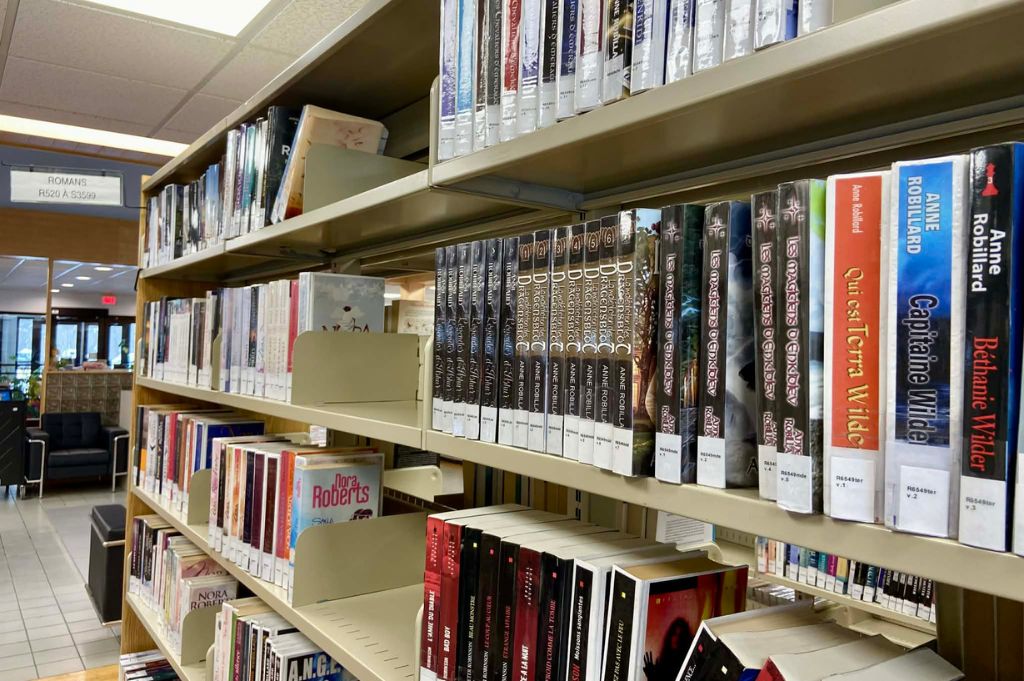
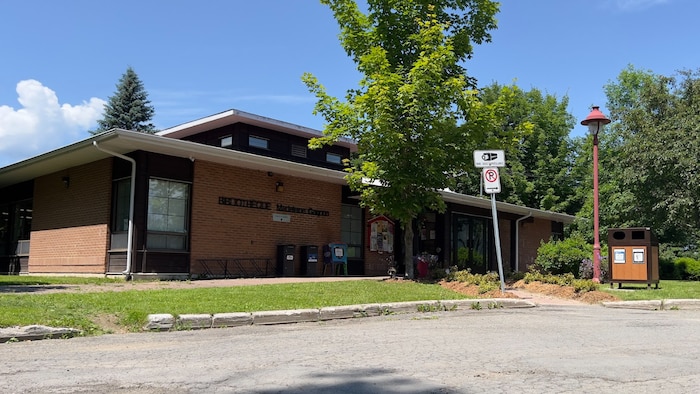
Gagnon’s influence is felt across generations of Quebec writers. Poet Diane Régimbald said: “She is one of the writers who greatly inspired me. By her freedom of thought, and her ability to make simple what was complex, and to always pour thought into the body.” Her work has been recognized with numerous awards, including the Governor General’s Award for poetry in 1991. The municipal library in Amqui bears her name. As Godin summarized: “The work is demanding, brilliant. It bursts forms, upends reading expectations, brings the body into writing, makes one think of the unconscious, makes one think of writing itself.”
The bottom line
- Madeleine Gagnon, a leading Quebec poet and essayist, has died at 87.
- Her work fused feminism, Marxism, psychoanalysis, and Quebec nationalism.
- She was a founding professor at UQAM and helped legitimize creative writing in academia.
- She published about 40 books and won the Governor General’s Award in 1991.
- Her writing is known for its intellectual rigour and physical, embodied language.
- She leaves a lasting influence on Quebec literature and feminist thought.



Who Is Canada’s Oldest Company Now? The Hunt for a Successor to Hudson’s Bay

Sabres’ Defensemen Power Playoff Push as Buffalo Seeks Series Win in Boston

Montreal Metro Resumes After Hour-Long Shutdown; Canadiens Eye Series Win
