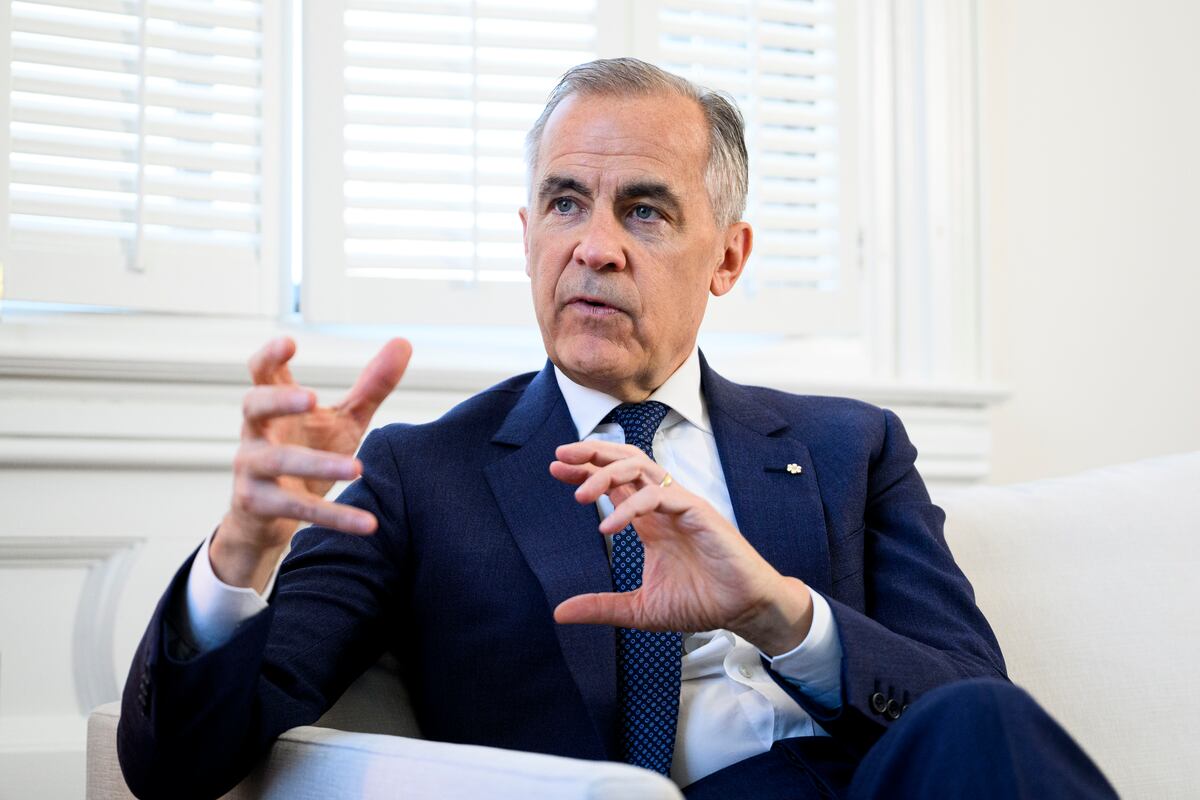
Martin Matte's 'Vitrerie Joyal' revisits a fractured 1990s Quebec through family drama and dark comedy
The six-episode series, premiering May 1 on Amazon Prime Video, draws on the comedian's own father's story to explore generational clash and societal change.

CANADA —
Key facts
- Vitrerie Joyal premieres May 1 on Amazon Prime Video, available to all Canadian and Quebec subscribers.
- The series consists of six 35-minute episodes, set in summer and fall 1995.
- Martin Matte portrays his own father, André Joyal, a prosperous but rigid boomer.
- Pier-Luc Funk plays the 25-year-old Philippe Joyal, a fictionalized version of Matte in 1995.
- The series was entirely financed by Amazon, the first Quebec production to receive such backing.
- Vincent Joyal, the eldest son, suffers a serious car accident; Philippe leaves the family business for comedy.
- The English title is 'The Glass House'.
A personal story, a universal clash
Martin Matte’s new series Vitrerie Joyal, arriving Friday on Amazon Prime Video, is an autofictional comedy-drama that excavates a pivotal summer in the comedian’s own life — the summer and autumn of 1995, when his family and professional worlds shattered. The show, six episodes of 35 minutes each, blends humour, emotion, and a sharp critique of a generation in denial. At its core is André Joyal, a prosperous, stubborn boomer who drives a gleaming BMW and runs the family window-and-door business in Laval, Quebec. Matte himself plays his own father, a man utterly unable to adapt to the changing times. The series traces his slow fall from the top of the pyramid to the shattering of everything he built.
A cast that embodies a family in crisis
Pier-Luc Funk plays Philippe Joyal, the 25-year-old son who supervises the factory floor but dreams of a career in comedy — a direct parallel to Matte’s own trajectory. Pierre-Yves Roy-Desmarais portrays Vincent Joyal, the 27-year-old eldest son, a university-trained accountant who clashes with his father over computerizing the business. Marilyse Bourke takes on Diane Vaillancourt, André’s wife and mother of the two boys, a housewife profoundly bored with her life. Florence Longpré delivers a memorable turn as Josée Côté, André’s secretary, who wears thick glasses and takes daily masturbation breaks in the office bathroom. François Chénier plays Gaston Veilleux, the company’s top salesman, whose sexist and crude jokes — even by 1995 standards — are jarring. The four main actors navigate the tightrope between comedy and tragedy with impressive precision.
The turning point: a patriarch’s collapse
The series begins with André Joyal at the height of his power, cigar in mouth, his two sons working beside him. But he is out of step with the society of 1995. He sees no need for computers, dismisses burnout as an imaginary illness, and reacts with hostility when a Black salesman (Patrick Emmanuel Abellard) enters his office. He uses homophobic slurs without grasping their weight. A particularly powerful scene in the second episode unfolds at Vincent’s birthday dinner, where a misunderstanding about a character’s sexual orientation leads to excruciating discomfort. The tone darkens midway through the second episode, and the series pivots toward its tipping point: the patriarch’s downfall and the disintegration of his entire universe.
A mirror to 1990s Quebec — and today
Matte has said he wanted to show where Quebec came from, where it is now, and how fragile progress can be — especially in light of current events in the United States. The series does not shy away from the racism, misogyny, and homophobia that were commonplace in the mid-1990s, even as the province was weeks away from a referendum on sovereignty. The show’s period details — brown walls, Rolodexes, Ford Festivas, manual credit-card machines, Timberland clothing — are meticulously recreated under the direction of Guillaume Lonergan (Empathie). Matte, who also wrote and produced the series, grew his hair for the first time in 20 years to play André. He has been open about the real-life Vincent Joyal’s serious car accident and Philippe’s departure from the family business to pursue stand-up comedy. The real André Joyal died in 2002.
Amazon’s bet on Quebec storytelling
Vitrerie Joyal is the first Quebec series entirely financed by Amazon Prime Video. The budget has not been disclosed, but the creative team says it was sufficient to authentically recreate the pre-referendum period. Matte defended the decision to work with a foreign giant, saying: “They take money and give it to Quebecers to make a series for Quebecers, with a quality budget that showcases our culture. I have trouble seeing the negative in that.” The series will be available to all Canadian and Quebec subscribers starting May 1. Its English title, The Glass House, captures the fragility of the family’s situation more directly than the French original.
A story that resonates beyond Quebec
While deeply rooted in Quebec’s specific cultural and political context, Vitrerie Joyal addresses themes — generational conflict, technological disruption, the pain of watching a parent become obsolete — that are universal. The show’s blend of comedy and tragedy, its refusal to soften the ugliness of the past, and its honest portrayal of a family in free fall give it a reach that could extend well beyond the province. Matte, who found massive success with Les beaux malaises, is clearly aiming for a similar impact. Whether Vitrerie Joyal will achieve that remains to be seen, but its ambition and execution suggest it is a serious contender.
The bottom line
- Vitrerie Joyal is an autofictional series based on Martin Matte’s own family history, set in 1995 Quebec.
- Matte plays his own father, André Joyal, a boomer who cannot adapt to societal and technological change.
- The series tackles racism, homophobia, and sexism head-on, showing how they were normalized in the 1990s.
- It is the first Quebec production fully financed by Amazon Prime Video, with a budget sufficient for period accuracy.
- The show’s six episodes premiere May 1 on Prime Video in Canada and Quebec.
- Key cast includes Pier-Luc Funk, Pierre-Yves Roy-Desmarais, Marilyse Bourke, Florence Longpré, and François Chénier.


Marta Kostyuk Stuns Mirra Andreeva to Win First WTA 1000 Title in Madrid

Lost Oscar Found: Lufthansa Locates Statuette Forced Into Checked Luggage

Delhi Capitals Chase Down 225 to Hand Rajasthan Royals Seven-Wicket Defeat in Jaipur