Newfoundland and Labrador’s Tory Budget Defers Deficit Reduction, Projects $1B-Plus Shortfalls
Finance Minister Craig Pardy’s first full-year fiscal plan delivers tax cuts and record health spending but abandons any timeline to balance the books, as deficits are set to exceed $1 billion from 2027.

CANADA —
Key facts
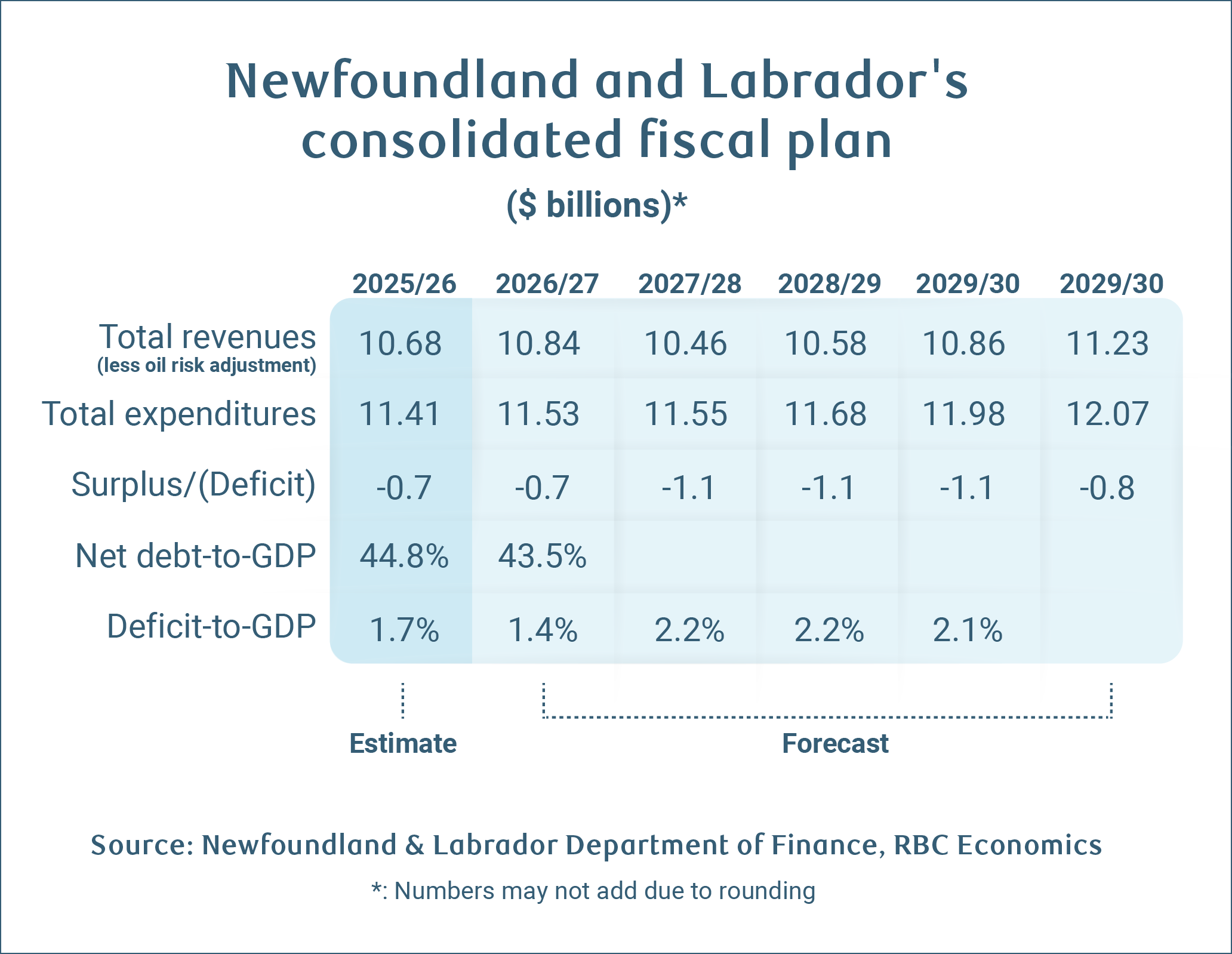
- Deficit of $688.5 million projected for 2026-27, with no plan to balance the budget over the five-year forecast.
- Net debt to reach $20.8 billion in 2026-27, highest debt burden among Canadian provinces.
- Record health spending of $5.4 billion, consuming 42 cents of every dollar spent.
- Three consecutive years of deficits above $1 billion starting in 2027-28.
- Revenue from the Hydro-Québec energy deal, valued at $1.4 billion, excluded from projections after Tories put deal on hold.
- Small business tax rate to be cut to 1.5% in 2027 and 1% in 2028; basic personal income tax exemption raised to $15,000.
- Tuition freeze reinstated at Memorial University and College of the North Atlantic.
- Interest and debt fees of $1.2 billion account for roughly 10% of total expenses.
A Budget of Promises and Postponed Pain
Newfoundland and Labrador’s new Progressive Conservative government tabled its first full-year budget on Wednesday, fulfilling election pledges to lower taxes and boost health spending while revealing a fiscal trajectory that worsens sharply over the medium term. Finance Minister Craig Pardy presented an $11.5-billion spending plan titled “Opportunity for All of Us,” which projects a $688.5-million deficit for the 2026-27 fiscal year — equivalent to 1.4% of GDP. “We campaigned on the promise that we would not balance the province’s books without first helping families balance their own,” Pardy told the House of Assembly. The budget makes good on the Tory trinity of lower taxes, better health care, and safer communities, but it contains no roadmap to eliminate the deficit. Instead, the five-year outlook shows deficits ballooning past $1 billion from 2027-28 onward, driven by rising health-care costs and the exclusion of revenue from a stalled energy deal with Hydro-Québec.
Tax Cuts and Affordability Measures Take Centre Stage
The budget delivers on several cost-of-living initiatives that formed the core of the Progressive Conservative election campaign. The basic personal amount exempt from provincial income tax will rise to $15,000, the Newfoundland and Labrador Seniors’ Benefit will increase by 20% effective July 1, and the child benefit will be expanded. Small businesses will see their tax rate drop in two steps: from 2% to 1.5% in January 2027, then to 1% in January 2028. A tuition freeze will be implemented this fall at Memorial University and the College of the North Atlantic, reinstating a policy that the education minister had announced earlier in the year. The government also plans to hire more police, prosecutors, judges, and court staff, framing the spending as part of its commitment to safer communities.
Record Health Spending and a Troubled Health Authority
Health care absorbs the largest share of the budget, with a record $5.4 billion allocated — about 42 cents of every dollar spent. The government has also set aside funds to pay off a $750-million line of credit amassed by the provincial health authority. Health Minister Lela Evans became emotional during the budget debate as she blamed the authority’s debt on “chronic underfunding” by the previous Liberal administration. Despite the infusion of cash, the province’s fiscal position remains precarious. The deficit for the current 2025-26 fiscal year is now estimated at $729 million — nearly double the projection in Budget 2025 and two and a half times the prior year’s shortfall. The deterioration stems largely from higher-than-expected spending in education and health, key campaign commitments that the new government has chosen to prioritize over deficit reduction.
Debt and Interest Costs Mount
Net debt is projected to reach $20.8 billion by the end of 2026-27 in a province of roughly 530,000 people, giving Newfoundland and Labrador the highest debt burden among Canadian provinces. Interest and other debt-servicing costs will consume an estimated $1.2 billion, or about 10% of total government expenses — more than the combined spending on social supports and justice and public safety. The government’s five-year forecast includes anticipated revenue from the still-developing green hydrogen sector and Equinor’s proposed Bay du Nord offshore oil project. However, it does not factor in any income from a draft energy deal with Hydro-Québec, which the previous Liberal government had signed in 2024 and had incorporated into its financial projections. The memorandum of understanding for the Upper Churchill and Gull Island hydroelectric developments has been referred to an Independent Review Committee, which is due to deliver its final report on April 30.
The Energy Deal That Wasn’t
The absence of the Hydro-Québec revenue is a major factor behind the deepening deficits. Liberal Leader John Hogan noted that the energy agreement was retroactive to 2025 and that the province would already be receiving money if the Tories had continued negotiations. “We would be getting the check for about $1.4-billion from Quebec,” Hogan told reporters. “Not only would we get rid of the deficit that exists today, we would have a massive surplus.” The Tories have put the deal on hold, a decision that has removed a potential $1.4-billion inflow from the fiscal plan. The budget’s revenue projections for 2027-28 are expected to drop by 3.5% partly as a result of this exclusion, and deficits are forecast to remain above $1 billion for three consecutive years beginning that fiscal year.
Economic Growth Offers Little Respite
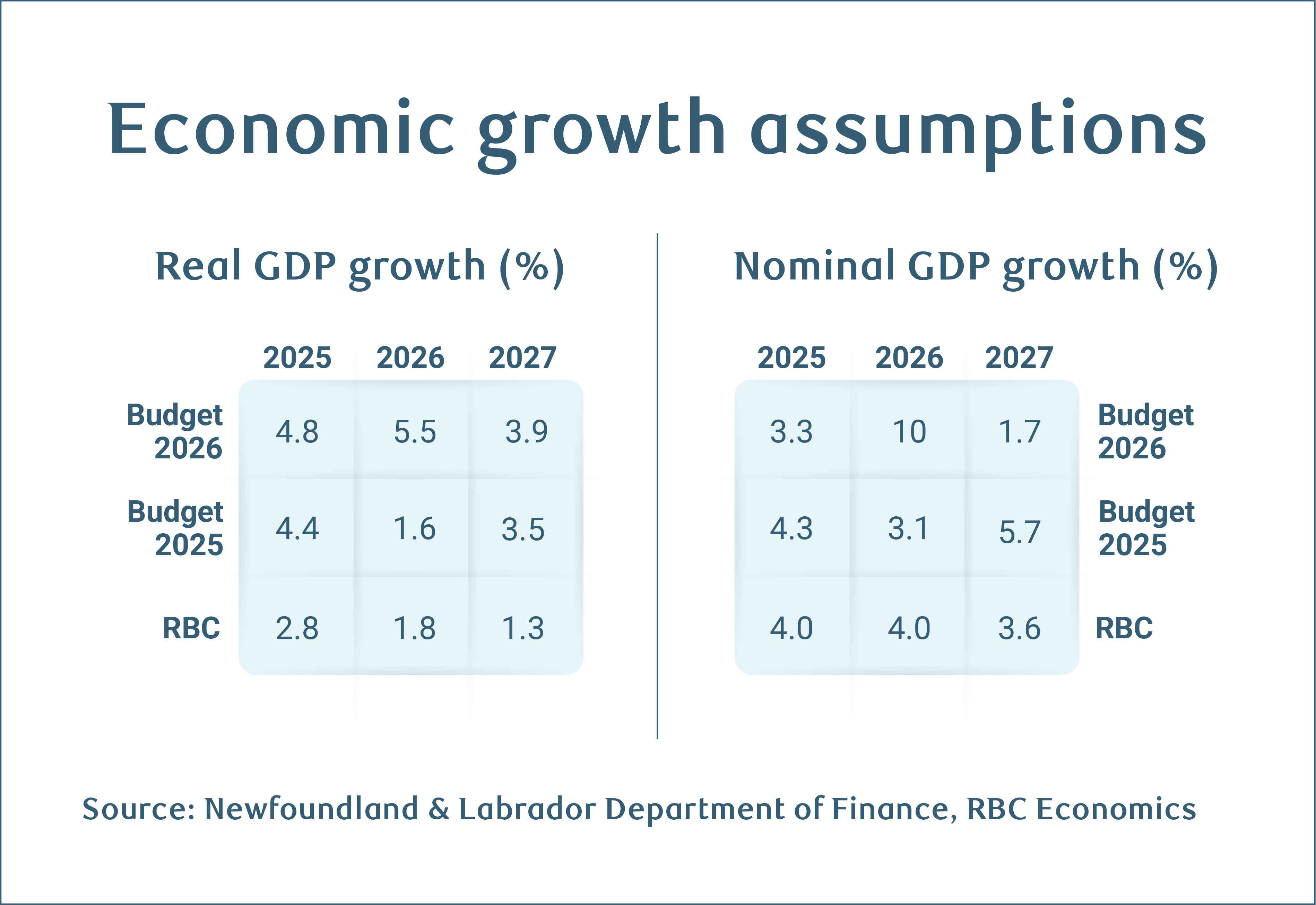
The province projects nominal GDP growth of 10% in 2026, driven by stronger oil and mining export values. This improved economic backdrop will marginally narrow the net debt-to-GDP ratio to 43.5% in 2026-27, but the province still carries the heaviest debt load among its peers. The upward revision to the growth outlook makes the absence of a deficit-reduction plan all the more striking, as stronger revenues typically improve a government’s fiscal position. Newfoundland and Labrador now joins the ranks of provinces that have abandoned their balance targets, projecting deficits over the entire planning horizon. The December fiscal update had already signalled trouble, with a $948-million deficit forecast for 2025-26 driven partly by a drop in oil price assumptions to US$66 per barrel from the $73 used in Budget 2025. Spending is expected to remain on a higher track, with expenditures growing modestly rather than falling as previously planned.
No End in Sight
Finance Minister Pardy has promised to produce a plan this year to chip away at the deficit, but the budget itself offers no timeline or specific measures. “We’ve got to plan to get it down,” he told reporters. “But we have to do it with the balance that we would address health care and the cost of living.” The balancing act leaves the province in a precarious position: delivering on campaign promises while deficits mount and debt service costs crowd out other spending. With the Hydro-Québec deal in limbo, oil revenue subject to volatile prices, and health-care costs rising inexorably, Newfoundland and Labrador’s fiscal outlook remains deeply uncertain. The budget buys time for families but kicks the can on deficit reduction, a gamble that will test the new government’s credibility as the red ink deepens.
The bottom line
- The Progressive Conservative government’s first budget prioritizes tax cuts and record health spending over deficit reduction, with no plan to balance the books.
- Deficits are projected to exceed $1 billion annually from 2027-28, driven by rising health costs and the exclusion of $1.4 billion in potential Hydro-Québec revenue.
- Net debt will reach $20.8 billion, giving Newfoundland and Labrador the highest debt-to-GDP ratio among Canadian provinces.
- Interest payments of $1.2 billion consume 10% of total spending, exceeding combined outlays on social supports and justice.
- The budget assumes revenue from green hydrogen and Bay du Nord but excludes the Hydro-Québec deal, which the Liberals had factored in.
- Economic growth of 10% in 2026 does little to improve the fiscal picture, as spending commitments outpace revenue gains.


Thermos recalls 8.2 million containers after stoppers cause permanent vision loss

Downtown Toronto to Lose Power for 12 Hours as Hydro One Replaces Equipment

L&T sells entire Hyderabad Metro stake to Telangana government in ₹4,000 crore deal