Strasbourg face Rayo Vallecano in Europa Conference League semi-final amid high stakes
Racing Club de Strasbourg Alsace travel to the compact, politically charged Estadio de Vallecas for the first leg of a tie that could define their season.
CANADA —
Key facts
- Rayo Vallecano hosts Strasbourg on Thursday, April 30, 2026, at 9 p.m. CET in the first leg of the Europa Conference League semi-finals.
- Estadio de Vallecas has a capacity of 14,708, making it the second-smallest stadium in La Liga after Montilivi (14,624).
- The pitch measures 100 meters by 65 meters, five meters shorter and three meters narrower than Strasbourg's Stade de la Meinau.
- Strasbourg currently sits eighth in Ligue 1, five points behind seventh-placed Monaco with a game in hand.
- Strasbourg lost the Coupe de France semi-final to Nice, conceding a brace from Elye Wahi.
- Rayo Vallecano, founded in 1924, is playing its first European semi-final in club history.
- The stadium has not been renovated since its inauguration on May 10, 1976.
- Strasbourg's captain Emmanuel Emegha sparked controversy by wearing a Chelsea shirt in September.
A compact stage for a defining clash
The Estadio de Vallecas, home to Rayo Vallecano, is one of the smallest and most idiosyncratic venues in Spanish football. With a capacity of just 14,708, it is the fourth-largest stadium in Madrid but remains deeply embedded in the working-class district of Puente de Vallecas, home to 241,000 residents. The ground, which also hosts table tennis, boxing, billiards and chess clubs, has not undergone significant renovation since its opening on May 10, 1976. Its pitch measures only 100 meters by 65 meters, well below the FIFA-recommended standard of 105 by 68 meters. The lack of space behind one goal prevents the construction of a fourth stand. "Being in a place where everything is compacted, with that facade without a stand and unchanged infrastructure, makes it a very particular stadium," recalls Bruno Rodriguez, the only Frenchman to have played for both Strasbourg (1996) and Rayo (2001). "It's also a place where the people of the neighborhood like to gather."
Political identity and fan fervor
The stadium's walls are plastered with flyers and posters supporting Palestine and opposing what they call the imperialist wars of Donald Trump and Benjamin Netanyahu, signaling that entering its gates is a political act. The club's cosmopolitan and working-class identity, forged in what was a red suburb until its incorporation into Madrid in 1950, has created an inseparable bond between the neighborhood and its team. Fans queued religiously at ticket booths early in the week, treating the quest for a ticket to the club's first European semi-final as a pilgrimage. Only 14,708 succeeded, leaving many disappointed. The atmosphere is expected to be intense, with the compact ground amplifying the noise.
Strasbourg's season on a knife-edge
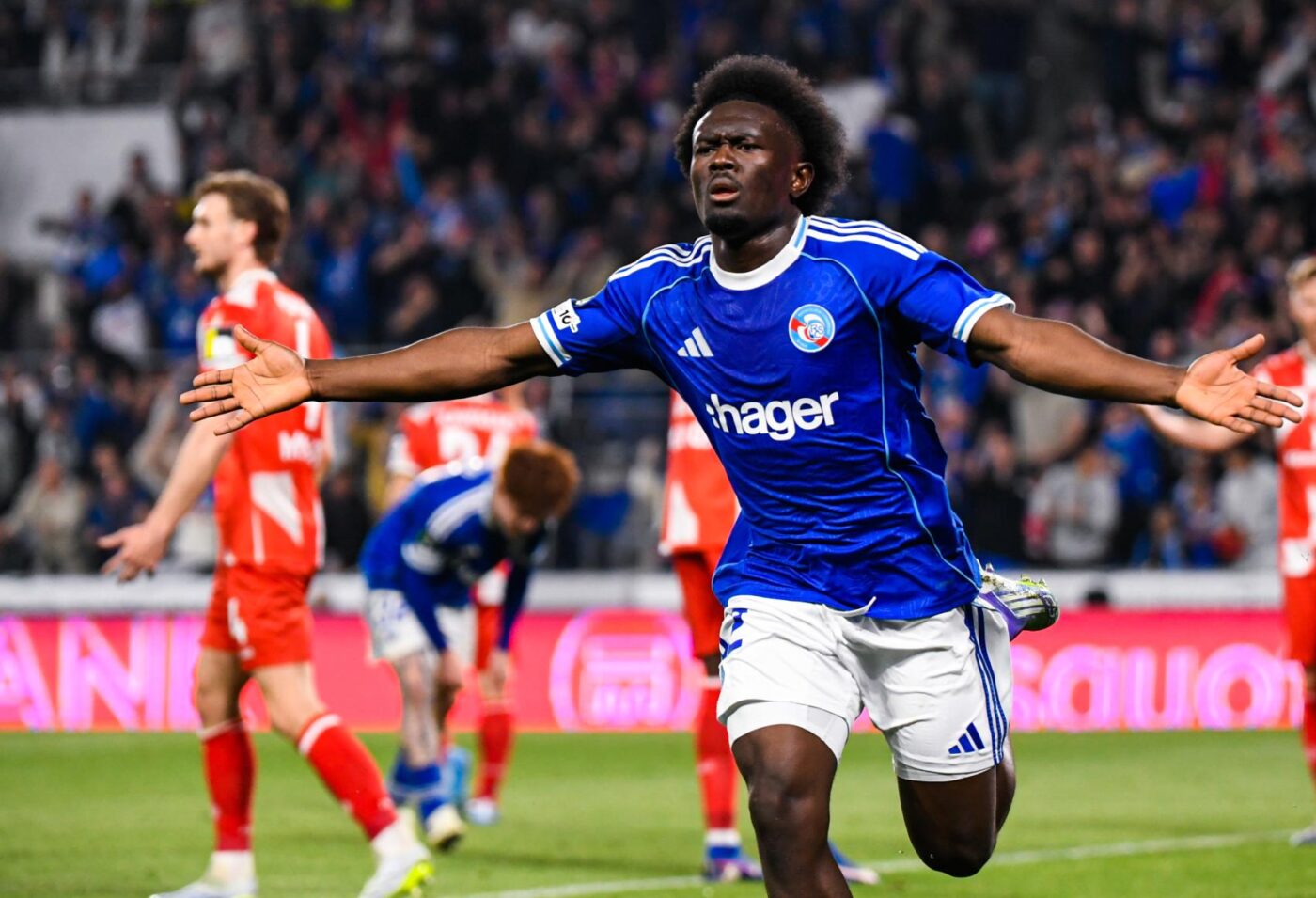
Strasbourg arrives in Madrid with its season hanging in the balance. The team, coached by Gary O'Neil, finished seventh in Ligue 1 last season but currently sits eighth, having won only four of its last eleven league matches. With four games remaining against Toulouse, Angers, Brest, and Monaco, the club trails seventh-placed Monaco by five points with a game in hand. A seventh-place finish would only secure a spot in the Europa Conference League qualifiers, a far cry from the top-five finish that would guarantee a Europa League place. The club's hopes for a Coupe de France final were dashed in the semi-finals by Nice, where Elye Wahi scored twice. "We are sorry not to take them to the Stade de France, but we will do everything to make this season memorable anyway," O'Neil said after that defeat. The implication is clear: without a European final, the season will be deemed a failure.
Adapting to a smaller pitch
O'Neil has taken steps to prepare his team for the unusual dimensions of the Vallecas pitch. "There isn't much space, which suits Rayo's players because they play long balls to press and create early chances," he explained. "We held our training sessions on a smaller pitch to start adapting." The pitch is five meters shorter and three meters narrower than the Meinau, forcing Strasbourg to adjust its usual width and passing patterns. The size difference is significant: the FIFA norm allows lengths from 100 to 120 meters and widths from 64 to 75 meters, but France mandates a minimum of 105 by 68 meters for top-tier competitions. Rayo's home advantage is partly built on this peculiarity.
Multipropriety turmoil and fan unrest
Off the pitch, Strasbourg has been rocked by the controversies of multi-club ownership. The club changed coaches mid-season to align with Chelsea's plans, only for Liam Rosenior to be sacked 107 days later. A faction of ultras has maintained a sustained protest against BlueCo, the ownership group. Captain Emmanuel Emegha further alienated supporters by wearing a Chelsea shirt in September. These tensions have created a backdrop of instability. A successful European run could help mend fences, but failure would deepen the sense of a season squandered. "The season would be a failure," one analysis notes, "not an industrial catastrophe, but a failure nonetheless."
What lies ahead
The first leg in Madrid is followed by the return leg at the Meinau. Strasbourg must navigate the hostile atmosphere and the peculiar pitch to return with a result that keeps its European dream alive. Rayo Vallecano, currently 11th in La Liga, will be motivated by the chance to reach a first European final in its centenary history. For Strasbourg, the stakes could not be higher. O'Neil's promise of a memorable season now rests entirely on this tie. A defeat would leave the club with only league matches to salvage pride, while victory would set up a final that could transform the narrative of the entire campaign.
The bottom line
- Rayo Vallecano's Estadio de Vallecas is one of the smallest and most politically charged grounds in Spain, with a pitch significantly smaller than standard.
- Strasbourg's season hinges on the Europa Conference League semi-final after failing to reach the Coupe de France final and slipping to eighth in Ligue 1.
- Gary O'Neil has adapted training to the smaller pitch, but the team must overcome a hostile atmosphere and a compact, pressing opponent.
- Off-field controversies, including multi-club ownership disputes and fan protests, add pressure to a team that risks a season of unfulfilled potential.
- The return leg in Strasbourg offers a chance for redemption, but the first leg in Madrid will test the team's resilience and tactical flexibility.



LaCombe's Defensive Mastery and Ducks' Offensive Surge Oust Oilers in Six Games

Canadiens on brink of first series win since 2021 as Bell Centre awaits Game 6
PSG Held 2-2 by Lorient, Miss Chance to Extend Ligue 1 Lead Ahead of Bayern Clash
