ShinyHunters Extortion Group Targets Education Giant Instructure
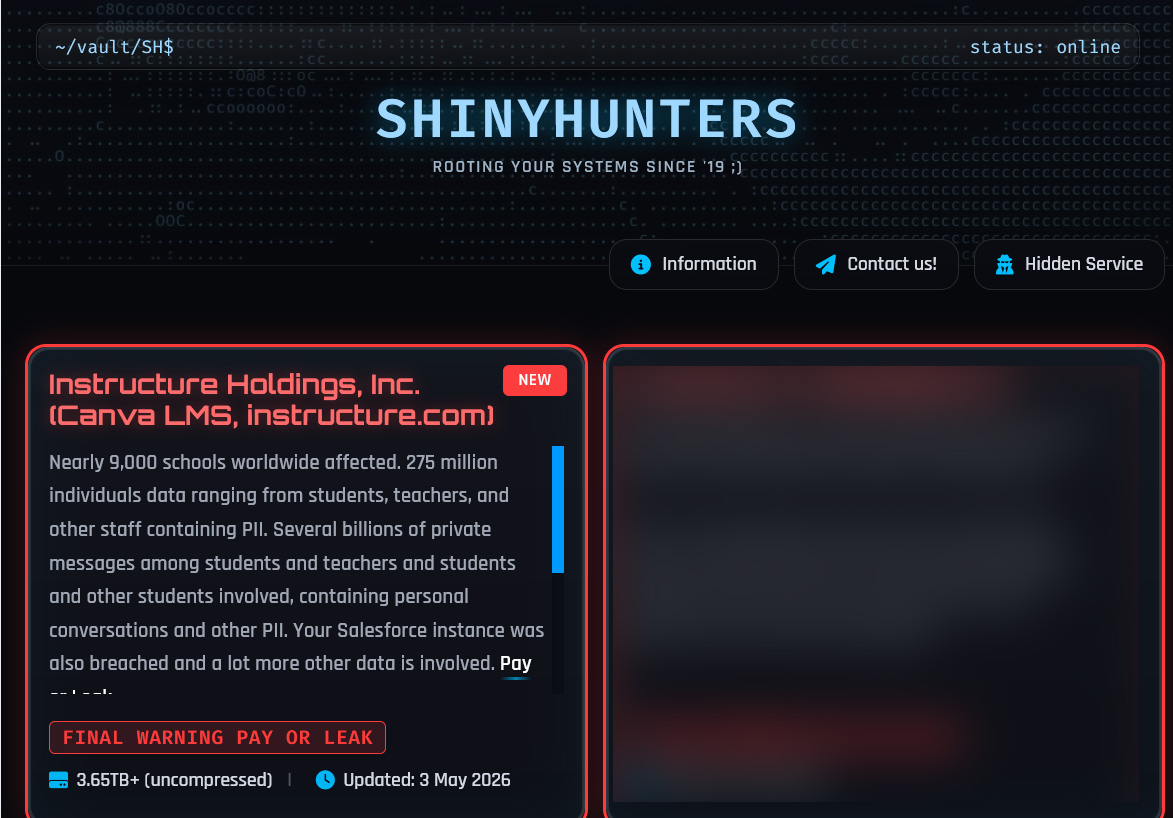
Cybercriminals claim to have stolen 280 million records from thousands of educational institutions via the Canvas platform.

CANADA —
Key facts
- The criminal group ShinyHunters breached Instructure, a major ed-tech provider.
- Hackers claim to have stolen 280 million data records belonging to students and staff.
- The breach allegedly impacts 8,809 colleges, school districts, and online education platforms.
- Stolen data includes names, email addresses, and private messages between teachers and students.
- ShinyHunters demanded a ransom from Instructure by May 6, 2026.
- Instructure uses its Canvas learning management system in over 40% of colleges and universities.
- This follows previous attacks by ShinyHunters on Salesforce, Infinite Campus, and McGraw Hill.
Cyberattack Exposes Millions of Student Records
The education technology giant Instructure has confirmed a significant data breach, with the criminal group ShinyHunters claiming responsibility for the attack. Hackers assert they have exfiltrated approximately 280 million data records pertaining to students, teachers, and staff from a vast network of educational institutions. This incident underscores the escalating threat posed by cybercriminals targeting third-party vendors that serve the education sector. ShinyHunters has issued a ransom demand to Instructure, setting a deadline of May 6, 2026, for payment before threatening to leak the compromised data. The group also warned of further "annoying digital problems" if their demands are not met, aiming to pressure the company into compliance. The educational technology provider, best known for its Canvas learning management system, serves more than 40 percent of colleges and universities globally. The breach highlights the systemic risks inherent in the digital supply chain, where a compromise at a single vendor can have widespread repercussions across numerous organizations.
Scope of the Alleged Data Theft
The threat actors behind the ShinyHunters group claim to have impacted 8,809 educational institutions, including universities, school districts, and online learning platforms. They have reportedly shared record counts for each affected entity, with individual institutions facing the potential loss of tens of thousands to several million records. A sample of the allegedly stolen data, viewed by some outlets, contained names, personal email addresses, and private messages exchanged between teachers and students. While Instructure has stated that passwords and other sensitive data types were not compromised, the exposed information could facilitate highly targeted phishing attacks. While Instructure has not independently verified all claims, some universities have begun to issue advisories to their communities. The University of Colorado Boulder acknowledged awareness of the breach affecting Instructure, the parent company of Canvas, and noted it as a nationwide event impacting multiple institutions. Rutgers University, however, stated it had not been notified of any direct impact to its campus, with Canvas remaining operational.
Instructure's Response and Investigation
Following the discovery of the cyberattack, Instructure initiated an investigation and confirmed a data breach had occurred. Steve Proud, Instructure's chief information security officer, confirmed the incident was perpetrated by a "criminal threat actor" and that the company was working with external forensics experts. Updates on the company's status page indicated that some services, including Canvas Data 2 and Beta, were being restored for customers. Instructure has largely referred inquiries to its official updates page, with a spokesperson, Kate Holmes, declining to answer specific questions about the incident. The company's official statements have focused on confirming the breach and assuring users that certain types of data, such as passwords, were unaffected. Despite the company's efforts to contain the situation and restore services, the incident has raised concerns about the security of trusted vendors within the education ecosystem. Experts suggest that the attackers' strategy of targeting third-party providers offers a more efficient path to acquiring large volumes of sensitive data compared to attacking individual institutions.
A Pattern of Attacks on Educational Vendors
This is not the first time ShinyHunters has targeted the education technology sector. Last fall, the group was linked to a breach at Salesforce, which allegedly resulted in the theft of approximately one billion customer records across numerous companies, including Instructure itself. In March, the hackers infiltrated Infinite Campus, a student information system widely used in K–12 education. More recently, in April, ShinyHunters claimed responsibility for accessing internal data at the publisher McGraw Hill. These repeated attacks demonstrate a strategic focus by the group on entities that hold vast amounts of personal information related to students and educators. the value proposition for attackers lies in the centralized nature of these vendors. By compromising a single vendor like Instructure, which serves thousands of institutions, cybercriminals can gain access to a far larger and more diverse dataset than they could by targeting individual schools or universities directly. This "armored truck" approach to cybercrime is proving increasingly lucrative.
The Downstream Risks of Vendor Breaches
The implications of such breaches extend far beyond the immediate data exfiltration. Experts warn that the compromised data, including real names and email addresses, can be leveraged to craft highly sophisticated and personalized phishing campaigns. These attacks, which can reference specific courses or even private conversations, are significantly more likely to succeed than generic scams. This "next wave" of phishing poses a substantial risk to individuals within the education system, potentially leading to further identity theft or the compromise of other online accounts. The ability to tailor attacks based on intimate knowledge of an individual's educational context makes them particularly insidious. The incident serves as a stark reminder of the need for a systemic approach to cybersecurity. Enhanced defenses, greater accountability within supply chains, and a recognition that data breaches are interconnected elements of a broader strategic threat landscape are crucial for safeguarding sensitive information in the digital age.
The bottom line
- The hacker group ShinyHunters has claimed responsibility for a major data breach at Instructure, a leading provider of educational technology.
- Hackers allege the theft of 280 million data records, impacting thousands of educational institutions globally.
- The compromised data includes names, email addresses, and private messages, increasing the risk of targeted phishing attacks.
- Instructure, known for its Canvas learning management system, is investigating the incident and working to restore services.
- This breach highlights the vulnerability of educational institutions to attacks on third-party vendors.
- ShinyHunters has a history of targeting large organizations, including other education technology companies and cloud service providers.






Lotto Max Jackpot Climbs to $70 Million as Major Prizes Go Unclaimed

Nintendo Announces Star Fox Remake for Switch 2

Dahlin, Makar, Werenski Vie for Norris Trophy
