Tesla Semi Enters Volume Production at Nevada Gigafactory, Posing Challenge to Diesel Trucking
With a 3% total cost of ownership advantage over diesel rivals and fuel savings of up to $72,000 per year per truck, Tesla's long-delayed electric Class 8 truck is finally rolling off a high-volume line.

CANADA —
Key facts
- Tesla produced the first Semi from its new high-volume line at a 1.7-million-square-foot facility adjacent to Gigafactory Nevada.
- The Semi is available in two trims: Standard Range (325 miles) at ~$260,000 and Long Range (500 miles) at $290,000.
- The truck features an 800-kW tri-motor drivetrain with 1,072 hp and supports 1.2-MW Megacharger speeds, restoring 60% range in ~30 minutes.
- Tesla's Semi factory has an annual capacity target of 50,000 units, potentially generating ~$14 billion in annual revenue.
- In California's Clean Truck & Bus Voucher program, the Tesla Semi accounted for 965 of 1,067 applications between January 2025 and February 2026.
- Bernstein analysis concludes the Tesla Semi holds a 3% total cost of ownership advantage over the diesel Freightliner Cascadia.
- Alyath plans to unveil a 'Tesla Semi as a Service' model at ACT Expo on May 4, offering bundled monthly payments for vehicle, charging, and energy.
A Decade-Long Wait Ends
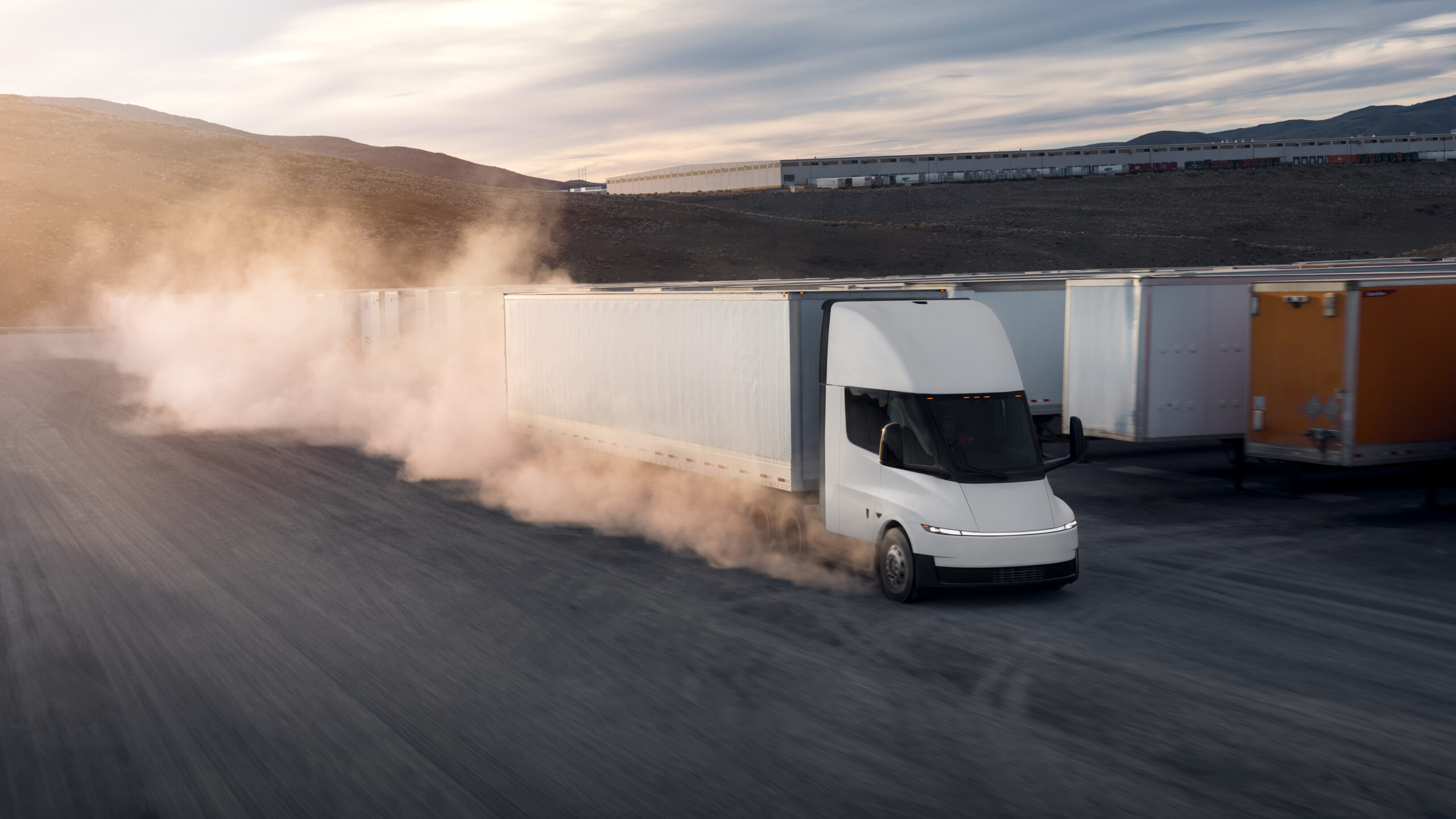
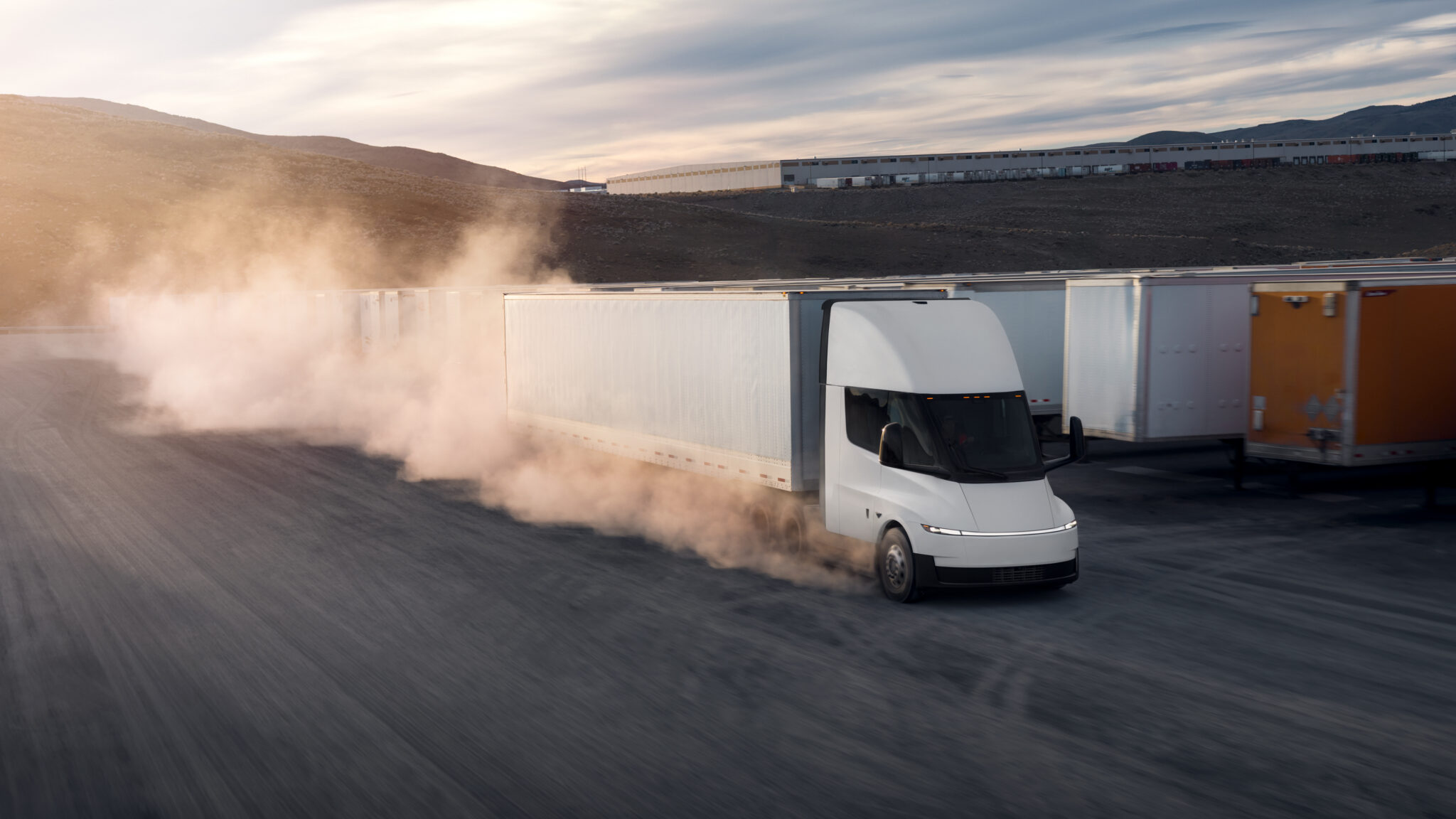
Tesla has produced the first Semi truck off its new high-volume production line at Gigafactory Nevada, marking a critical milestone for the long-delayed electric truck program. The automaker shared an image of the truck on its official Tesla Semi account on X, confirming volume production is now underway at the dedicated 1.7-million-square-foot factory. The Tesla Semi has had one of the longest gestation periods in Tesla’s history. First unveiled in 2017, the truck was originally promised for production in 2019. That target slipped repeatedly — to 2020, then 2021, then 2022 — before Tesla finally delivered a handful of units to PepsiCo in late 2022. Those early trucks were essentially hand-built on a pilot line, and cumulative U.S. deliveries barely exceeded 200 units.
From Pilot Line to High-Volume Production
Tesla spent the next three years refining the design, cutting roughly 1,000 lbs from the truck, and building out a dedicated factory adjacent to Gigafactory Nevada in Sparks. The company revealed the final production specs in February, confirming two trims: a Standard Range with 325 miles at full 82,000-lb gross combination weight, and a Long Range with 500 miles of range. The shift from a pilot line to a high-volume production line is significant. Tesla’s Semi factory is designed for an annual capacity of 50,000 trucks, though the company will ramp gradually. Analysts project deliveries between 5,000 and 15,000 units in 2026, but that sounds way too optimistic. In its Q1 2026 shareholder filing with the SEC, Tesla confirmed that the Semi has entered pilot production at the facility and indicated a long-term capacity target of up to 50,000 units annually, a figure that translates to roughly $14 billion in annual revenue from a single product line.
Vertical Integration and the 4680 Battery Advantage
A key advantage of the Nevada location is vertical integration. The 4680 battery cells powering the Semi are manufactured in the same complex, eliminating the supply chain bottleneck that forced Tesla to deprioritize the Semi for years while it allocated batteries to its higher-volume passenger cars. Both trims feature an 800-kW tri-motor drivetrain producing 1,072 hp and support 1.2-MW Megacharger speeds, restoring 60% of range in roughly 30 minutes — conveniently timed around a driver’s mandatory rest break. Tesla has opened its first Megacharger station in Ontario, California, and has mapped 66 Megacharger locations across 15 states. The charging infrastructure is critical for long-haul operations and is part of the broader ecosystem expanding around the Semi.
Cost Advantage Over Diesel and Competitors
Rising fuel costs have shifted the broader cost picture for diesel trucks, making electric alternatives more attractive than ever before. Bernstein published an analysis this spring formally concluding that the Tesla Semi now holds a 3% total cost of ownership advantage over the Freightliner Cascadia diesel in today’s fuel environment. Trucking is an industry where full-year profit margins typically run between 2% and 5%. A 3% structural cost edge, compounding across an entire fleet over hundreds of thousands of miles, is a competitive moat. The Semi’s fuel cost runs 15-25 cents per mile against 50-70 cents for a comparable diesel. On a truck logging 200,000 miles annually, the fuel savings alone approach $72,000 per year. The Tesla Semi is also among the lowest-priced electric Class 8 options on the market, with the 500-mile variant listed at $290,000. The Freightliner eCascadia and the Volvo VNR Electric both list above $300,000. According to data compiled by the International Council on Clean Transportation from California’s HVIP incentive program, the Tesla Semi’s median price is the lowest among commercially available Class 8 battery-electric tractors.
Market Reception and Competitive Landscape
Tesla enters high-volume production with a meaningful lead on price and range. Daimler’s Freightliner eCascadia and Volvo’s electric trucks are shipping in limited numbers but at higher price points and shorter range. Nikola, once positioned as a direct competitor, went bankrupt. Volvo is seen as the global leader with thousands of electric trucks delivered already. In California’s Clean Truck & Bus Voucher program — a useful proxy for commercial demand — the Tesla Semi accounted for 965 of 1,067 applications between January 2025 and February 2026. Daimler, PACCAR, and Volvo combined received fewer than 100. This overwhelming preference suggests strong fleet interest in the Tesla Semi despite its delayed arrival.
Ecosystem Expansion and New Business Models
Meanwhile, the ecosystem around the Semi is expanding. Alyath is preparing to unveil a “Tesla Semi as a Service” model at ACT Expo on May 4, offering fleets access to the truck through a bundled monthly payment that includes the vehicle, charging infrastructure, and energy supply — eliminating the capital expenditure barrier entirely. And drayage operator MDB just launched a three-week freight pilot using the Semi at Southern California ports. These developments indicate that the Semi is not just a vehicle but a platform for new service models that could accelerate adoption among fleets hesitant to invest in electric trucks outright.
Environmental Stakes and Outlook
Diesel trucks generate a disproportionate amount of CO2 and soot, and while most other truck manufacturers have electric models, sales are tiny compared to diesel versions. The Tesla Semi’s entry into high-volume production could significantly reduce emissions from freight transport, especially if the cost advantages hold and charging infrastructure expands. The timing of its success could prove fortuitous. Tesla expects higher-volume production of the Semi to ramp in 2026. Specific delivery volumes for the year have not been formally disclosed, but some analyst estimates place first-year output in the 5,000–15,000 range. If Tesla can achieve even a fraction of its 50,000-unit annual capacity, the Semi could reshape the economics of long-haul trucking and make a meaningful dent in transport emissions.
The bottom line
- Tesla has begun volume production of the Semi at a dedicated Nevada factory with an annual capacity target of 50,000 units.
- The Semi offers a 3% total cost of ownership advantage over diesel trucks, with fuel savings of up to $72,000 per year per truck.
- Tesla's vertical integration of 4680 battery cell production at the same site eliminates a prior supply chain bottleneck.
- The Semi is the lowest-priced Class 8 battery-electric tractor on the market, with the 500-mile version at $290,000.
- California incentive data shows the Tesla Semi captured 90% of applications among electric truck models, indicating strong fleet demand.
- New service models like 'Tesla Semi as a Service' and freight pilots are expanding the truck's commercial ecosystem.





Raptors face elimination without Ingram as heel injury sidelines star forward
Raptors Face Elimination Without Ingram After Heel Injury

Lakers' Offense Stalls as Rockets Force Game 6, Threatening Historic Comeback