‘Desert Warrior’: Saudi Arabia’s $150M Epic Flops With $472K U.S. Opening
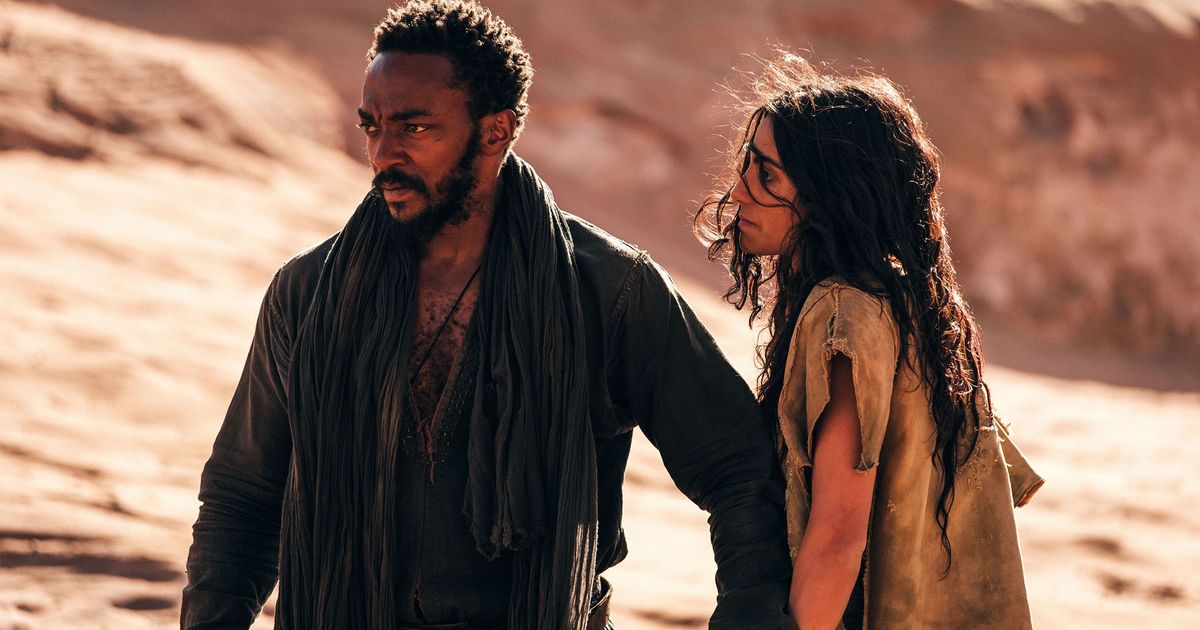
The Anthony Mackie-led historical action film, once hailed as a milestone for the kingdom’s Vision 2030, grossed a mere $472,000 across 1,010 screens — a catastrophic return on a budget that ballooned to at least $150 million.
UNITED KINGDOM —
Key facts
- Desert Warrior grossed $472,000 in its U.S. opening weekend across 1,010 screens.
- The film’s budget swelled from an initial $70 million to at least $150 million, per MBC Group internal accounting.
- Principal photography began in September 2021 at Neom Media, a studio complex that was still under construction.
- Director Rupert Wyatt was stripped of editing control after early cuts were deemed disastrous; he later returned to complete the film.
- The film was finally sold to distributor Vertical in February 2026, four years and seven months after production started.
- MBC Group’s 2022 internal audit revealed a culture of overspending and lack of controls.
- The October 7, 2023 Hamas attack on Israel and subsequent regional war deterred distributors from picking up the film.
- Sharlto Copley, who plays the main villain, defended the production as not ‘chaotic’ or ‘dysfunctional’.
A Desert Epic Built on Shifting Sands
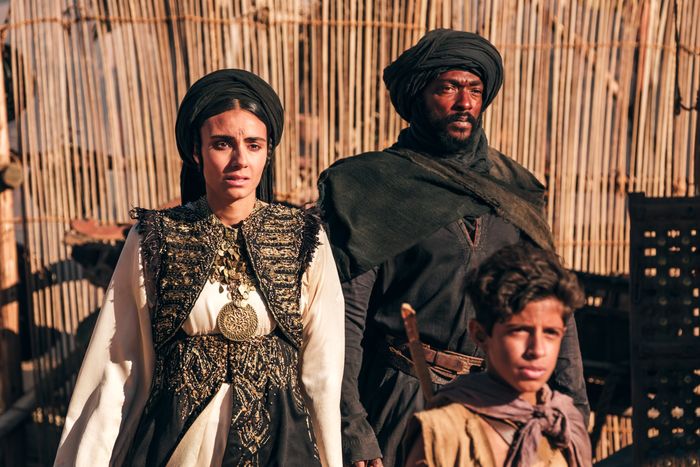
Desert Warrior was conceived as the first Hollywood-style tentpole shot entirely on location in Saudi Arabia, a cornerstone of Crown Prince Mohammed bin Salman’s Vision 2030 campaign to diversify the economy beyond oil. Directed by Rupert Wyatt (Rise of the Planet of the Apes) and starring Anthony Mackie, the film aimed to launch Neom Media, a state-of-the-art studio complex attached to the futuristic Neom City. But when cameras rolled in September 2021, the promised 130,000 square feet of production space were far from complete. The crew built a makeshift soundstage in a hotel parking lot in Tabuk, cooled by giant fans against the desert heat. ‘It was like an inflatable stadium,’ recalled one person on set. ‘There were no studios. There were studios after us because of the film.’
From $70 Million to $150 Million: A Budget Out of Control
The film’s budget, initially set at $70 million, ballooned to at least $150 million.’s internal accounting, with one insider estimating $170 million. The cost overruns stemmed from a cascade of logistical challenges: 12,500 extras were trucked in from as far as Georgia; a technical crew from 40 countries was assembled; and equipment had to be imported across the Middle East. COVID-19 border closures stranded crucial gear for six weeks. Sets were built, junked, and rebuilt due to unfamiliarity with Hollywood production methods. Despite these hurdles, principal photography wrapped on schedule in December 2021. Production designer Paki Smith called it ‘quite the miracle that we pulled this off.’
Postproduction Hell and Creative Turmoil
After filming, Desert Warrior languished in postproduction. Early cuts were either well-received or disastrous, depending on the source. MBC fired Wyatt’s editor, Richard Mettler, and stripped Wyatt of oversight. An executive shuffle led to Wyatt’s departure — described as firing, hiatus, or refusal to make changes. Test screenings of the non-Wyatt edits proved disastrous. One proposed fix, paying Morgan Freeman $2 million for voice-over, was never pursued. ‘Nobody at the company had the experience to make this kind of movie,’ said an insider. ‘Who is its targeted demo? Arabs don’t want to watch it because they don’t think it’s authentic. And nobody in the West gives a shit about Princess Hind.’
Geopolitical Fallout and a Delayed Release
The October 7, 2023 Hamas attack on Israel and the ensuing U.S.-Iran conflict made the film’s desert warfare theme unpalatable. No theatrical distributors or streamers would touch it for years. ‘Man makes his plans and the gods laugh,’ said Ali Jaafar, MBC’s head of film and global series. ‘Destiny has decreed that this film comes out in the geopolitical circumstances that it does. It’s a delicious twist of irony.’ In February 2026, the film was finally sold to Vertical, a small distributor known for low-budget releases. It opened on 1,010 U.S. screens with minimal marketing, grossing $472,000 — an average of $467 per cinema.
Casting Controversy and Cultural Tensions
The choice of Anthony Mackie, a Black American actor, as the male lead reportedly puzzled some Saudi royal court members. ‘They were like, “Why the fuck are we having [a Black man] as the lead of our first Saudi Arabian movie?”’ recalled a source with knowledge of the production. Jaafar called that characterization ‘entirely inaccurate,’ stating it didn’t square with their experience. The film’s plot — Arab tribes uniting against a Persian empire — also risked offending regional sensibilities. MBC’s original plan was to ‘take a story from our region and translate it with world-class filmmakers for audiences around the world,’ Jaafar said. But the result failed to resonate with either Arab or Western audiences.
A Dual Narrative: Miracle or Disaster?
Those involved in the shoot often describe it as a triumph of improvisation. Sharlto Copley, who plays a bloodthirsty warlord, emailed to dispel the ‘troubled production’ label: ‘What we did on Desert Warrior was difficult, no question. But to reduce that experience to “chaos” or “dysfunction” isn’t just an oversimplification, it’s a distortion.’ Yet the numbers tell a different story. MBC Group’s 2022 internal audit painted a picture of wild overspending and disarray. The film’s failure has stalled MBC Studios’ ambitions to become a forward face of Saudi entertainment. For now, Desert Warrior stands as a cautionary tale of ambition colliding with reality.
What Comes Next for Saudi Cinema?
The Desert Warrior debacle raises questions about the viability of Saudi Arabia’s film industry ambitions under Vision 2030. The kingdom has invested billions in infrastructure, but the lack of experienced local crews and market research proved costly. ‘There was none of the market research one does for a film originally budgeted at $70 million,’ the insider noted. MBC Group’s corporate disorganization, as revealed by the audit, further undermined the project. While the film may eventually find an audience on streaming, its theatrical failure is a stark setback. As one observer put it, ‘There’s no audience for this movie after the Israel-Hamas war.’ The path forward for Saudi-produced blockbusters remains uncertain.
The bottom line
- Desert Warrior’s budget ballooned from $70 million to at least $150 million, with a U.S. opening gross of just $472,000.
- The film was plagued by incomplete infrastructure, creative clashes, and a lack of experienced local film crews.
- Geopolitical tensions after October 7, 2023 made the film’s desert warfare theme commercially toxic.
- Casting Anthony Mackie as the lead sparked controversy among Saudi royals, though MBC denies this.
- MBC Group’s internal audit revealed systemic overspending and disorganization, stalling its studio ambitions.
- The film’s failure underscores the challenges of building a film industry from scratch under Vision 2030.

‘The Devil Wears Prada 2’ Opens to $114.6M Globally as Sequel Dominates International Box Office

Zelenskyy Offers Open-Ended Truce as Putin Demands Two-Day Ceasefire for Victory Day

Antonelli's Miami Hat-Trick Stuns F1 as 2026 Rules Face Backlash