Eta Aquariid Meteor Shower Peaks Amid Bright Moon
Earth passes through debris from Halley's Comet, but moonlight may dim the spectacle.

UNITED KINGDOM —
Key facts
- The Eta Aquariid meteor shower peaks between Tuesday and Wednesday.
- Best viewing is in the early morning hours before dawn.
- The shower originates from debris shed by Halley's Comet.
- Up to 40 meteors per hour are possible in the Southern Hemisphere under ideal conditions.
- Visibility in the Northern Hemisphere is typically lower, with fewer than 20 meteors per hour expected.
- A bright waning gibbous moon will significantly reduce visibility, potentially to fewer than 10 meteors per hour.
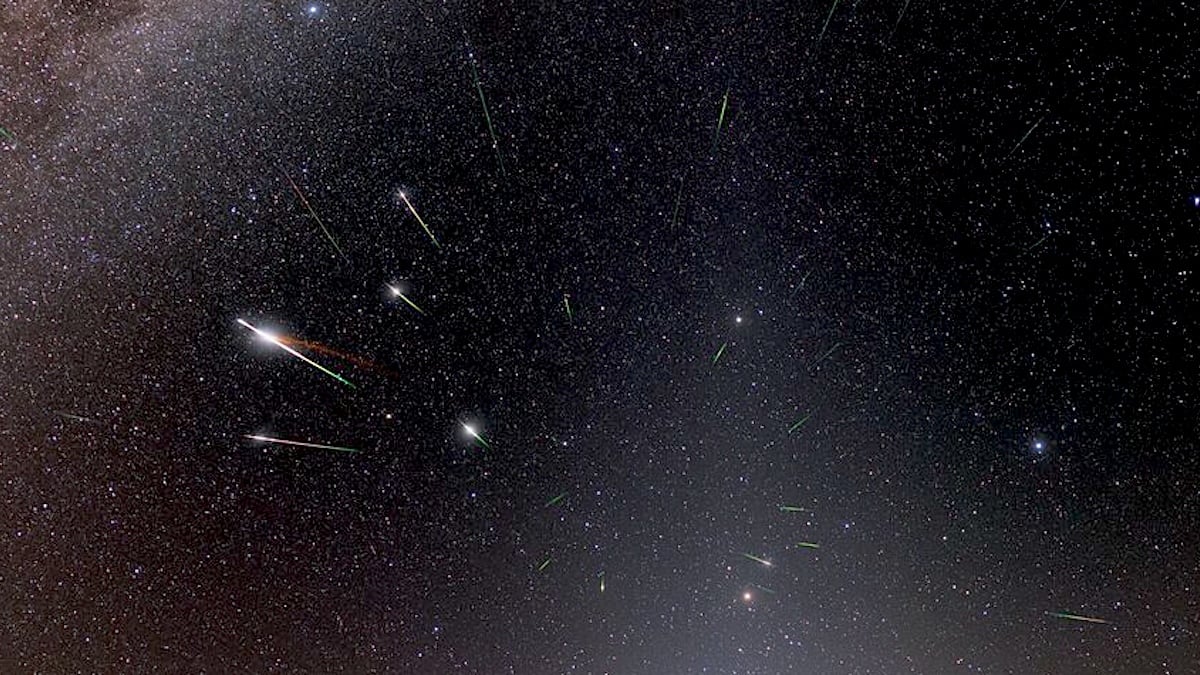
- The meteors travel at approximately 40 miles per second, sometimes leaving glowing trails.
- The shower is active from April 19 to May 28, with a broad peak around May 5-6.
Celestial Spectacle Faces Lunar Obstruction
Sky-gazers hoping for a dazzling display of shooting stars this week will need keen eyes and a strategy to overcome a significant celestial obstacle. The Eta Aquariid meteor shower, a yearly event born from the dusty remnants of Halley's Comet, reaches its zenith between Tuesday and Wednesday. While the early morning hours before dawn offer the prime window for observation, a bright waning gibbous moon threatens to wash out many of the fainter streaks. The Eta Aquariids are known for their speed, with meteors zipping through Earth's atmosphere at roughly 40 miles per second. This velocity can cause them to leave behind luminous trails that linger for a moment after the initial flash, a phenomenon documented by NASA. However, the brilliance of the moon, which will be an 84% illuminated disk rising shortly after midnight on the peak night of May 5-6, is poised to diminish the shower's impact. "We're going to be lucky if we see just a couple an hour" with the bright moon, notes Robert Lunsford, fireball report coordinator with the American Meteor Society. He advises observers to seek out the darkest possible locations, away from city lights, and to allow their eyes at least 45 minutes to adjust to the darkness to maximize their chances of spotting the faint meteors.
Timing and Location Dictate Viewing Success
The optimal time to witness the Eta Aquariids is during the final few hours before sunrise. This is because the shower's radiant point, the apparent origin of the meteors, lies within the constellation Aquarius. This constellation does not become visible in the sky until around 3 a.m. for much of the globe, limiting the viewing window. "The only opportunity to see these meteors is during the last few hours before dawn," confirms Lunsford. The higher the radiant appears in the sky, the more meteors an observer can expect to see. From the Southern Hemisphere, Aquarius typically sits higher, offering a more expansive view. This geographical advantage means that locations south of the equator can expect up to 40 meteors per hour under ideal conditions, a rate that can climb to 50 or even 60 per hour according to some reports. In contrast, the Northern Hemisphere offers a less favorable vantage point. While up to 20 meteors per hour might be theoretically possible under dark skies, the presence of the bright moon is expected to reduce this number significantly, potentially to fewer than 10 per hour. Observers in the southern half of the United States are considered to have the strongest chance of catching the display.
Halley's Comet Provides Annual Cosmic Debris
The Eta Aquariids are a direct result of Earth's annual passage through the debris trail left behind by the famous Halley's Comet. This celestial wanderer, officially designated 1P/Halley, completes an orbit around the Sun approximately every 76 years. As the comet journeys through the solar system, it sheds dust and ice particles. When Earth's orbit intersects with this stream of cometary detritus, small particles enter our atmosphere at high speeds. The intense friction causes these particles to heat up and vaporize, creating the streaks of light we perceive as meteors. The radiant point for the Eta Aquariids is located near the star Eta Aquarii within the constellation of Aquarius, giving the shower its name. While the peak activity is concentrated between May 4 and May 6, the Eta Aquariids are active for an extended period, typically from April 19 to May 28. This extended duration means that even if the peak viewing conditions are hampered by the moon, opportunities to see the shower will persist into late May.
Strategies to Mitigate Moonlight Interference
Despite the challenging lunar conditions, several strategies can help sky-watchers maximize their viewing experience. The most crucial step is to find a location far from artificial light pollution, such as city streets and buildings, which can obscure fainter celestial events. Laying down on a blanket or reclining in a chair to take in as much of the dark sky as possible is recommended. An effective tactic to combat the moon's glare is to position oneself so that a large, natural object like a tree or a building is between the observer and the moon. Because Earth rotates from west to east, celestial objects generally rise in the east and set in the west. During the pre-dawn hours of the peak, the moon will be setting in the west while Aquarius rises in the east. By turning one's back to the moon, observers can use it as a natural shield against its own light. Additionally, using astronomy smartphone applications like Stellarium or Sky Safari 7 Pro can aid in locating the radiant point in the constellation Aquarius, which rises in the hours after midnight. Aiming to view meteors in a patch of sky roughly 40 degrees away from the radiant can also enhance the visibility of their persistent glowing trails.
Past Performance and Future Prospects
In recent years, the Eta Aquariids have not always delivered spectacular displays, even under darker skies. Robert the shower has "barely producing five meteors per hour" in some recent peak events. This suggests that factors beyond just lunar interference can influence the shower's intensity. However, the annual nature of the shower and its origin from Halley's Comet ensures continued interest. The debris stream is a consistent feature of Earth's orbit, meaning the event will return year after year. While the current year's viewing may be compromised by the moon, future Eta Aquariid showers could offer more dramatic displays if they coincide with a new moon or less obstructed skies. Looking ahead, the Eta Aquariids are expected to remain an active shower for the foreseeable future. The debris trail from Halley's Comet is a long-standing feature, and Earth's orbital path ensures regular encounters. Observers are encouraged to continue watching the skies, as the shower's activity extends until late May, offering a prolonged, albeit potentially fainter, viewing window.
The bottom line
- The Eta Aquarid meteor shower peaks between Tuesday and Wednesday, with the best viewing opportunities occurring in the pre-dawn hours.
- Earth is passing through debris left by Halley's Comet, which creates the annual shower.
- A bright waning gibbous moon will significantly hinder visibility, potentially reducing the number of visible meteors to fewer than 10 per hour, especially in the Northern Hemisphere.
- The Southern Hemisphere offers better viewing conditions due to the radiant point appearing higher in the sky.
- Observers can improve their chances by finding dark locations, allowing eyes to adjust, and using natural objects to block moonlight.
- The shower's activity lasts until late May, providing continued opportunities to observe shooting stars.




Lakers Face Uphill Battle Against Thunder Without Dončić in Western Conference Semifinals

The Boys Season 5 Nears Climax with Episode 6 Twists
