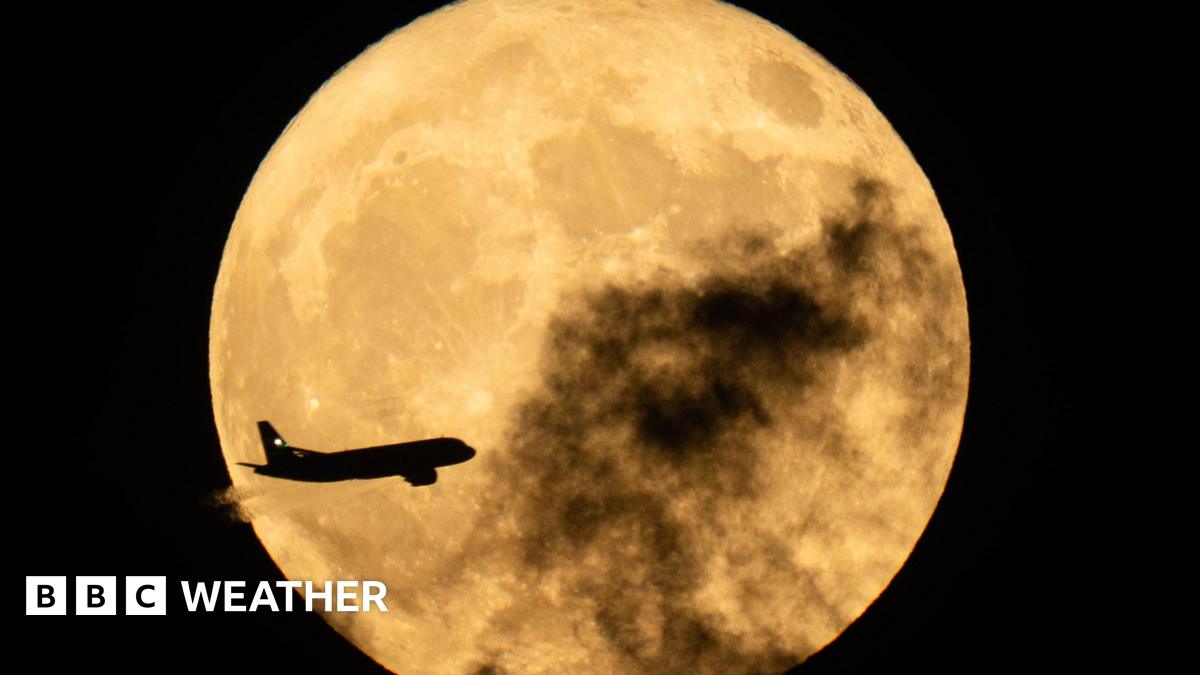
Waxing Gibbous Moon Reaches 98% Illumination Ahead of May Day Full Moon
With the lunar cycle at day 13, skywatchers can spot craters, mountains, and the Apollo 16 landing site before the first of two full moons in May.

UNITED KINGDOM —
Key facts
- The Moon is in the Waxing Gibbous phase as of Thursday, April 30.
- 98% of the Moon's surface is illuminated tonight.
- The next Full Moon is predicted for May 1, the first of two in May.
- The lunar cycle takes approximately 29.5 days to complete.
- There are eight distinct lunar phases: New Moon, Waxing Crescent, First Quarter, Waxing Gibbous, Full Moon, Waning Gibbous, Third Quarter, Waning Crescent.
- Visible features tonight without aids: Mare Serenitatis, Tycho Crater, Copernicus Crater.
- With binoculars: Alps Mountains, Archimedes Crater, Alphonsus Crater.
- With a telescope: Apollo 16 landing spot, Rima Hyginus, Fra Mauro Highlands.
Tonight's Sky: A Nearly Full Moon Reveals Surface Details
The Moon stands at day 13 of its lunar cycle, just one day shy of full illumination. As of Thursday, April 30, the phase is Waxing Gibbous, with 98% of the lunar surface lit.ght offer an exceptional opportunity to observe prominent features without any visual aids, including the Mare Serenitatis, Tycho Crater, and the Copernicus Crater. For those with binoculars, the view expands to include the Alps Mountains, Archimedes Crater, and the Alphonsus Crater. A telescope reveals even more: the Apollo 16 landing spot, Rima Hyginus, and the Fra Mauro Highlands. The proximity to the full moon means shadows are minimal, yet the high contrast of the terminator region still provides striking detail.
The Lunar Cycle: Eight Phases in 29.5 Days
The Moon takes roughly 29.5 days to circle Earth once, passing through eight distinct phases. Although the same side of the Moon always faces Earth, the amount of sunlight hitting it changes as it moves in its orbit, creating the familiar shapes of full, half, and crescent moons. The eight main phases are: New Moon, Waxing Crescent, First Quarter, Waxing Gibbous, Full Moon, Waning Gibbous, Third Quarter, and Waning Crescent. Tonight's Waxing Gibbous phase occurs when more than half of the Moon is lit but it is not yet full. In the Northern Hemisphere, the illuminated portion appears on the right side. After the Full Moon, the Moon enters the Waning Gibbous phase, losing light on the right side, followed by the Third Quarter (left side lit) and Waning Crescent (a thin sliver on the left) before returning to darkness.
May 1 Full Moon: First of Two in May
The next Full Moon is predicted to take place on May 1, marking the first of two full moons in the month of May. This phenomenon, sometimes called a Blue Moon when two full moons occur in a single calendar month, will see the Moon fully illuminated and visible in its entirety. The second full moon is expected later in May, though its exact date depends on the lunar calendar. Full moons occur when the Earth is directly between the Sun and the Moon, allowing the Sun's rays to fully illuminate the lunar face. The May 1 full moon will be a highlight for astronomers and casual observers alike, offering a bright, unobstructed view of the Moon's surface.
Observing Tips: From Naked Eye to Telescope
Tonight, without any visual aids, observers can spot the Mare Serenitatis, a dark basaltic plain; the Tycho Crater, a prominent impact crater with a distinctive ray system; and the Copernicus Crater, another large impact feature. Binoculars bring into view the Alps Mountains, a rugged mountain range on the lunar surface; the Archimedes Crater, a large crater in the Mare Imbrium; and the Alphonsus Crater, a crater with a dark floor. For telescope users, the Apollo 16 landing site in the Descartes Highlands becomes visible, along with Rima Hyginus, a long, narrow channel on the Moon, and the Fra Mauro Highlands, a region of rugged terrain. These features offer a glimpse into the Moon's geological history and the sites of human exploration.
Why the Moon's Phases Matter for Science and Culture
The lunar phases have guided human calendars, agriculture, and cultural rituals for millennia. Scientifically, the Moon's orbit and phases provide insights into celestial mechanics and Earth's place in the solar system. NASA continues to monitor lunar phases through its Daily Moon Guide, aiding both amateur astronomers and researchers. The 29.5-day cycle is a fundamental rhythm that influences tides, animal behavior, and even human sleep patterns. As the Moon approaches full illumination, its gravitational pull is strongest, leading to spring tides. The upcoming full moon on May 1 will be a reminder of the Moon's enduring presence in our skies.
What Comes Next: The Lunar Cycle Continues
After the Full Moon on May 1, the Moon will enter the Waning Gibbous phase, gradually losing illumination over the following two weeks. The next major phase will be the Third Quarter around May 8, followed by the Waning Crescent. The cycle will then repeat with a New Moon, restarting the 29.5-day journey. For those who miss tonight's view, the full moon offers an equally spectacular sight, though surface details may be less contrasted due to the absence of shadows. Binoculars and telescopes will still reveal many features, but the terminator—the line between light and dark—will be absent, making craters and mountains harder to distinguish. The next opportunity for high-contrast viewing will come during the Waxing Gibbous phase of the following cycle.
The bottom line
- The Moon is in Waxing Gibbous phase with 98% illumination on April 30, one day before the Full Moon.
- Visible features tonight include Mare Serenitatis, Tycho Crater, and Copernicus Crater without aids; with binoculars, Alps Mountains, Archimedes Crater, Alphonsus Crater; with telescope, Apollo 16 landing site, Rima Hyginus, Fra Mauro Highlands.
- The lunar cycle lasts 29.5 days and consists of eight phases: New Moon, Waxing Crescent, First Quarter, Waxing Gibbous, Full Moon, Waning Gibbous, Third Quarter, Waning Crescent.
- The next Full Moon is predicted for May 1, the first of two full moons in May.
- The Moon's phases influence tides, cultural calendars, and scientific observation; NASA's Daily Moon Guide provides phase tracking.


May’s Flower Moon Rises Tonight as a Micromoon, with a Rare Blue Moon Due on May 31

LeBron James forces overtime as Lakers take 3-0 series lead over Rockets
May’s Flower Moon Rises as a Micromoon, Followed by a Rare Blue Moon
