Turkmenistan Police Raid Rooftops to Seize Secret Starlink Terminals
Authorities hunt for satellite dishes as residents pool funds to buy unlicensed internet from Dubai, evading one of the world's most restrictive networks.
UNITED KINGDOM —
Key facts
- Police and telecom workers search rooftops in Turkmenabat, Dashoguz, and other cities for Starlink terminals since mid-April.
- arrests and confiscation of devices; some are held in police stations.
- Starlink terminals began appearing in late 2025 after frequent internet outages and speeds of ~4 Mbps.
- A local from Dashoguz said wealthy households pool money to buy equipment from Dubai and pay monthly subscriptions via foreign banks.
- Starlink download speeds range from 100-300 Mbps, not subject to local censorship.
- Authorities claim restrictions prevent 'actions that disrupt social order and propagate terrorism.'
- In February 2026, network quality deliberately degraded, accelerating demand for satellite internet.
- Legal high-speed packages (up to 100 Mbps) cost $6,280/month for local entities and up to $35,702 for foreign companies.
Rooftop Raids and Secret Antennas
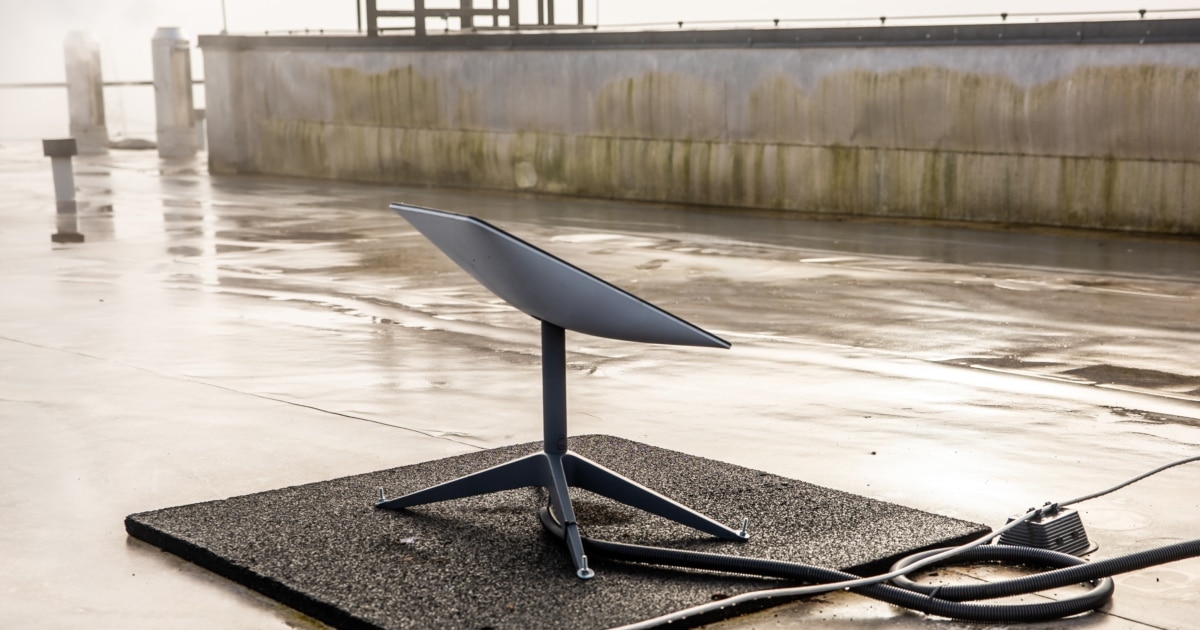
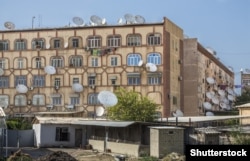
Police in Turkmenistan are scouring rooftops for Starlink satellite internet terminals as residents defy one of the world's most restrictive internet regimes. In the eastern city of Turkmenabat, teams of local officials and law enforcement conduct door-to-door searches, climbing onto roofs to inspect antennas. “They come and go straight to the roof,” a Turkmenabat resident told RFE/RL’s Turkmen Service on condition of anonymity. “They check who has what. If a Starlink system is found, they take the device away.” Some residents linked to the devices are being arrested and held in police stations, sources say. Telecom workers, who routinely access apartment rooftops, are also being used as informants. “The technicians have people among them who report what kind of antennas are where,” the local added. RFE/RL’s calls to a Turkmenabat police station seeking comment went unanswered.
A Crackdown That Began in April
Independent media focusing on the Starlink raids have been ongoing since mid-April. Inspections have included residential, office, and commercial buildings, according to the Turkmen.news portal. The searches are conducted by law enforcement and other state bodies, with particular attention to rooftops where satellite equipment is typically installed. Although Starlink is not officially authorized in Turkmenistan, it has become widely used as users seek more stable internet access amid low speeds and restrictions imposed by local providers. The shift toward satellite internet accelerated in February, when authorities introduced what users describe as a deliberate degradation of connectivity. Higher-speed packages are largely unavailable to ordinary users. Speeds of up to 100 Mbps are offered only to legal entities at a cost of approximately $6,280 per month. For foreign companies, the price can reach as much as $35,702 per month. Yet even these expensive plans suffer from frequent disruptions and blocking.
Pooling Funds for Dubai-Bought Dishes
Starlink terminals began appearing in Turkmenistan in late 2025 amid frequent interruptions to an internet that was already among the slowest and most restrictive in the world. A local from the northern city of Dashoguz told RFE/RL’s Turkmen Service in November 2025 that “a small number of wealthy households are joining forces with their neighbors, pooling their money, and buying Starlink equipment from Dubai.” The families “deposit the money in a foreign bank and then pay a monthly subscription fee to use it,” the resident explained. With internet speeds of around four megabits per second, data that takes a full minute to load in Turkmenistan would be received within a second in countries with fast networks. Starlink download speeds are rated from 100-300 megabits per second depending on the pricing plan, and the satellite internet is not subject to local censorship. Turkmenistan is one of the most closed countries in the world, with heavily restricted and monitored internet use. Ashgabat has previously claimed that internet restrictions are to prevent “actions that disrupt social order and propagate terrorism, extremism, ultra-nationalism, and other illegal activities.”
The Stakes of Connectivity in a Closed State
The crackdown on Starlink underscores the regime’s determination to maintain control over information flows. By targeting satellite dishes, authorities aim to close a loophole that allows citizens to bypass state censorship and surveillance. The use of telecom workers as spies reveals the extent of state infiltration into everyday life. For residents, the consequences of being caught with a Starlink terminal can be severe: arrest, detention, and confiscation of expensive equipment. Yet the demand for alternative internet access continues to grow, driven by the poor quality of official networks and the deliberate degradation of service in February. The high cost of legal high-speed packages—$6,280 per month for local entities—puts them out of reach for most individuals, making Starlink’s relatively affordable shared subscriptions an attractive option. However, the risks of procurement and use remain high.
What Comes Next for Turkmenistan’s Internet Underground
The raids have not yet halted the spread of Starlink terminals, as residents find new ways to acquire and hide the equipment. The cat-and-mouse game between authorities and users is likely to intensify, with both sides adapting tactics. Open questions remain about the scale of the underground network and the effectiveness of the crackdown. suggest that inspections are widespread but not comprehensive, leaving some terminals undiscovered. The regime’s ability to maintain its internet monopoly may depend on whether it can sustain the raids and deter future purchases. For now, Turkmenistan remains one of the world’s most isolated digital environments, where even basic online activities take considerable time. The Starlink raids are a stark reminder of the lengths to which the state will go to preserve that isolation.
The bottom line
- Turkmenistan police have conducted rooftop searches for Starlink terminals since mid-April, arresting residents and confiscating devices.
- Residents pool money to buy equipment from Dubai and pay monthly subscriptions via foreign banks to bypass state censorship.
- Internet speeds in Turkmenistan average 4 Mbps, while Starlink offers 100-300 Mbps without local restrictions.
- Authorities deliberately degraded network quality in February 2026, accelerating demand for satellite internet.
- Legal high-speed packages cost up to $35,702 per month for foreign companies, making Starlink a cheaper alternative.
- The crackdown highlights the regime's effort to maintain control over information in one of the world's most closed countries.


Phil Salt injury clouds RCB's top-order firepower ahead of crucial GT clash

Ulster Edge Exeter in Challenge Cup Semi-Final Thriller

Farringdon Station Evacuated After Suspected Gas Leak; 14 Treated, Two Hospitalized
