Uzbekistan's Renaissance: A Silk Road Revival Beckons Travelers and Artisans
From Samarkand's turquoise domes to Bukhara's bustling bazaars, a nation once closed off is now a safe, affordable haven where ancient crafts thrive anew.
UNITED KINGDOM —
Key facts
- Uzbekistan gained independence from the Soviet Union in 1991 following Gorbachev's Perestroika.
- The country is a major trade hub, with its economy boosted by natural gas and gold mining.
- £100 sterling is equivalent to 1,630,000 Uzbek Som, making visitors instant millionaires.
- Samarkand has inspired English poets like Milton, Keats, and Marlowe, who wrote about it without ever visiting.
- More than 20,000 people live and work within Bukhara's Unesco-protected historic core.
- Traditional crafts like suzani embroidery, woodcarving, and miniature painting were discouraged during Soviet times but revived after independence.
- The Samarkand Bukhara Silk Carpet Factory, founded in 1992 by an Afghan family, is now run by the fifth generation.
- Uzbekistan is a six-hour flight from London to Tashkent, with new five-star hotels and luxury shopping malls.
A Nation Reborn: From Soviet Relic to Tourism Hotspot
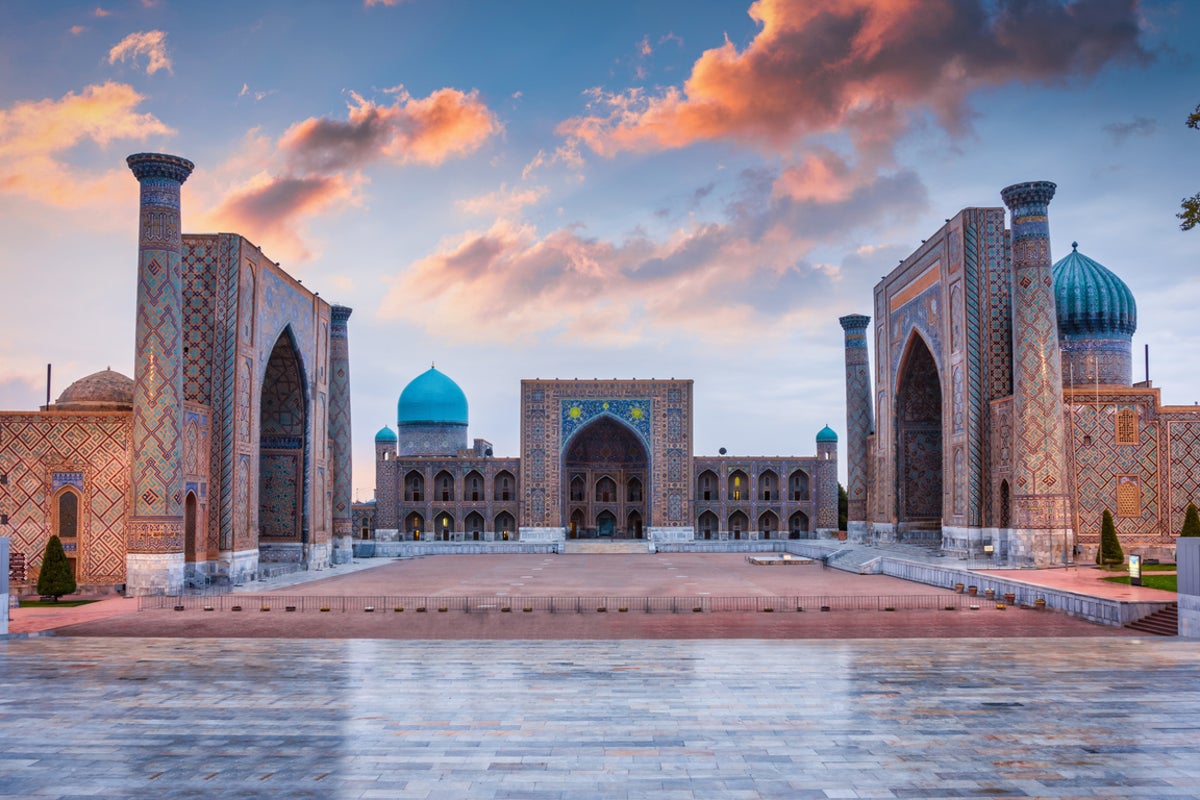
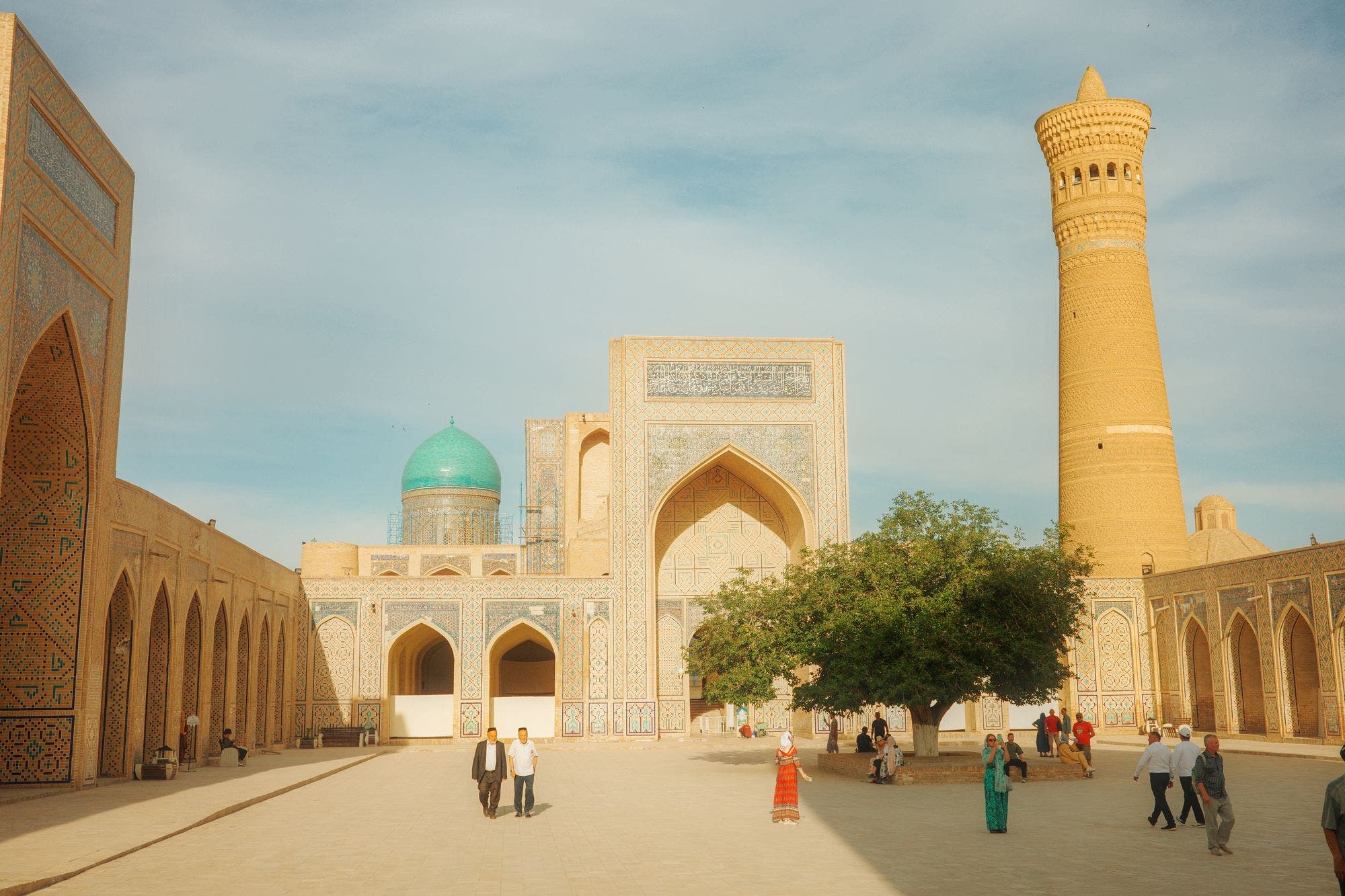
No other far-flung city has so fired the imagination of English poets over the centuries as much as Samarkand – exotic, magical and mystical, a fairytale architectural citadel in the heart of Central Asia. Uzbekistan has been the playground and battleground of Genghis Khan, Alexander the Great, Emperor Temur and Peter the Great, who laid the groundwork for Russian control a century later. Today, this ancient citadel is something of a tourism secret, with Uzbekistan now undergoing a renaissance having freed itself from the Soviet yoke through Gorbachev's Perestroika revolution in 1991. It is remarkably undersold as a stunningly attractive and safe destination. It is also a flourishing trade hub, its economy turbocharged by copious gas and gold mining, making it a surprisingly alluring ancient and modern tourist hot spot. The country is one of the few places where every visitor almost immediately becomes a millionaire – not just because Uzbekistan is prosperous, but because of its currency the Som: £100 of sterling is worth 1,630,000 Som. Even better, these rather eye-watering sums find tremendously good value with accommodation and shopping compared to European prices.
The Lure of the Silk Road: Poets, Conquerors, and Modern Travelers
For many years Uzbekistan, nestled along the legendary Silk Road, has been the chosen territory of adventurous English travel writers, from Robert Byron to Colin Thubron and Wilfred Blunt. They tempted readers through their courageous exploits on horseback, train, camel and foot to discover what were once truly wild and remote tribal territories. Today, Uzbekistan is an easy six-hour flight from London to Tashkent. The capital has a flavour of Paris with its wide boulevards, tree-lined avenues and verdant parks. There are many brand new five-star luxury hotels – some with a sushi bar on the penthouse floor – as well as boutique hotels nestling next door to marble monuments and galleries. It seems a haven of peace away from the world's many trouble spots. Samarkand has always been intoxicating as an exotic fantasy and idyll, even for those who never actually visited it like Christopher Marlowe, the Elizabethan dramatist, who had much to say about the romantic and remote city in his play Tamburlaine. Milton was also seduced by the idyll of Samarkand, while Keats described the city as “silken”. Oscar Wilde was won over too: “The almond groves of Samercand, Bokhara, where red lilies blow, And Oxus, by whose yellow sand, The grave white-turbaned merchants go.”
Artisans at Work: Reviving Traditions in Bukhara and Beyond
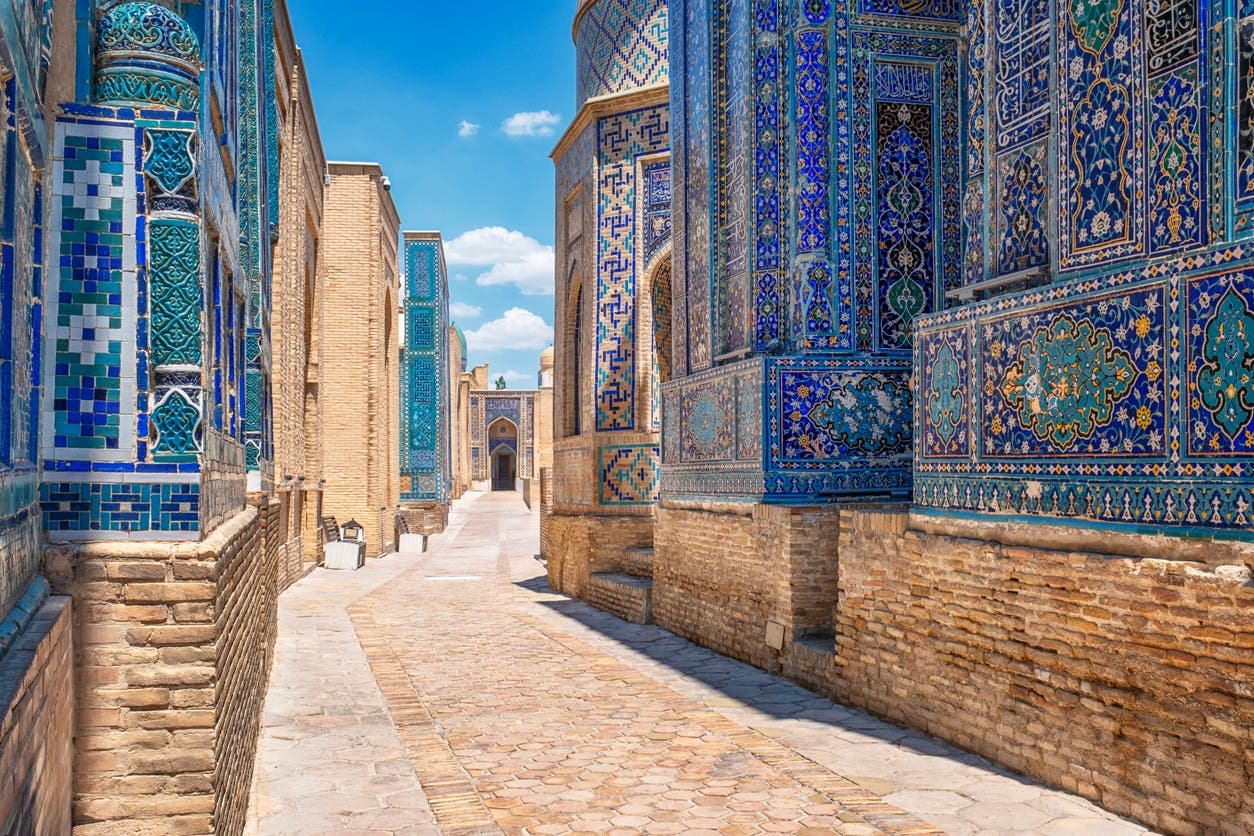
Inside a small workshop with the earthy scent of freshly cut wood, a woodcarver's chisels move patiently over a block of walnut wood as a Koran stand slowly takes shape. “Look,” he says, holding up a finished piece with quiet pride. “There are no hinges or nails.” The stand folds open effortlessly, its interlocking parts forming a cradle for a sacred text, or even a modern iPad. I am in the old town of Bukhara, a living city where more than 20,000 people still live and work within a Unesco-protected historic core. Once a flourishing hub along the Silk Road, it is believed that as many as 200 crafts flourished here, with each neighbourhood or mahalla connected to a particular craft. Following the gentle curve of its narrow streets, we arrive beneath the great trading domes: these ancient bazaars called Toqi Zargaron, Toqi Telpak Furushon, and Toqi Sarrofon was where the merchants on the Silk Road came to sell their fragrant teas and porcelain, returning with precious gems and gold. Gayrat, my local guide from Orient Star Group, a company specialising in tours in Uzbekistan and one of the largest tour companies in the country, explains that different trades thrived beneath them in the past – from jewellers to cap-makers and money changers. Today, the vaulted spaces shelter stalls selling miniature paintings, embroidered doppa caps, wood carvings, and vibrant suzani textiles.
Suzani, Miniatures, and Carpets: The Living Heritage of Uzbek Craftsmanship
One of the most striking crafts encountered everywhere is colourful and intricate suzani embroidery. The word comes from the Persian word for “needle,” and these richly embroidered textiles once formed an essential part of nomadic life, serving as prayer mats, bed covers, and wall hangings. Brides traditionally embroidered suzanis with their mothers as part of their dowry, decorating them with motifs for fertility, prosperity, and long life. Inside the enormous Kukaldosh Madrasah in Bukhara, built in the 16th century and once used as a cinema during the Soviet era, master craftswoman Zaynab Murodova shows exquisite jackets and embroidered panels while explaining the language of the motifs: black and white threads for protection, pomegranates for abundance. Across the country, artists bend over a sheet of paper with a slender brush made of squirrel hair, bringing to life scenes from Silk Road history. The tradition of miniature painting in Central Asia flourished during the Timurid era in the 14th and 15th centuries. In Bukhara, the home and studio of award-winning miniaturist Davlat Toshev, who started creating these paintings in the 1990s, has a gallery and classrooms where young students learn the art. Another ancient tradition is carpet weaving. Flatweave carpets were traditionally made on simple wooden looms that could be folded and transported, but the most prized carpets are densely knotted pile carpets. Carpet weaving is traditionally done by women and empowers them.
A Shopper's Paradise: From Silk Dressing Gowns to High-End Couture
Uzbekistan is in so many ways an Aladdin's Cave of treats and treasures, from amethyst necklaces to fabrics and fashion. Beating the path to shop here are London and Paris interior designers who come for the fabrics. High on their list to see is the Queen of Uzbekistan Embroidery, Madina Kasimbayeva, who has revived the traditional Tashkent school of Suzani hand embroidery. Her signature is coats – she has exhibited in museums and has a couture clientele. During her catwalk show in Tashkent this month, the chicness of her designs on 23 sashaying models was matched by that of her high society and fashionista guests who all wore white. Her clothes are considered works of art. “Buy for investment. This is not just a coat,” said a fashion expert from Seattle flown in for the show. Kasimbayeva is considered the Muccia Prada of Central Asia. She may be high-end but everyday shopping here – from trinkets to silk scarves and souvenirs – is fun but also completely hassle-free. There are so many shopping opportunities – from sourcing silk dressing gowns, which can be tailor-made in an hour, to scouting the vast emporium of the seventh generation carpet dealer Sabina Burkhanova, whose speciality is a particular silk design and weave specific to the Bukhara region.
A Secular Haven: Hospitality, Safety, and Modern Comforts
This is one of the most easy and friendly places for a tourist to navigate. Or even wind down with a meal and drink. It is relaxed about alcohol in restaurants: Uzbekistan has a mainly Muslim population but is a secular country. Uzbekistan likes its very local food and customs and has deliberately kept out fast food franchises. That said, the shopping malls in Tashkent compete with Oxford Street in terms of big name brands – and Rolls Royces and Maybachs for sale are displayed in the hallways of the malls. The country offers a unique blend of ancient and modern, with five-star luxury hotels and boutique accommodations nestled next to marble monuments and galleries. For travelers seeking authentic cultural encounters, an Uzbekistan tour offers rare access to artisans transforming simple materials into objects of astonishing beauty. The country's extraordinary heritage of arts and crafts, from suzani embroidery and knife-making to woodcarving and ceramics, is a living tradition that nearly disappeared during the Soviet period but experienced a revival after independence in 1991.
The Road Ahead: Uzbekistan's Promise as a Global Destination
Uzbekistan is in so many ways an Aladdin's Cave of treats and treasures, from amethyst necklaces to fabrics and fashion. The country's economy, turbocharged by copious gas and gold mining, makes it a surprisingly alluring ancient and modern tourist hot spot. With its safe environment, affordable luxury, and rich cultural heritage, Uzbekistan is poised to become a major destination on the global travel map. As the country continues to open up and modernize, the challenge will be to preserve its unique traditions while embracing the future. The revival of crafts after independence shows that Uzbekistan can balance both. For now, the ancient citadel of Samarkand, the living bazaars of Bukhara, and the bustling streets of Tashkent offer a journey through time that few other places can match. The poets who dreamed of Samarkand without ever seeing it would be astonished by what they would find today.
The bottom line
- Uzbekistan's independence in 1991 sparked a revival of traditional crafts that had been suppressed during Soviet rule.
- The country's currency, the Som, makes it an incredibly affordable destination for foreign visitors, with £100 equaling over 1.6 million Som.
- Samarkand, Bukhara, and Khiva are key cities where ancient Silk Road heritage is preserved and celebrated through architecture and artisan workshops.
- Artisans like Madina Kasimbayeva (embroidery) and Davlat Toshev (miniature painting) are gaining international acclaim, attracting designers and collectors from London and Paris.
- Uzbekistan is a secular Muslim country with a relaxed attitude toward alcohol, and it has deliberately avoided fast food franchises, preserving local culinary traditions.
- The country offers a safe, hassle-free travel experience with modern amenities, including luxury hotels and shopping malls, alongside historic sites.



Eddie Howe faces pivotal Brighton clash after ‘challenging’ talks with Newcastle owners

Ipswich Town on Verge of Premier League Return as Town Centre Erupts in Blue and White

BBC Newsround Revamps Format to Reach More Children Across Platforms