Ghana cedi’s 42.6% rally stalls as dollar demand surges, erasing 13% in third quarter
After a historic rebound that made it the world’s best-performing currency in early 2025, the cedi has lost ground amid acute dollar shortages and a widening gap between official and parallel market rates.
GHANA —
Key facts
- The cedi appreciated 42.6% against the US dollar by end of June 2025, per Finance Minister Dr. Cassiel Ato Forson.
- Bloomberg data shows the cedi weakened 13% in the third quarter of 2025, the steepest fall globally.
- Bank of Ghana officials received only half of dollar requests from banks in late August 2025, said UMB Bank’s Hamza Adam.
- Inflation fell to 18.4% in May 2025, a three-year low, partly due to the stronger cedi.
- Ghana’s import cover stands at 4.6 months of imports, supported by the GOLDBOD reserve buffer.
- The cedi lost about 77% cumulatively between 2022 and 2024, leading to sovereign default and an IMF programme.
- The IMF has advised the Bank of Ghana to ease foreign-exchange interventions for greater market flexibility.
A historic rebound unravels
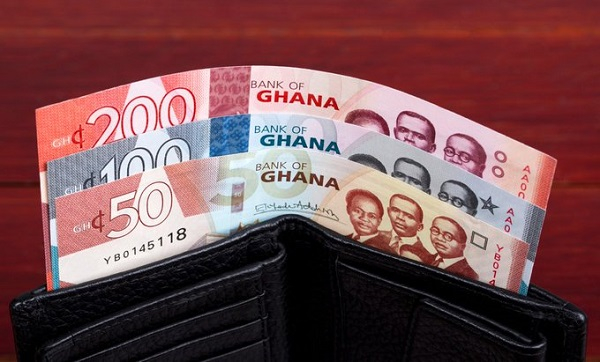
The Ghanaian cedi, which surged 42.6 percent against the US dollar by the end of June 2025 — one of the most dramatic recoveries in decades — has hit a wall. A surge in demand for dollars by importers, combined with a sharp decline in physical dollar liquidity at local banks, has erased 13 percent of the currency’s value in the third quarter alone, making it the world’s worst-performing currency in that period. The reversal comes less than five months after Bloomberg named the cedi the world’s best-performing currency in April 2025, following a 16 percent gain since the start of the year. That rally helped push consumer inflation down to 21.2 percent at the time, and further to 18.4 percent by May — a three-year low. Now, the currency’s fragility threatens to undo those hard-won gains.
Dollar shortage grips banks and bureaux
Across Accra and other major cities, commercial banks and forex bureaux have reported an acute scarcity of physical dollars. Customers attempting to make withdrawals for business or travel are being turned away or told to wait indefinitely. Cedirates, an online currency monitoring platform, reported a sharp increase in dollar rates this week as financial institutions struggled to meet demand. Hamza Adam, Head of Market-Risk Management at UMB Bank, said banks that submitted dollar requests on behalf of clients to the Bank of Ghana last week received only half of what they asked for. “This week the central bank is trying to meet all demand,” he said by phone from Accra on September 3, 2025. The shortage has widened the gap between official and parallel market rates, fuelling speculation and eroding confidence in short-term forex stability.
Central bank interventions under scrutiny
The Bank of Ghana has been the primary force behind the cedi’s resilience, intervening heavily in the foreign exchange market to support the currency. But the International Monetary Fund has advised the central bank to ease those interventions to allow for “greater market flexibility,” a recommendation that has stirred unease about whether the cedi can hold its gains without heavy official support. Gershon Kudjo Agbledzorwu, Head of the Financial Markets Department at the Bank of Ghana, defended the central bank’s stance on Accra-based TV3 on May 2, 2026, arguing that the 41 percent appreciation in 2025 was a legitimate correction, not an overvaluation. “The cedi lost about 77% between 2022 and 2024; the correction was needed,” he said, adding that international institutions including the IMF have affirmed that the appreciation is consistent with mean reversion dynamics.
Reserves and gold programme offer a buffer
Ghana’s growing reserve position has provided a critical cushion. With reserves now covering 4.6 months of imports, boosted by the creation of the GOLDBOD — a gold-backed reserve vehicle — the country has built a buffer that Cnergy Global Holdings, in its review of the mid-year budget, called “a very critical contribution to the strength of the cedi.” The Domestic Gold Purchase Programme (DGPP) has had a double-edged effect: a stronger cedi reduces the local-currency cost of buying gold from miners, but it also widens the spread between the forex bureau rate and the official Bank of Ghana rate, contributing to higher reported programme costs in 2025. The Bank maintains these accounting effects are temporary.
External risks and domestic policy challenges
Cnergy Global Holdings warned that potential global price hikes, geopolitical tensions, and tariff disputes involving the United States could unsettle trade flows and put pressure back on Ghana’s currency. Such shocks could undermine the stability that has helped the cedi recover. However, the firm noted that World Bank projections of a 12 percent decline in global commodity prices could help neutralize some of these external pressures. Beyond global trends, the report stressed that Ghana’s own policy choices will be critical. Sustaining the cedi’s strength will require “effective and efficient coordination” between government programmes, from disciplined spending and targeted investment to flagship initiatives like the 24-Hour Economy, the Big Push Programme and the Agriculture for Economic Transformation Programme.
Outlook: a fragile equilibrium
Finance Minister Dr. Cassiel Ato Forson, presenting the 2025 Mid-Year Budget Review to Parliament, celebrated the cedi’s performance, saying it had “demonstrated exceptional resilience and strength.” By the end of June, the cedi had appreciated 42.6 percent against the dollar, 30.3 percent against the British pound, and 25.6 percent against the euro — a stark contrast to the same period in 2024, when it depreciated by 18.6 percent, 17.9 percent, and 16 percent respectively. “So far,” he said, “we have almost reversed all the cedi depreciation in 2022, 2023 and 2024.” Yet the recent reversal underscores the fragility of those gains. The cedi traded 0.1 percent weaker at GH¢11.9507 per dollar on September 3, 2025, and despite a 23 percent gain for the year to date, the third-quarter slide has raised questions about the sustainability of the recovery. For businesses and households that have enjoyed rare relief after years of depreciation and volatility, holding on to those gains will require careful policy management, long-term discipline, and resilience in the face of a global economy that remains unpredictable.
The bottom line
- The cedi’s 42.6% rally in the first half of 2025 was driven by central bank interventions and strong gold prices, but has reversed 13% in Q3 due to dollar demand.
- Physical dollar shortages at banks and forex bureaux have widened the gap between official and parallel market rates, undermining confidence.
- The IMF has recommended reducing central bank interventions, raising doubts about the cedi’s ability to hold gains without heavy support.
- Ghana’s reserves, boosted by the GOLDBOD, cover 4.6 months of imports, providing a buffer but not immunity from external shocks.
- Inflation fell to 18.4% in May 2025, a three-year low, but the recent forex instability threatens to reignite price pressures.
- Sustaining the cedi’s strength will require coordinated policy implementation and resilience against global trade and geopolitical risks.


Chelsea's slide deepens as Forest win 2-0 at Stamford Bridge

Kobbie Mainoo's Late Strike Seals Champions League Return for Manchester United in 3-2 Thriller Against Liverpool

Jeremy Doku's Stunning Strike Gives Manchester City Vital Win at Everton