Mensah Questions Black Stars' Priorities Ahead of World Cup
Former Asante Kotoko chairman criticizes Ghana Football Association's administration and strategic focus.
GHANA —
Key facts
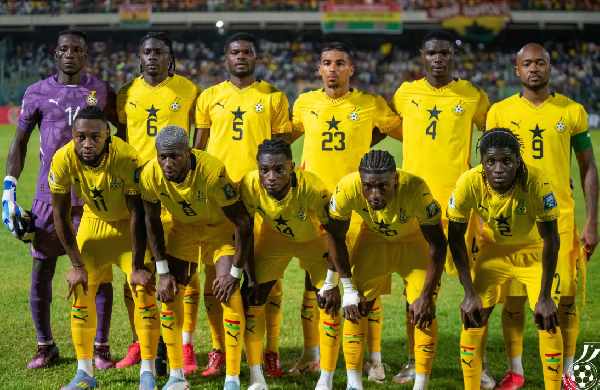
- Herbert Mensah, former Asante Kotoko chairman, assesses Ghana's Black Stars ahead of the 2026 FIFA World Cup.
- Newly appointed head coach Carlos Queiroz has 46 days before the opening match against Panama on June 17.
- Queiroz's modest World Cup coaching record despite his accomplished career.
- He points to a history of poor administration within the Black Stars setup.
- Mensah suggests a potential strategic shift, questioning if AFCON success was overlooked for World Cup qualification.
- He emphasizes that football administrators are public servants accountable to the nation.
- Mensah calls for accountability from Ghana Football Association leadership, including Kurt Okraku.
A Critical Eye on World Cup Preparations
As Ghana's Black Stars intensify preparations for the 2026 FIFA World Cup, former Asante Kotoko chairman Herbert Mensah has offered a stark assessment of the team's readiness and the administrative structures surrounding it. The national team faces a tight deadline, with newly appointed head coach Carlos Queiroz needing to finalize his 26-man squad by June 1 for the opening Group L clash against Panama on June 17 in Toronto. This critical juncture for the team has prompted Mensah, who also serves as the President of Rugby Africa, to voice concerns that resonate with a history of challenges faced by Ghanaian football. Mensah acknowledges the pedigree of the Portuguese tactician, Carlos Queiroz, but tempers praise with a pragmatic observation of his World Cup track record. "He does not have a great record at the World Cup, but that does not mean he's not a very accomplished coach," Mensah stated, highlighting a potential disconnect between coaching prowess and tournament success. This nuanced view sets the stage for his deeper critique, which centers on systemic issues rather than individual capabilities. The looming World Cup, a stage where Ghana has historically aimed to make its mark, now serves as a backdrop for these pointed questions about the team's direction and management. The former Kotoko chairman's commentary arrives at a moment when the Black Stars are under immense pressure to perform on the global stage. His frank assessment underscores the high expectations placed upon the team and its leadership, particularly in the wake of recent tournament performances. The narrative of potential versus performance, and the administrative scaffolding required to bridge that gap, forms the core of Mensah's critique as the countdown to the World Cup continues.
Strategic Priorities Under Scrutiny
Mensah's assessment extends beyond the immediate technical preparations, delving into the strategic priorities of Ghana's football leadership. He questions whether the focus has been appropriately balanced between continental and global ambitions, particularly in light of the team's performance at the recent Africa Cup of Nations (AFCON). While acknowledging the "unfortunate" failure to progress in the AFCON, the subsequent qualification for the World Cup raises pertinent questions about where the team's true strategic focus lay. "Our failure to get through to AFCON was unfortunate. The fact that we've gone to the World Cup says maybe we were looking bigger in different things," Mensah remarked, carefully stopping short of endorsing the idea that AFCON success was deliberately sacrificed. However, his words clearly signal lingering doubts about the decision-making processes within the Ghana Football Association (GFA). This ambiguity fuels the ongoing debate about the team's direction and the rationale behind its strategic planning, especially as the World Cup approaches. The timing of Mensah's remarks adds significant weight to the growing scrutiny on the GFA and the Black Stars management. With the World Cup just weeks away, his comments serve as a reminder that any performance shortfall will inevitably lead to a re-examination of the planning and any perceived sacrifices made along the way. The nation's football custodians are thus under pressure to deliver a result that validates their strategic choices.
Accountability for Public Servants
Central to Mensah's critique is a strong call for accountability from those entrusted with managing the national team. He firmly asserts that individuals in charge of the Black Stars are public servants, answerable not to personal interests but to the nation and its taxpayers. This principle, he argues, must guide all decisions made by the Ghana Football Association and its leadership, including its president, Kurt Okraku. "I’ve always said there are public servants there to serve. They don’t work for Kurt and his team—they work for us, for the taxpayer," Mensah stated emphatically. He stressed that administrators must accept responsibility for their decisions: "When they make decisions, they must live by those decisions and die by them." This demand for accountability is framed within the context of the team's preparation and the immense public interest in its performance. Mensah reminds the GFA leadership that they operate under constant public observation. "What I know from football is that there will be 30 something million coaches, referees and observers watching every move of the black stars," he observed. While acknowledging the public's support regardless of outcomes, he insists that custodians of the national team must be prepared to face consequences if performance falters. "But if they don't, as some people suspect they don't, then it is we must continue supporting the black stars, but the custodians of the national team should fall on their sword," he concluded, underscoring the gravity of their mandate.
A History of Administrative Shortcomings
Mensah's concerns are rooted in a perceived pattern of administrative shortcomings that have historically plagued the Black Stars. He points to a recurring issue where, despite poor administration, the players themselves often strive to produce exceptional performances. This resilience of the players, he suggests, has sometimes masked deeper systemic problems that require urgent attention. "The Black Stars have seen this through the history of time, poor administration, and yet the players themselves try their hardest to produce something special," Mensah noted. This observation highlights a persistent challenge: the team's potential is often hampered by external factors beyond the players' control, creating an uneven playing field for success. The upcoming World Cup presents another critical test of whether these historical administrative weaknesses have been adequately addressed. The Rugby Africa president's emphasis on this historical context serves as a warning. It implies that relying solely on the players' individual efforts may not be a sustainable strategy for achieving consistent success at the highest level. The call for improved administration is therefore not merely a critique but a plea for a more robust and professional framework that supports the team's aspirations and leverages Ghana's established footballing pedigree.
Ghana's Football Pedigree and Future
Despite his criticisms, Mensah maintains a strong belief in Ghana's inherent footballing strength and its right to consistently compete at the highest echelons of the sport. He reiterates that the nation possesses a rich footballing history and a pedigree that demands sustained presence in major tournaments. The recent AFCON disappointment, while unfortunate, is juxtaposed with the optimism generated by World Cup qualification, creating a complex emotional landscape for Ghanaian football fans. Mensah's perspective is that Ghana, as a footballing nation, should always be a contender for qualification and a participant in the final stages of major tournaments. He draws parallels with other African nations, such as Morocco, which have demonstrated consistent progress and success on the global stage. This comparison underscores his conviction that Ghana has the potential to achieve similar or even greater feats. Looking ahead, Mensah's comments serve as a crucial reminder that while World Cup qualification is an achievement, it is only one step. The ultimate measure of success will lie in the team's performance and the effectiveness of its management. His frank assessment, delivered with the authority of experience, aims to foster a more transparent and accountable environment for Ghanaian football, ensuring that the nation's considerable talent is matched by exemplary leadership and strategic foresight.
The bottom line
- Herbert Mensah, a prominent figure in Ghanaian sports, has voiced significant concerns regarding the Black Stars' preparedness for the 2026 FIFA World Cup.
- He questions the strategic priorities of the Ghana Football Association, suggesting a potential imbalance between AFCON and World Cup focus.
- Mensah emphasizes that football administrators are public servants accountable to the nation, calling for greater transparency and responsibility from leadership.
- A history of administrative shortcomings is identified as a recurring impediment to the team's potential, despite players' efforts.
- The former Asante Kotoko chairman acknowledges coach his modest World Cup record.
- Mensah's remarks highlight the high expectations and scrutiny facing the Black Stars and their management as the World Cup approaches.


Bayern Munich Grapples with PSG's Pressure in Champions League Standoff

Arsenal and Atlético Madrid Battle for Champions League Final Berth in High-Stakes Second Leg
Chelsea's slide deepens as Forest win 2-0 at Stamford Bridge