Valve’s New Steam Controller Brings TMR Sticks and Modular Design to the Couch
The $99 wireless controller mirrors the Steam Deck layout, adds a magnetic charging puck, and becomes the first major first-party gamepad to adopt drift-resistant TMR thumbsticks.
HONG KONG —
Key facts
- Valve released the new Steam Controller at $99, available now.
- It is the first major first-party controller to use TMR (Tunnel Magnetoresistance) sticks, specifically K-Silver JS13 Pro+ modules.
- The controller features twin capacitive trackpads from Cirque, designed with Valve, and two sets of back paddle buttons.
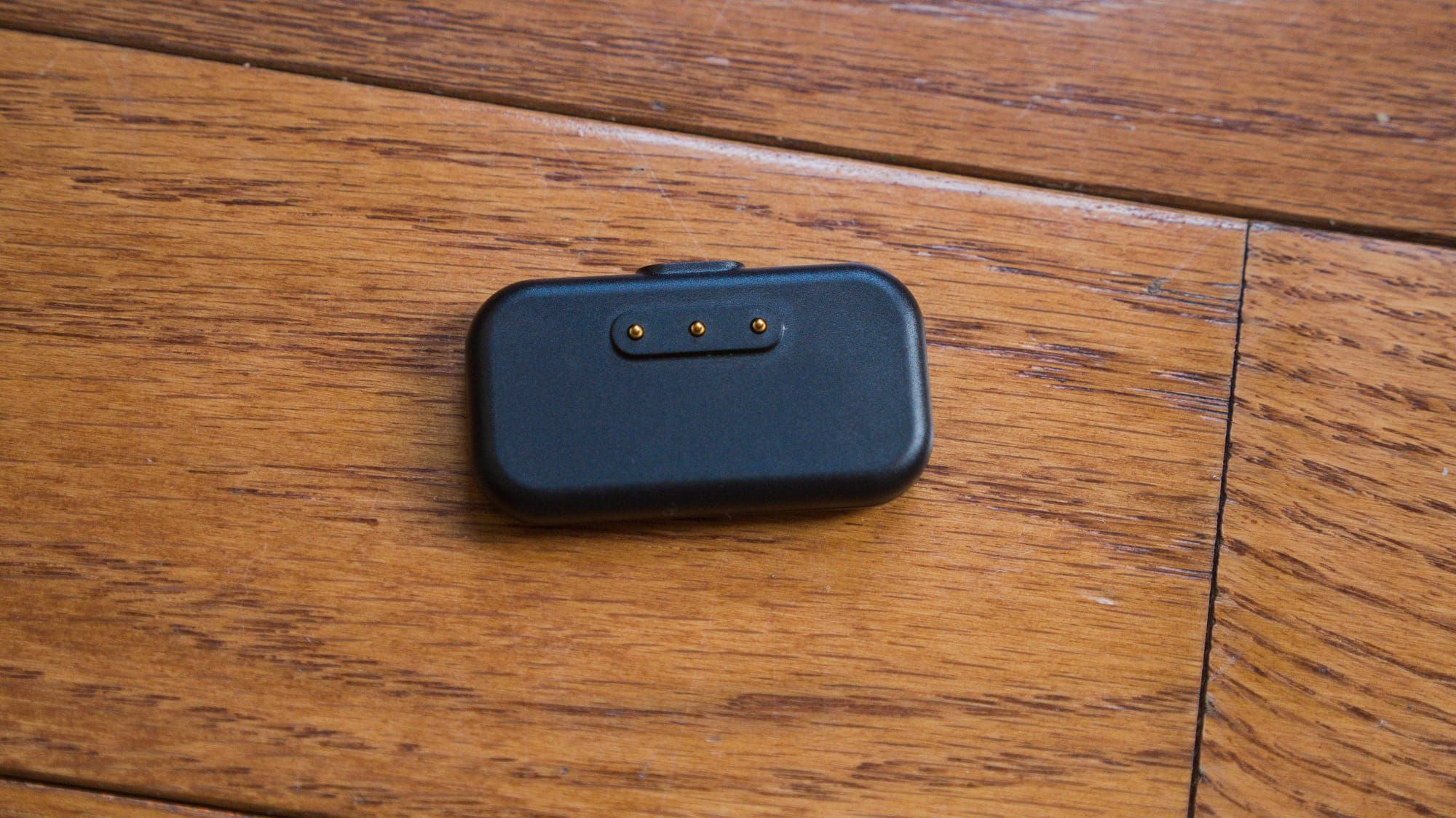
- It includes a magnetic charging puck that snaps onto the back, doubling as a 2.4GHz wireless dongle with support for up to four controllers.
- Valve claims a battery life of 35 hours; the controller charges via USB-C or the puck.
- Valve is partnering with iFixit and providing 3D-printable accessory files, and the controller uses no security screws for easy repair.
- The controller works with PCs, Macs, Linux, and Steam Deck, but not with Nintendo Switch, Xbox, or PlayStation.
- The controller layout is symmetrical (Sony-style) with larger, inward-angled trackpads and haptic feedback.
A Controller Built for the Living Room PC
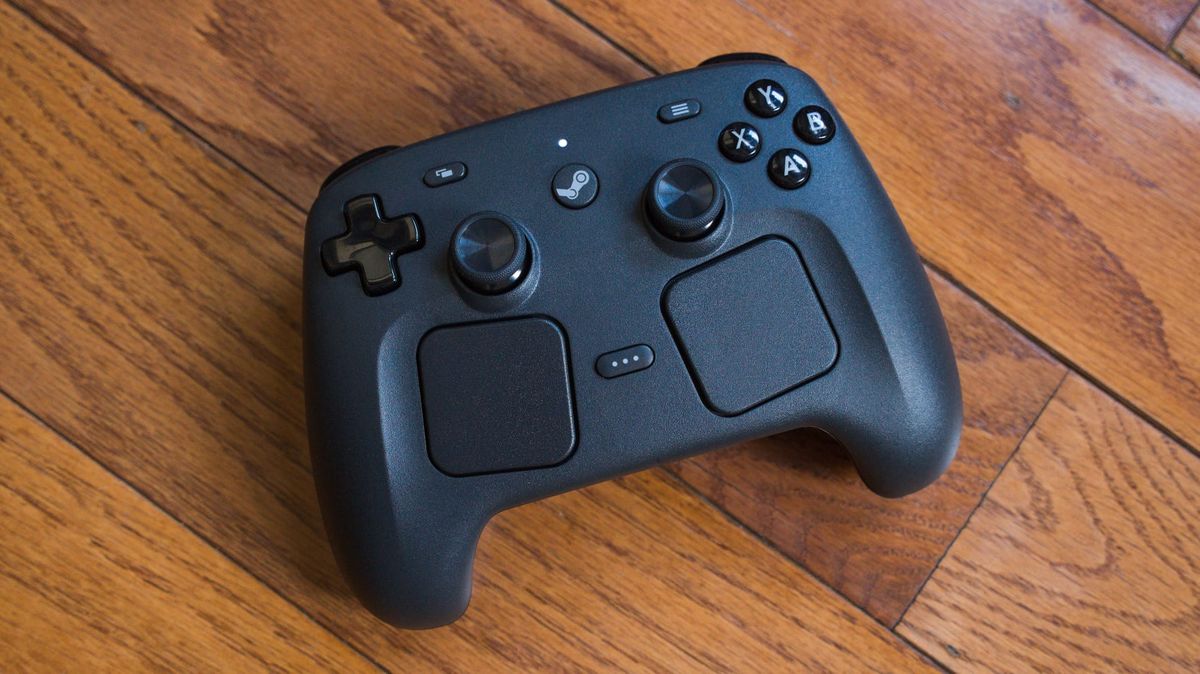
For more than a decade, a niche of PC gamers has connected full computers to televisions, enduring the awkwardness of a keyboard and mouse on the coffee table. Valve’s new Steam Controller, priced at $99 and available now, aims to make that lifestyle seamless. The device is essentially the control layout of the Steam Deck transplanted into a wireless gamepad, with dual analog sticks, a crosspad, analog triggers, and two capacitive trackpads. The controller is designed to work with Steam’s Big Picture mode, allowing users to navigate the desktop and launch games without a keyboard. The trackpads summon an on-screen keyboard and act as a mouse replacement, similar to the Steam Deck. While a keyboard and mouse may still be needed for some tasks, the Steam Controller offers the best compromise yet for couch-based PC gaming.
TMR Sticks and Hall-Effect Heritage: A Leap in Durability
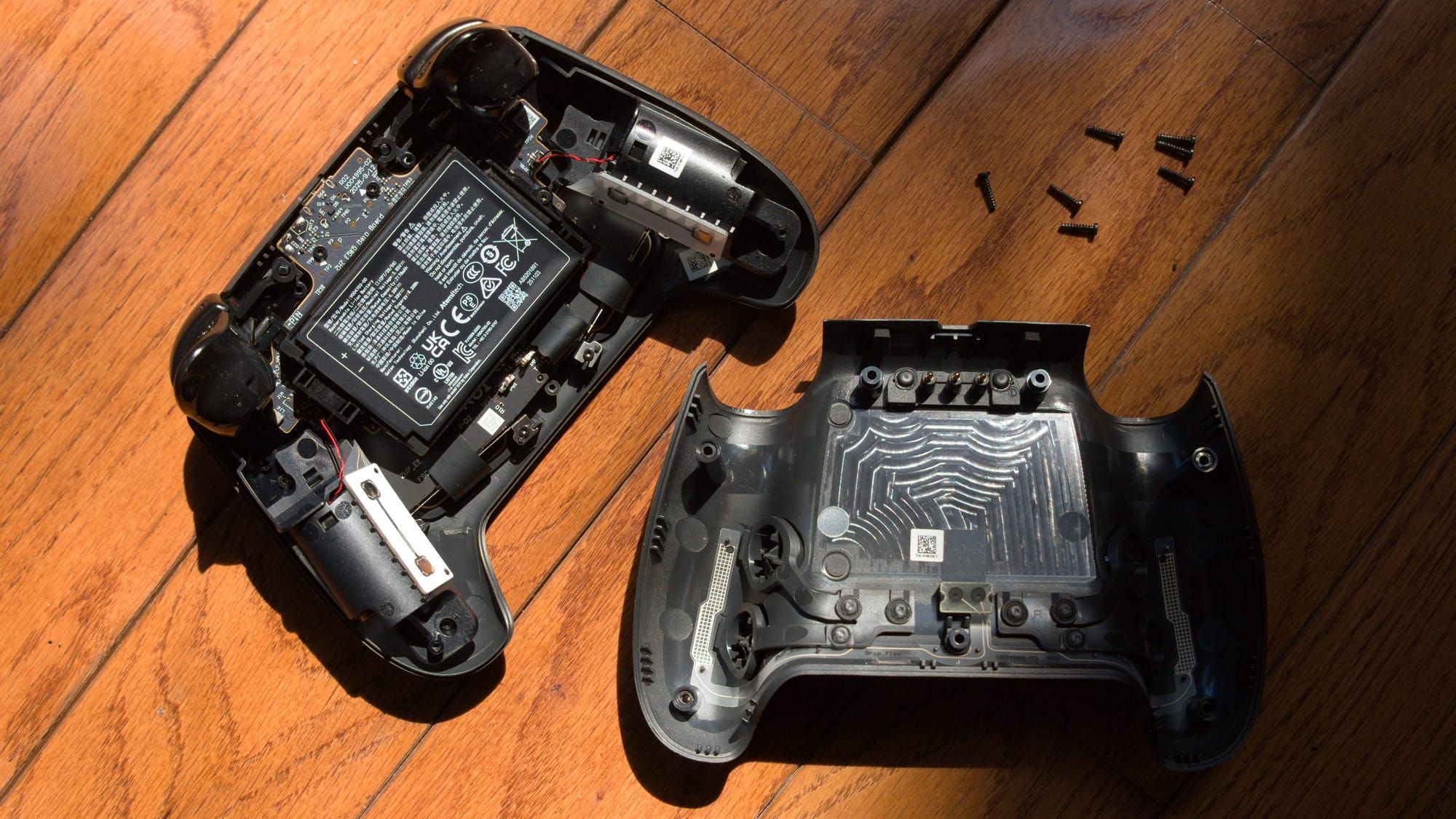
The Steam Controller is the first major first-party controller to use TMR (Tunnel Magnetoresistance) thumbsticks, a technology that improves on Hall Effect sensors by offering lower power consumption and greater resistance to drift. The sticks are K-Silver JS13 Pro+ modules, found in high-end Chinese controllers like the ZD-0+ Excellence. This marks a departure from the older potentiometer-based sticks used by Sony, Microsoft, and Nintendo, which degrade over time. The trackpads use capacitive technology from Cirque, developed in collaboration with Valve, and provide haptic feedback. The controller’s internal layout is designed for repairability: no security screws, a battery in an accessible location, and a PCB that is not hidden. Valve is also working with iFixit and releasing 3D-printable files for custom accessories, making this the most repair-friendly first-party controller on the market.
Magnetic Charging Puck: A Clever Wireless Solution
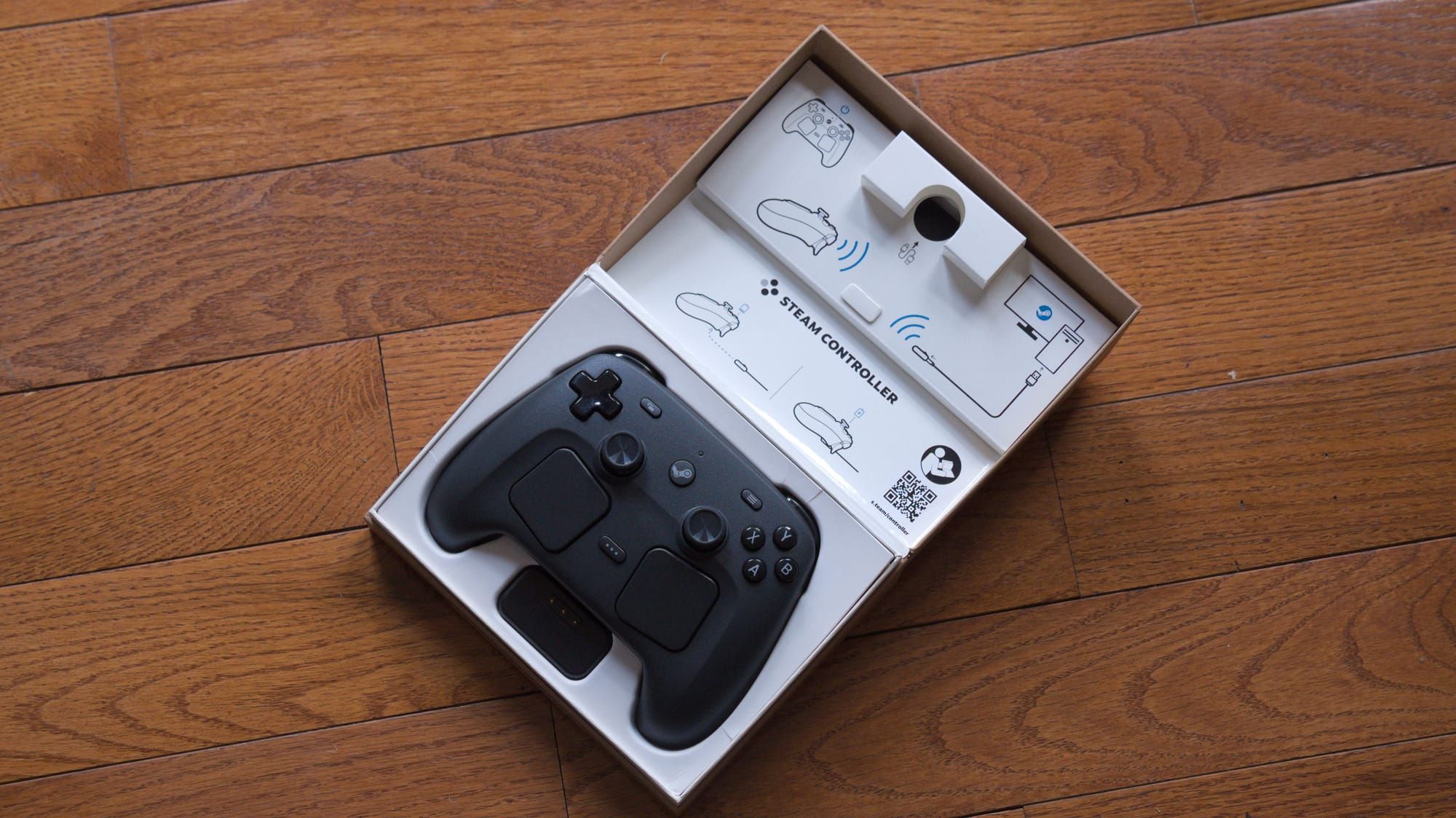
Valve’s included magnetic charging puck addresses two common pain points: wireless latency and controller storage. The puck plugs into a USB-C-to-A cable and snaps onto the back of the controller with a magnet, providing a dedicated 2.4GHz wireless connection that outperforms Bluetooth. One puck can support up to four controllers simultaneously, reducing clutter for multiplayer sessions. The controller also supports Bluetooth and USB-C for charging or wired use. Valve claims a 35-hour battery life, and the puck makes setup painless: after a brief firmware update, the controller is ready to use. The puck’s design is both functional and satisfying, with a magnetic snap that feels secure.
Hands-On: Comfort and Performance on the Couch
Tested with a Steam Deck OLED connected to a TV via the Steam Dock, the Steam Controller delivers a console-like experience. The controller feels dense but not heavy, with vibrating haptics that range from strong to subtle. The trackpads provide haptic clicks, and the back paddles are more prominent than on the Steam Deck, offering additional programmability. In fast-paced games like the indie twitch shooter Sektori, the controller’s response time via the puck was appreciably faster than Bluetooth, matching the feel of holding the Steam Deck directly. The symmetrical Sony-style layout is praised as “morally correct” by some reviewers, and the angled trackpads do not interfere with comfort. The controller is available now, though the Steam Machines and Steam Frame hardware have been delayed.
Repairability and Community: Valve’s Open Approach
Valve has long encouraged community modification of its hardware, and the Steam Controller continues that philosophy. The controller’s internals are laid out for easy disassembly, with no security screws and a battery that can be swapped when it degrades. Valve is providing iFixit with repair guides and releasing 3D-printable files for accessories, effectively outsourcing R&D to the community. This approach mirrors the Steam Deck, which has seen extensive modding, from shell swaps to thermal modifications. The controller’s modularity and open design are a stark contrast to the sealed, difficult-to-repair controllers from Sony and Microsoft. For users who value longevity and customization, the Steam Controller sets a new standard.
What’s Next: Steam Machines Delayed, Controller Leads the Way
While the Steam Controller is now shipping, Valve’s broader hardware ambitions remain in flux. The Steam Machines and Steam Frame, announced alongside the controller, have been pushed back due to rising component costs. No pricing or release dates have been set for those devices. For now, the Steam Controller serves as a practical bridge for PC gamers who want a console-like experience on their TV. It works with any PC, Mac, or Linux system running Steam, and pairs seamlessly with the Steam Deck. The controller’s $99 price point positions it as a premium accessory, but its build quality, repairability, and innovative charging solution may justify the cost for dedicated users.
The bottom line
- The Steam Controller is the first major first-party controller to use TMR thumbsticks, offering superior drift resistance and lower power consumption.
- The magnetic charging puck provides a dedicated 2.4GHz wireless connection with lower latency than Bluetooth and supports up to four controllers.
- Valve’s commitment to repairability includes no security screws, accessible battery, and partnership with iFixit, along with 3D-printable accessory files.
- The controller mirrors the Steam Deck layout, making it ideal for couch-based PC gaming via Steam’s Big Picture mode.
- Steam Machines and Steam Frame hardware have been delayed, but the Steam Controller is available now at $99.



Lakers' 3-0 Lead Evaporates as Offensive Woes Hand Rockets Lifeline

Line of Severe Storms Threatens Gulf Coast Saturday Night

Four Tickets Split Record HK$228 Million Mark Six Jackpot as Hong Kong Lottery Celebrates 50 Years