Reform UK Claims Early Victories as Labour Braces for Local Election Losses
Early results show Reform UK securing council seats, while Labour anticipates significant setbacks that could impact Keir Starmer's leadership.

IRELAND —
Key facts
- Reform UK has won seats in Brentwood and Chorley.
- Philippa Nicholson secured a Reform UK victory in Brentwood's Hutton South ward with 987 votes.
- Martin Topp won a Reform UK seat in Chorley East with 778 votes.
- Labour is projected to lose approximately 1,850 councillors in England.
- The Labour Party may lose the national vote in Wales for the first time in over a century.
- The SNP is expected to remain the largest party in Scotland.
- Deputy Prime Minister David Lammy described the election cycle as 'tough'.
Early Gains for Reform UK Signal Shifting Political Landscape
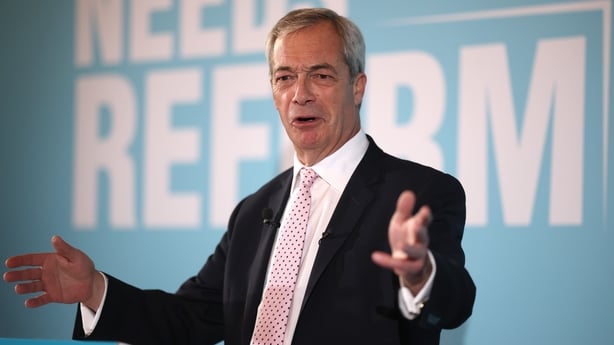
Reform UK has secured early victories in local elections, claiming council seats in Brentwood and Chorley as the first results emerge. Philippa Nicholson won in Brentwood's Hutton South ward with 987 votes, a 41% lead over the Conservatives. In Chorley East, Martin Topp secured 778 votes for Reform UK, surpassing Labour's 677. These initial successes suggest Reform UK is capitalizing on current political sentiments, potentially at the expense of established parties. The results come as polls close across Scotland, Wales, and parts of England, in elections widely seen as a critical juncture for the Labour Party and its leader, Keir Starmer.
Labour Faces Anticipated Widespread Setbacks
The Labour Party is bracing for significant losses across England, with projections indicating a potential loss of around 1,850 councillors. This anticipated drubbing comes as the party struggles in national polls, facing pressure from Reform UK on its right and a resurgent Green Party on its left. In Wales, Labour is forecast to lose the national vote for the first time in over a century. Meanwhile, in Scotland, the Scottish National Party (SNP) is expected to maintain its position as the largest party, despite broader electoral shifts. Deputy Prime Minister David Lammy acknowledged the challenging electoral environment, stating that the message from voters on the doorstep was that "this is a tough election cycle." He attributed voter concerns to the cost-of-living crisis and a desire for swifter government action, suggesting Labour's "message of delivery" was overshadowed by "the politics of grievance."
Leadership Speculation Intensifies for Keir Starmer
The prospect of substantial local election losses is likely to intensify speculation surrounding Keir Starmer's leadership of the Labour Party. Before polls closed, reports indicated that Ed Miliband, the Energy Secretary and former Labour leader, had privately urged the Prime Minister to outline a departure timeline post-election. Several senior figures within the party are reportedly considering leadership bids. Health Secretary Wes Streeting and former Deputy Prime Minister Angela Rayner are among those mentioned as potential contenders. Allies of Ms. Rayner express confidence in her ability to secure the 81 MP signatures needed to trigger a leadership challenge, a threshold Mr. Streeting is also said to have met. However, neither is reportedly eager to be the first to make a move. Greater Manchester Mayor Andy Burnham, who has been rumored to be planning a return to national politics, has withdrawn from an upcoming speech. He was scheduled to address the Festival of Childhood in Manchester the day after the elections, but organizers announced his replacement by Caroline Simpson, group chief executive of the Greater Manchester Combined Authority.
Electoral Context: Scotland, Wales, and England
The elections encompass a broad swathe of the United Kingdom, with results expected from Scotland and Wales from midday onwards, following initial outcomes in England. These local contests serve as a significant barometer of public sentiment, particularly for the governing and opposition parties. The performance in these elections is being closely watched as an indicator of national trends. Labour's expected difficulties in England and Wales, coupled with the SNP's anticipated dominance in Scotland, paint a complex picture of the UK's political allegiances. The timing of these elections, mid-term for the national government, often reflects public satisfaction with current governance and provides a platform for voters to express their views on key issues such as the economy and public services.
Broader Political Currents and Future Implications
The electoral challenges faced by Labour are occurring against a backdrop of broader political currents, including concerns over the cost of living and a perceived lack of progress on key government initiatives. Deputy Prime Minister David Lammy's comments highlight the difficulty Labour has had in communicating its message effectively amidst a "politics of grievance." The potential for significant leadership challenges within Labour underscores the high stakes of these local elections. The outcomes could reshape the party's direction and its prospects in future national contests. Furthermore, the gains by Reform UK and the resilience of the Green Party suggest a fragmented political landscape where established parties face increasing pressure from both the right and the left, demanding a recalibration of political strategies and messaging.
The bottom line
- Reform UK has achieved early electoral successes, winning council seats in England.
- The Labour Party anticipates substantial losses in local elections across England and Wales.
- Potential Labour leadership challenges are expected to intensify following the election results.
- The SNP is projected to remain the largest party in Scotland.
- Voter concerns about the cost of living are a significant factor influencing electoral sentiment.

Reform UK Declares "Historic Shift" as Local Election Results Batter Labour and Tories

Rory McIlroy Returns to PGA Tour, Fueled by Renewed Masters Motivation
Delhi CM Launches 'War Against Heat' Initiative Amid Scorching Temperatures