180-Million-Year-Old Ichthyosaur Fossil Reveals Injured Jurassic Predator's Survival
A remarkably preserved Temnodontosaurus specimen found in Germany shows healed injuries and stomach stones, offering new insights into Jurassic marine life.
INDIA —
Key facts
- Fossil discovered in Germany, belonging to Temnodontosaurus genus.
- Specimen lived approximately 180 million years ago during the Jurassic period.
- Ichthyosaur was a dolphin-like marine reptile, not a dinosaur.
- Fossil shows evidence of injuries that had healed, indicating survival.
- Stomach contained stones, possibly used for digestion or buoyancy.
- Specimen had around 100 teeth, suggesting a diet of fish and squid.
- This is a younger specimen than previously known Temnodontosaurus fossils.
A Window into Jurassic Seas
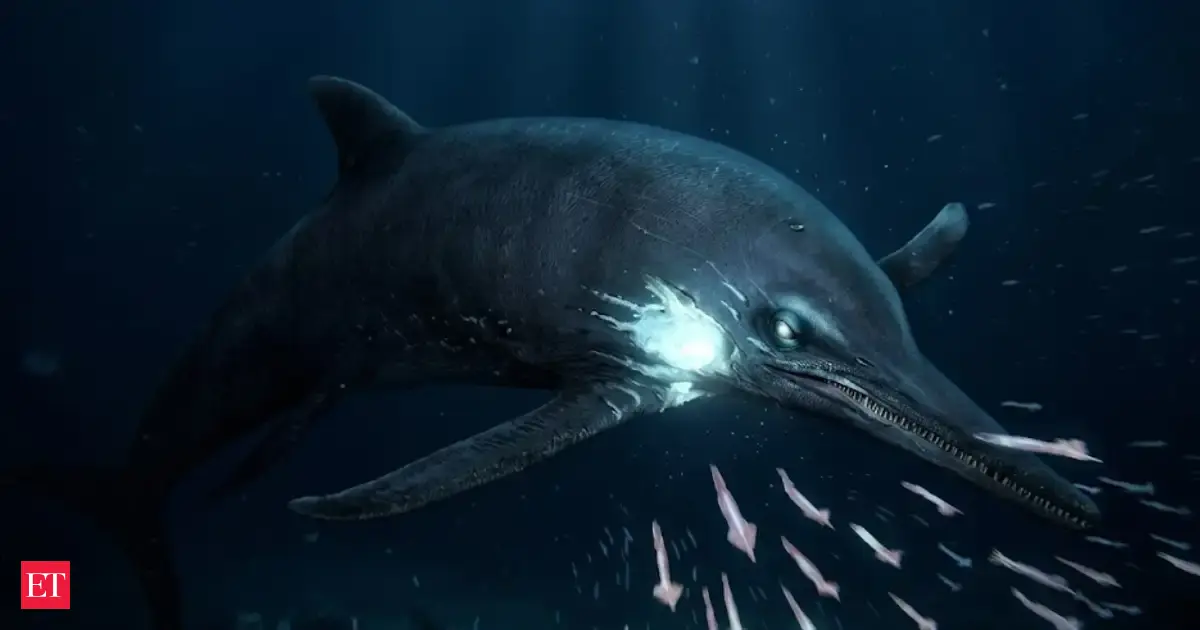
A remarkably well-preserved fossil of an ichthyosaur, unearthed in Germany, is providing scientists with unprecedented details about life in the Jurassic oceans. The specimen, belonging to the genus Temnodontosaurus, lived approximately 180 million years ago. This dolphin-like predator, often called a 'sea monster,' offers a rare glimpse into the challenges and adaptations of ancient marine reptiles. The fossil's exceptional condition has allowed researchers to examine not just its skeletal structure but also evidence of injuries and survival strategies. The find is particularly significant because it represents a younger individual than most previously discovered Temnodontosaurus fossils, filling a gap in the understanding of this predator's life cycle.
Evidence of Injury and Resilience
The ichthyosaur's bones show clear signs of healed injuries, indicating that the animal survived traumatic events during its lifetime. These healed wounds suggest that even in the harsh Jurassic seas, some individuals could recover from serious harm. The exact nature of the injuries—whether from combat with other predators, accidents, or disease—is still under investigation. This resilience is a key finding for paleontologists studying the survival strategies of ancient marine reptiles. The ability to heal from significant injuries would have been crucial for a predator that needed to hunt and navigate a dangerous environment.
Stomach Stones and Diet
One of the most intriguing aspects of the fossil is the presence of stones in its stomach area. These gastroliths, as they are known, are not uncommon in some marine reptiles, but their function has long been debated. In this case, the stones may have been used to help grind up food, such as fish and squid, or to aid in buoyancy control. The ichthyosaur's jaw contained approximately 100 teeth, well-suited for grasping slippery prey. This dental arrangement, combined with the stomach stones, paints a picture of a formidable hunter that could process tough food items. The diet likely consisted of fish and cephalopods, which were abundant in Jurassic seas.
Ongoing Research and Implications
Researchers are now conducting detailed analyses of the fossil's anatomy to better understand the biology and ecology of Temnodontosaurus. The specimen's age—younger than most known examples—provides a unique opportunity to study growth patterns and developmental changes in these reptiles. The findings also have broader implications for Jurassic marine ecosystems. By piecing together the life history of this individual, scientists can infer more about the environmental conditions and food webs that existed 180 million years ago. This research is part of a larger effort to reconstruct the ancient world and the creatures that inhabited it.
A Rare and Significant Discovery
The discovery of this fossil in Germany adds to a growing body of knowledge about ichthyosaurs, which were among the most successful marine reptiles of the Mesozoic Era. While many ichthyosaur fossils have been found worldwide, specimens with such detailed evidence of injury and diet are rare. This particular find underscores the importance of continued paleontological work in Europe, where Jurassic deposits have yielded numerous important fossils. The preservation quality of this specimen will likely make it a focus of study for years to come, offering new insights into the lives of these ancient sea creatures.
The bottom line
- The 180-million-year-old Temnodontosaurus fossil from Germany shows healed injuries, indicating survival after trauma.
- Stomach stones found in the specimen suggest they were used for digestion or buoyancy control.
- With around 100 teeth, the ichthyosaur was a specialized predator of fish and squid.
- This younger specimen fills a gap in knowledge about Temnodontosaurus growth and development.
- The fossil provides a rare, detailed snapshot of Jurassic marine life and predator-prey dynamics.



Bhuvneshwar Kumar's ₹70–75 Crore Net Worth and Meerut Bungalow: A Cricketer's Journey

Today's Chanakya Exit Poll Predicts Mamata Banerjee's Defeat in West Bengal

Bhuvneshwar Kumar's Death-Overs Mastery Propels RCB into Top-Four Clash with GT