Tamil Nadu Government Formation Hangs in Balance as Parties Vie for Crucial Support
Vijay's TVK falls short of majority, forcing complex coalition talks with DMK, AIADMK, and Left parties.

INDIA —
Key facts
- Vijay's TVK secured 108 seats in the April election, falling 10 seats short of the 118 needed for a majority.
- The DMK and AIADMK are reportedly plotting a historic alliance to prevent Vijay from forming a government.
- The Viduthalai Chiruthaigal Katchi (VCK) is in talks with both the DMK and the Communist Party of India (Marxist) and Communist Party of India.
- The Communist Party of India (Marxist) and Communist Party of India hold a combined four seats.
- The Congress party has committed its five seats to Vijay's TVK.
- A DMK-AIADMK alliance would command 120 seats if their allies remain on board.
- Governor has given Vijay's TVK until May 10 to prove its majority.
Post-Election Stalemate Grips Tamil Nadu
Chaos has descended upon Tamil Nadu in the wake of April's election, with actor-turned-politician Vijay's TVK party falling just ten seats shy of the 118 required to form a government. The outcome has plunged the state into a complex negotiation period, as Vijay's camp scrambles to secure the necessary support. Meanwhile, the traditional powerhouses, the DMK and AIADMK, are reportedly exploring an unprecedented alliance aimed at collectively blocking Vijay's ascent to power. The immediate aftermath of the election has seen a flurry of backroom dealings and public pronouncements, underscoring the fragility of the current political landscape. The governor's decision to grant Vijay's TVK until May 10 to demonstrate its majority has only intensified the maneuvering, setting a clear deadline for the unfolding political drama. This critical juncture highlights the shifting alliances and strategic calculations that define Indian politics, where even a narrow victory can lead to prolonged uncertainty and intense coalition-building efforts.
Shifting Alliances and Conditional Support
The path to government formation is fraught with intricate conditions and shifting loyalties. Sources indicate that the AIADMK was initially asked to sever ties with the Bharatiya Janata Party, described as a 'communal party,' before any discussions on external support could commence. The DMK, while signalling potential openness to the AIADMK, has also laid down its own set of demands, including ministerial positions for smaller allies like the Viduthalai Chiruthaigal Katchi (VCK). This strategic play by the DMK appears designed to sway the VCK, which had shown signs of leaning towards Vijay. By offering concessions, the DMK hopes to dissuop the VCK from providing Vijay with the two crucial seats he needs. The success of this gambit is evident as the VCK is now reportedly re-engaging with the DMK and initiating talks with the Communist Party of India (Marxist) and the Communist Party of India. These complex negotiations reveal a political chessboard where every seat and every alliance carries significant weight, with parties leveraging their positions to extract maximum advantage in the post-election scramble.
The Left's Dilemma and Congress's Commitment
Vijay's camp has actively courted the Communist Party of India (Marxist) and the Communist Party of India, proposing a coalition formula that includes the Congress and the VCK to secure the nine additional seats required. However, the Left parties, holding a combined four seats, appear divided. While some within the parties favour neutrality, others are reportedly inclined to align with Vijay and the TVK. CPI General Secretary D. Raja has publicly urged the governor to adhere to established practices and provide Vijay's TVK with the first opportunity to form a government. When questioned about a potential DMK-AIADMK pact, Raja offered a noncommittal response, stating, "I do not know..." In contrast, the Congress party has unequivocally pledged its five seats to Vijay, marking a significant shift. This commitment places them in opposition to the DMK, their electoral partner in three of the past seven elections. Manickam Tagore, a proponent of a pre-poll alliance with Vijay, has accused the DMK of betraying secularism by considering a deal with the AIADMK, which he labels as the 'BJP's B team'.
Strategic Calculations of the Dravidian Giants
A potential alliance between the DMK and AIADMK would present a formidable bloc of 120 seats, assuming their respective allies remain steadfast. These allies include the Indian Union Muslim League (two seats) and Desiya Murpokku Dravida Kazhagam (one) for the DMK, and the Pattali Makkal Katchi (four seats) and Amma Makkal Munnetra Kazhagam (one) for the AIADMK. The driving force behind this contemplated union of the two major Dravidian parties appears to be a shared apprehension: the burgeoning influence of Vijay's TVK poses a threat to their long-term political dominance. Both parties fear being sidelined for an extended period should Vijay establish a stable government. This fear echoes historical precedents, particularly for the DMK. The specter of the AIADMK, under the charismatic leadership of M.G. Ramachandran, keeping the DMK out of power for a decade from 1977 to 1987 looms large, underscoring the stakes of the current political maneuvering.
BJP's Taunt and the Road Ahead
The Bharatiya Janata Party has responded to the Congress's shift with a pointed taunt. BL Santosh, the party's National General Secretary, posted on X, "Only time will tell who will form Tamil Nadu government. But one thing is for sure...Congress will end up with egg on its face." The coming days are critical as Vijay's TVK attempts to cobble together the necessary support to meet the May 10 deadline. The intricate web of alliances, conditional offers, and historical rivalries means that the final composition of the Tamil Nadu government remains highly uncertain. As the political drama unfolds, the decisions made by smaller parties like the VCK and the Left will be pivotal. Their choices will not only determine who forms the next government but also shape the future political landscape of Tamil Nadu, potentially ushering in a new era of coalition politics or reinforcing the dominance of the established Dravidian parties.
The bottom line
- Vijay's TVK requires ten more seats to achieve a majority in the Tamil Nadu assembly.
- The DMK and AIADMK are considering an unprecedented alliance to counter Vijay's political ambitions.
- The VCK and the Left parties (CPI(M) and CPI) are central to the coalition talks, holding key numbers.
- The Congress party has pledged its support to Vijay's TVK, breaking ranks with the DMK.
- A DMK-AIADMK coalition would hold a majority of 120 seats.
- The deadline for Vijay's TVK to prove its majority is May 10.



Gujarat Board to Release SSC Results at 8 AM Today; Over 15 Lakh Students Await Scores

Bhuvneshwar Kumar Reaches IPL Milestone, Hailed as Elite Fast Bowler
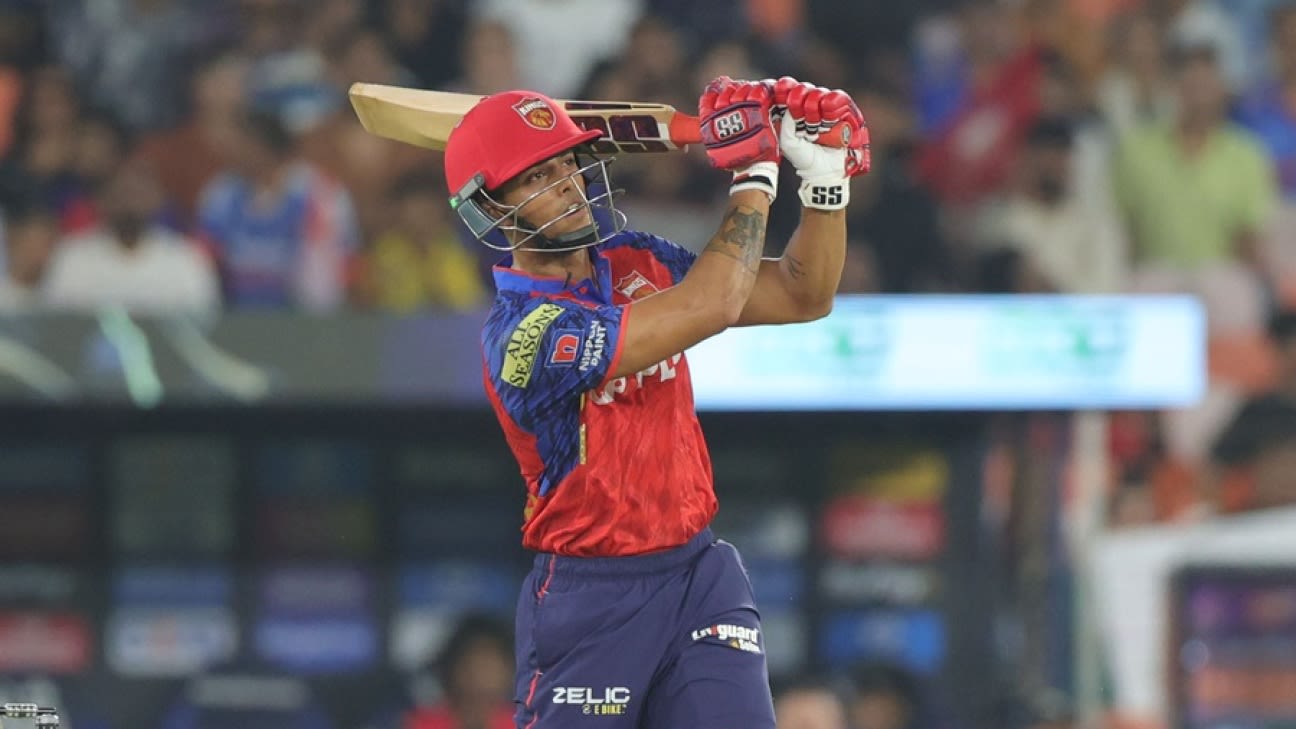
Punjab Kings Remain Top Despite Back-to-Back Losses, Says Captain Shreyas Iyer After Narrow Defeat to Gujarat Titans