Red Bull Joins Ferrari with Upside-Down Rear Wing at Miami GP
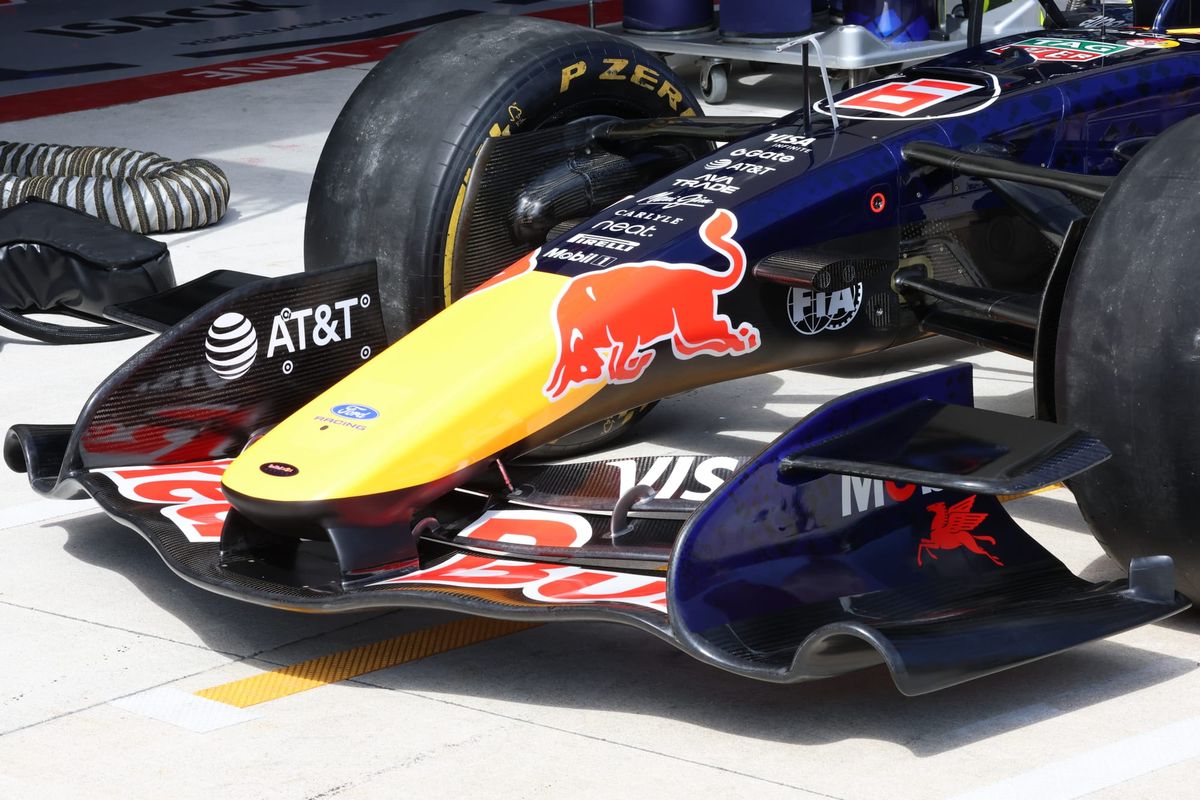
The team also introduced the largest front-wing diveplane on the grid, signaling an aggressive upgrade push.
.webp)
INDIA —
Key facts
- Red Bull debuted an upside-down rear wing design during Friday practice at the Miami Grand Prix.
- Ferrari first revealed a similar rotating rear wing, dubbed the 'flip-flop' wing, at pre-season testing in Bahrain.
- The 2026 regulations permit active aerodynamics, with flaps opening on straights for low drag and closing in corners for downforce.
- Red Bull's Miami upgrade includes a front-wing diveplane that is the biggest of any F1 team, going from having none.
- Lewis Hamilton referred to Ferrari's wing as the 'flip-flop' wing and also heard it called 'Macarena'.
- F1 technical expert Mark Hughes explained that flipping the wing creates a larger gap for airflow, reducing drag.
- Red Bull, like Ferrari, previously had no diveplane, while Mercedes and McLaren had wider sculpted designs.
Red Bull Unveils Radical Rear Wing in Miami
Red Bull has joined Ferrari in deploying a rotating rear wing at the Miami Grand Prix, catching the attention of the paddock during Friday’s track action. The team unleashed its own upside-down rear wing design at the Miami International Autodrome, following Ferrari’s earlier debut of a similar concept at pre-season testing in Bahrain. The move comes as Formula 1 prepares for new-for-2026 regulations that feature active aerodynamics. This year, along designated straight sections, flaps on cars’ front and rear wings move to an ‘open’ position, flattening the wings to reduce drag and increase top speed. In corners, they return to a ‘closed’ position to maintain downforce and provide more grip.
Ferrari’s ‘Flip-Flop’ Wing Sparked the Trend
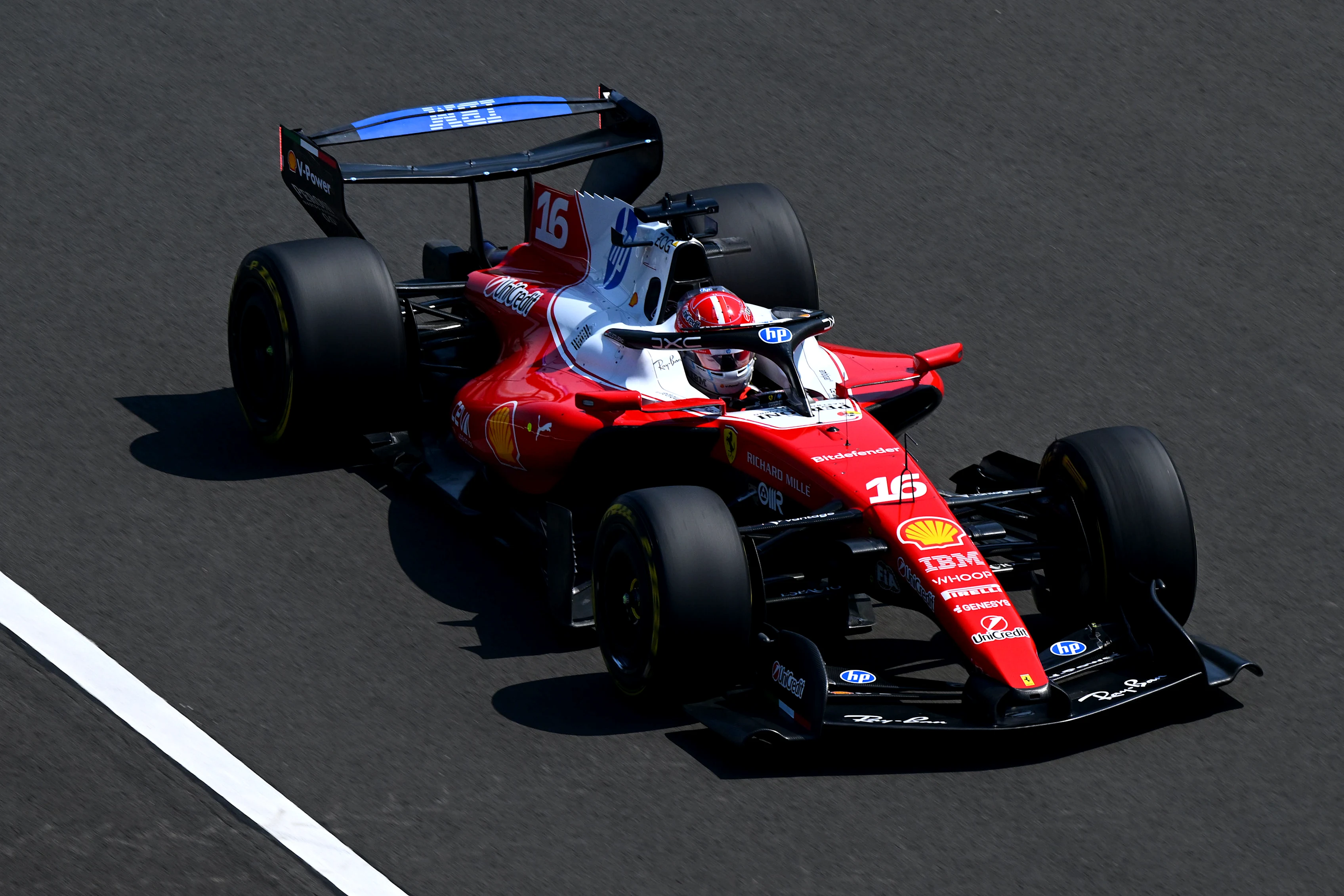
Ferrari first made headlines on Day 2 of pre-season testing at the Bahrain International Circuit by revealing a radical rotating rear wing element. Driver Lewis Hamilton dubbed it the ‘flip-flop’ wing, though he noted someone also called it ‘Macarena’. Instead of simply switching from an angled to a flat position, the special rear wing component flips completely upside down, creating a bigger gap for air to travel through and reducing drag on straights. Ferrari opted against using the wing at the season-opening round in Australia but brought it back for Friday practice at the Chinese Grand Prix Sprint weekend. After that session, the team removed it to allow engineers to further tweak the concept. “It’s great to see that the team are fighting… the team are pushing, chasing and really working overtime back at the factory to be able to bring upgrades, because that’s the name of the game,” Hamilton said in Shanghai.
How the Upside-Down Wing Works
F1.com technical expert Mark Hughes provided a detailed explanation of the wing’s mechanics. “In normal downforce mode, the wing’s upper surface is of a smaller surface area than the underside,” he wrote. “It is this which creates the air pressure difference between above and below – and that, in turn, creates downforce. With the wing flipped, the smaller surface area becomes the lower one – thereby creating more space in the gap than in a conventional flattened (but not upside-down) flap.” The design maximizes the low-drag configuration allowed under the 2026 active aero rules. By flipping the wing completely, the gap for airflow is enlarged, reducing drag more effectively than a standard flattened flap.
Red Bull’s Front-Wing Diveplane: From None to Largest
Red Bull’s Miami upgrade package also includes a significant change to its front wing: the team went from having no diveplane on the front wing endplate to having the biggest of any Formula 1 team. F1’s 2026 rules permit a winglet on the outside of the front wing endplate, leading to varied designs. Some teams have nothing, while others, like Mercedes and McLaren, have had wider sculpted designs. Red Bull and Ferrari previously had nothing, but in Miami, Red Bull’s front wing broke cover with a bigger, flatter version than either Mercedes or McLaren. The diveplane helps manage airflow around the front tyre. When airflow hits the tyre, it can go over the top or around the sides. Flow over the top induces a small amount of lift on the front-corner assembly, which is undesirable. Flow around the outside creates outwash, which is beneficial, while flow to the inside disturbs downforce-producing devices downstream. The vane helps separate the flow going over the top from the flow that must find a different route.
Efficiency Gains Through Drag Reduction
The lower endplate footplate tunnel connects to the tyre-squirt airflow (the flow displaced when the tyre rotates onto the track surface), increasing outwash and reducing inwash. The goal is to get more downforce for less drag by reducing negatives (lift) rather than increasing positives (downforce). Increasing downforce typically comes with increased drag, but reducing lift actually reduces drag, improving the efficiency of the complete package. Red Bull, along with many other teams, brought a host of developments to Miami, indicating that most teams have been working flat-out during the enforced break. The diveplane is one component that was missing from Red Bull’s initial design, and in joining the club, the team created a bigger component than most others.
What Comes Next in the Development Race
The introduction of these upgrades signals an intensifying development race as teams push to maximize performance under the 2026 regulations. Ferrari’s decision to withdraw its wing after the Chinese Grand Prix suggests that the concept still requires refinement. Red Bull’s immediate adoption of both the upside-down rear wing and a massive front-wing diveplane indicates confidence in their engineering approach. With the Miami Grand Prix weekend underway, the effectiveness of these innovations will be tested on track. The paddock will be watching closely to see whether Red Bull’s bold upgrades translate into a performance advantage, and whether Ferrari responds with further iterations of its own design.
The bottom line
- Red Bull and Ferrari are both running upside-down rear wings that flip completely to reduce drag on straights.
- The 2026 active aero rules allow flaps to open and close, but Ferrari and Red Bull have taken the concept further with a rotating element.
- Red Bull’s Miami upgrade includes the largest front-wing diveplane on the grid, a component it previously lacked.
- The diveplane improves aerodynamic efficiency by reducing lift rather than increasing downforce, lowering drag.
- Ferrari’s ‘flip-flop’ wing was tested in Bahrain and China but removed for further tweaks, suggesting the design is still evolving.
- The development race is intensifying as teams exploit the new regulations, with Red Bull and Ferrari leading the charge.
.webp)
.webp)


Delhi Capitals end losing streak with seven-wicket win over Rajasthan Royals in Jaipur

Parag's 90 in vain as Starc's three-wicket haul propels Delhi Capitals to seven-wicket win over Rajasthan Royals

Kartik Sharma, CSK's ₹14.2 Crore Gamble, Gets Hussey's 10-Year Endorsement Amid Playoff Push