India Grapples with Economic Headwinds and Political Narratives
From PM Modi's foreign visits to domestic policy debates, the nation navigates complex challenges.

INDIA —
Key facts
- Prime Minister Modi's foreign tour commenced on May 15th in the UAE.
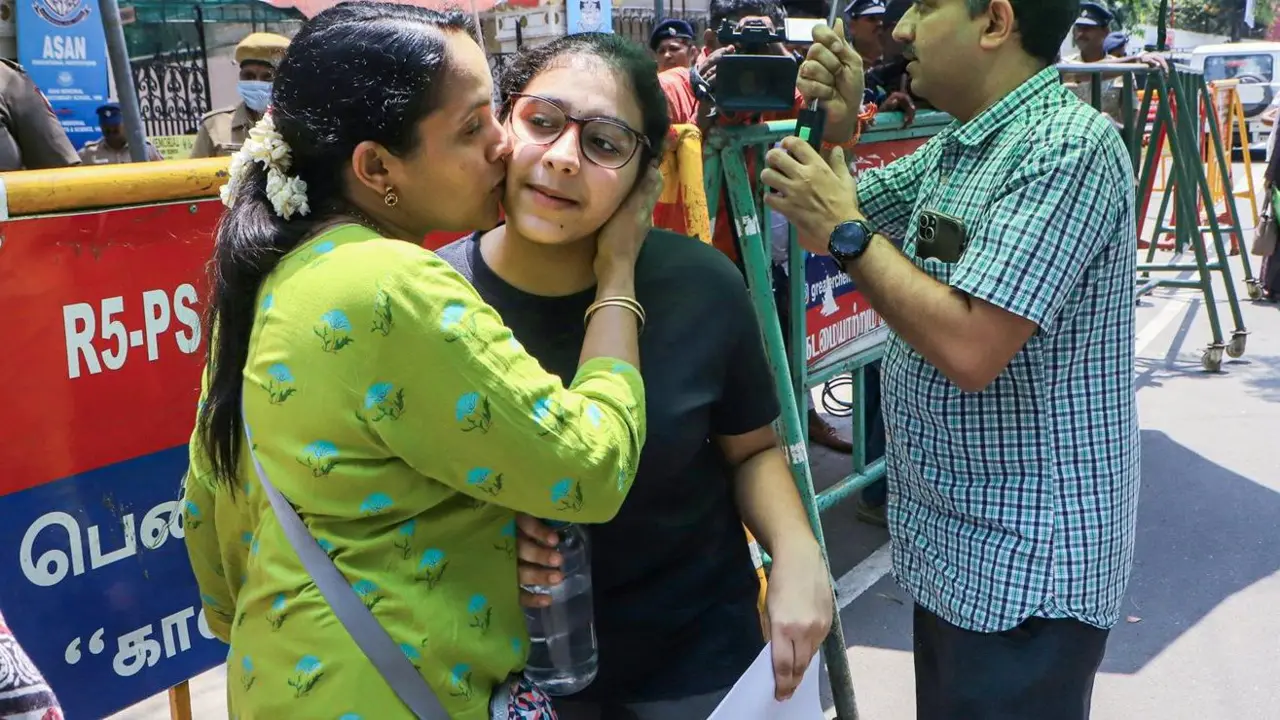
- Over 2.2 million students took a pivotal exam on May 3rd, 2026.
- A proposal for a new LPG option involving coal gasification received approval for ₹37,500 crore.
- Prateek Yadav's death was attributed to pulmonary embolism, according to post-mortem reports.
- India's foreign exchange reserves are being discussed in the context of global holdings.
- A missile strike on a primary school in Minab on February 28th resulted in 168 fatalities, including 110 children.
Modi's Diplomatic Offensive Amidst Domestic Concerns
Prime Minister Narendra Modi's international engagements have begun, with a visit to the United Arab Emirates (UAE) on May 15th. During this stop, he is scheduled to meet with President Sheikh Mohamed bin Zayed Al Nahyan. The tour's second phase is planned from May 15th to May 17th, underscoring India's active role on the global stage. These diplomatic efforts unfold against a backdrop of domestic economic pressures. The government is reportedly seeking to reduce the strain on foreign exchange reserves, prompting appeals from the Prime Minister for citizens to curtail their spending. This call for austerity highlights the delicate balance India must strike between international projection and internal economic stability. Discussions around India's foreign exchange reserves have also brought into focus the holdings of other major nations. Questions are being raised about the adequacy of India's reserves, even as they amount to billions of dollars, in the face of broader economic challenges.
A Nation Awaits Futures Shaped by Examinations
On May 3rd, 2026, a significant examination saw participation from over 2.2 million students across the country. This test was viewed by many as a potential life-changer, a gateway to future opportunities. Amidst the ongoing discourse on educational pathways, a call has emerged to reconsider the National Eligibility cum Entrance Test (NEET) for medical course admissions. Chief Minister Vijay has advocated for the abolition of NEET-based admissions, proposing instead that states be permitted to grant entry based on Class 12 marks. This debate over admission criteria reflects a broader societal aspiration for accessible and equitable educational pathways. The sheer scale of student participation in the May 3rd examination underscores the immense pressure and hope vested in the country's academic system.
Political Narratives and Social Undercurrents
The political landscape is also marked by evolving narratives and localized incidents. A statement regarding 'two lakh infiltrators' in Lucknow, followed by the assertion that not a single one has been found, points to a divergence between political rhetoric and on-ground realities. Separately, the sudden death of Prateek Yadav, the younger son of Samajwadi Party founder Mulayam Singh Yadav and husband of Aparna Yadav, sent shockwaves through Lucknow's political circles and the have identified pulmonary embolism as the cause of his demise. These events, ranging from political pronouncements to personal tragedies, contribute to the complex tapestry of India's social and political discourse, often amplified by media coverage detailing every aspect, from the autopsy findings to the alleged secrets behind celebrity transformations.
Economic Initiatives and Austerity Measures
In a significant economic development, a new option for Liquefied Petroleum Gas (LPG) that utilizes coal gasification has been approved, with an investment of ₹37,500 crore. This initiative signals a move towards diversifying energy sources and potentially addressing domestic energy demands. In parallel, a viral trend highlights an ingenious, low-cost solution for a common travel inconvenience: paper soap available for just one rupee, promising to eliminate worries about soap during train journeys. This small innovation underscores a spirit of resourcefulness. Reflecting the broader calls for conservation, ministers in BJP-ruled states have reportedly adopted austerity measures. These include travelling by metro and reducing convoy sizes, in response to Prime Minister Modi's 'Save Petrol' appeal. This collective action aims to set an example for public consciousness regarding resource management.
Geopolitical Tensions and Tragic Consequences
International relations remain a source of concern, with reports detailing a missile strike on a primary school in Minab on February 28th, coinciding with the start of a conflict between America, Israel, and Iran. The attack resulted in the tragic loss of 168 lives, including approximately 110 children. This incident serves as a stark reminder of the devastating human cost of geopolitical conflicts, particularly when they impact civilian infrastructure and innocent lives. The broader context of international relations, including the ongoing dialogues and potential escalations between major global powers, continues to shape regional stability and global security dynamics.
The bottom line
- Prime Minister Modi's foreign visits aim to bolster India's international standing.
- Domestic economic policy is focusing on managing foreign exchange reserves and promoting austerity.
- The education sector is debating the merits of NEET versus Class 12 marks for medical admissions.
- Political discourse includes localized claims and responses to significant personal and social events.
- New energy initiatives, like coal-to-gas conversion, are being pursued with substantial investment.
- Geopolitical conflicts continue to have severe humanitarian consequences, as evidenced by the Minab school attack.



CBSE Class 12 Results 2026 Expected Soon for Over 18 Lakh Students

Maharashtra Board to Announce SSC 10th Results Tomorrow
Uttar Pradesh Police Declare Results for 4,543 Sub-Inspector Posts
