Banerjee Refuses to Resign After Poll Defeat, Cites 'Nasty Games'
West Bengal's chief minister challenges election results, setting up a constitutional standoff with the governor.

INDIA —
Key facts
- Mamata Banerjee has refused to resign as Chief Minister of West Bengal.
- The Election Commission's results show her Trinamool Congress party won 80 seats, falling short of the majority mark.
- Banerjee claims the BJP's mandate of 207 seats out of 294 was the result of an illegal campaign.
- She accuses the poll panel of playing 'nasty games' and colluding with the BJP.
- Banerjee alleges manipulation of voter rolls and other illegal practices affecting 100 seats.
- The governor may ask Banerjee to prove her majority on the floor of the House.
- There is no explicit constitutional provision requiring a chief minister to resign after losing an election.
Chief Minister Defies Convention After Election Loss
West Bengal Chief Minister Mamata Banerjee has declared she will not resign, despite her Trinamool Congress party's significant defeat in the recent state elections. The Election Commission's official tally awarded the BJP 207 of the state's 294 seats, while Banerjee's party secured only 80, falling well short of the majority required to govern. This refusal to step down marks a departure from established convention in Indian politics, where election losses typically trigger resignations. Banerjee, a veteran politician known for her combative style, has rejected the results outright. She asserts that her party has not lost and that the BJP's victory was engineered through an illegal campaign. The chief minister's stance sets the stage for a potential constitutional crisis in the eastern Indian state. Her refusal to tender her resignation means the matter now rests with the Governor, who holds significant authority in such unprecedented circumstances. The situation highlights a rare moment where political defiance meets constitutional ambiguity, with profound implications for the state's governance.
Accusations of Collusion and 'Nasty Games'
Moments after the results were announced, Banerjee launched a blistering attack on the Election Commission, accusing it of orchestrating an unfair electoral process. She described the commission's actions as "nasty games" and suggested a deliberate bias in favour of the ruling BJP. This accusation extends to allegations of collusion between the poll panel and the saffron party, which she claims manipulated the outcome. Banerjee pointed to defeats for non-BJP alliances in recent elections in Maharashtra, Haryana, and Bihar as further evidence of a pattern of unfair play. She specifically claimed that the results for 100 seats were "stolen" through alleged manipulation of the Election Commission-mandated voter roll revision and other "illegal practices." Her rhetoric paints a picture of a judiciary compromised, an Election Commission biased, and a central government intent on establishing one-party rule. This narrative, she warns, sends a "wrong message to the world."
Constitutional Convention vs. Explicit Rule
The legal framework surrounding a chief minister's resignation after an election defeat is not as rigid as often perceived. While there is no explicit provision in the Indian Constitution that mandates a chief minister to step down following a poll loss, the practice has become a strong convention, underpinning the peaceful transfer of power. The core principle is that a chief minister must maintain the confidence of the legislative assembly. Once the Election Commission's verified results indicate a loss of this confidence, constitutional convention dictates a resignation. However, Banerjee's refusal to adhere to this convention places the onus on the Governor. this situation has few precedents in India. The Constitution states that chief ministers and their cabinets hold office "during the pleasure of the governor," a clause that grants the governor the power to dismiss them. This power is likely to be invoked if Banerjee fails to demonstrate her claimed majority.
Governor's Options and the Path Forward
Should Mamata Banerjee persist in her refusal to resign, the Governor has several measures at his disposal. The most immediate step would be to ask Banerjee to prove her party's majority on the floor of the West Bengal Assembly. The BJP is expected to argue that Banerjee no longer commands such support, a claim she will undoubtedly contest. If Banerjee is unable to prove her majority, the Governor could then invite the leader of the party with the majority – in this case, the BJP – to form the government. This would be a more likely course of action than the most extreme measure available to the Governor. The ultimate, though unlikely, recourse would be to recommend President's Rule, placing the state under direct federal control by suspending the legislature. This drastic step is generally considered a last resort in cases of constitutional breakdown.
A Street-Fighter's Defiance
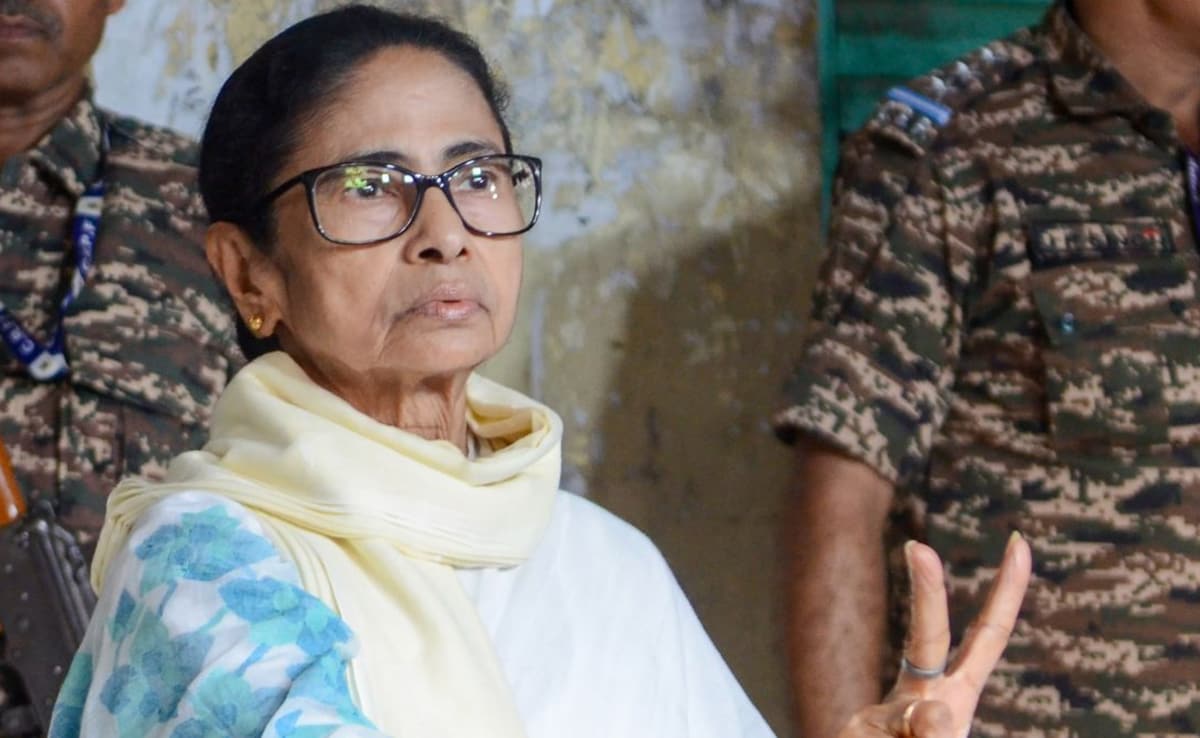
The 71-year-old chief minister invoked her well-known image as a tenacious street-fighter, vowing to continue her political battle. "I have not lost… so I will not go to Raj Bhavan (the governor's residence). I will not tender resignation," she declared, channeling the spirit that had kept the BJP at bay for 15 years in West Bengal. Adding to the charged atmosphere, Banerjee also alleged that she was assaulted at a polling station as votes were being counted. This claim further fuels the narrative of a deeply unfair and hostile electoral environment. Her defiant stance suggests a protracted political struggle ahead, one that will test the boundaries of constitutional norms and the resilience of democratic conventions in India.
The bottom line
- Mamata Banerjee has refused to resign as Chief Minister of West Bengal following her party's election defeat.
- She alleges the Election Commission colluded with the BJP to manipulate the results, affecting 100 seats.
- While not constitutionally mandated, resignation after losing an election is a strong political convention in India.
- The Governor may ask Banerjee to prove her majority in the state assembly.
- Banerjee has vowed to fight the results, citing unfair practices and a personal assault claim.
- The standoff could lead to the Governor dismissing Banerjee or recommending President's Rule.






Nagaland Lottery Declares ₹1 Crore Winner for Dear Star Thursday Draw

Jharkhand Board to Release Class 12 Results Soon on jacresults.com
Nepal Seek Revenge Against Oman in Crucial World Cup League 2 Clash
