Maruti Suzuki chairman sees inevitable small-car revival as GST cuts and latent demand align
India’s largest automaker reports record sales of 2.42 million units in FY26 but faces capacity constraints and rising costs that squeezed fourth-quarter profit.
INDIA —
Key facts
- Maruti Suzuki’s pending order book stood at 190,000 units at end of FY26, including 130,000 in the small-car segment.
- Small cars’ share of India’s passenger vehicle market fell to 23% in FY26 from 46% in FY19.
- Utility vehicles now account for 68% of total sales (55% SUVs, 13% MPVs).
- Maruti Suzuki’s domestic market share declined to around 40% in FY26 from over 50% in FY19.
- The company plans to add 500,000 units of annual capacity at Kharkhoda and Hansalpur plants.
- A fifth manufacturing facility at Sanand, Gujarat, is expected to have capacity of 1 million units per year.
- a 6.4% drop in Q4 profit despite a 29% jump in revenue.
- The government reduced GST on small cars to 18% under GST 2.0 to improve affordability.
Small-car decline and the SUV surge
India’s passenger vehicle market has undergone a dramatic shift over the past six years. Utility vehicles now make up 68% of total sales — 55% from SUVs and 13% from multi-purpose vehicles — while hatchbacks have shrunk to roughly 23%, down from a peak of 46% in the financial year ended March 2019. The migration has been driven by rising vehicle prices, stricter regulations and higher ownership costs that eroded affordability at the entry level. Many first-time buyers have bypassed small hatchbacks in favour of subcompact SUVs, a trend that has hit Maruti Suzuki harder than most because of its traditional dominance in the small-car segment. Segment-level data from JATO Dynamics India shows that cars priced below ₹10 lakh now account for just 6% of total sales in FY26, half the 12.5% share recorded in FY24. Volumes in the small-car segment are estimated to be 35-45% below pre-pandemic levels.
Bhargava’s case for recovery: GST cuts and latent demand
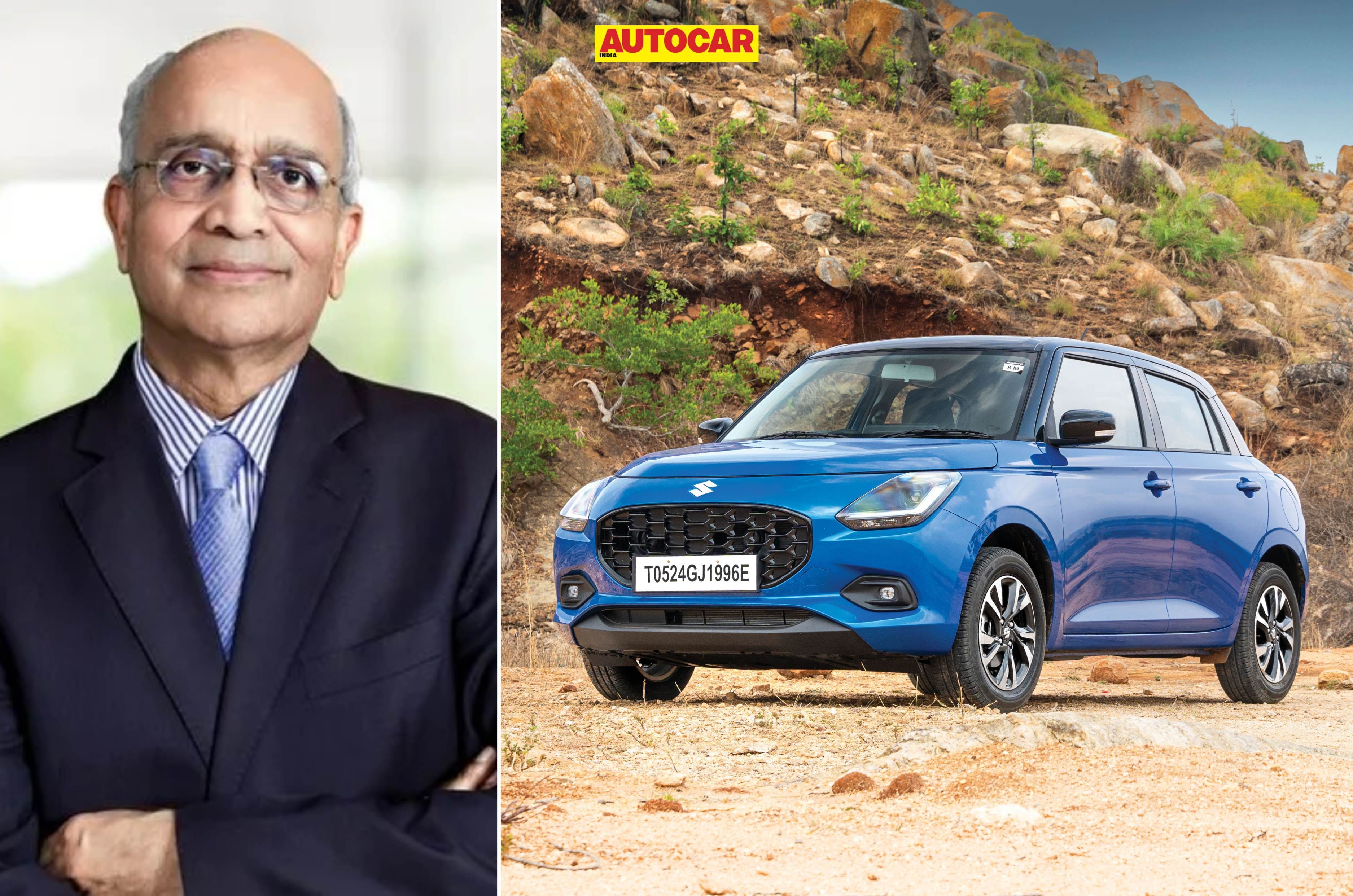
Maruti Suzuki chairman RC Bhargava told analysts that a revival of the small-car segment is “inevitable” over the next few years. “In the last six years, the share of small cars has been declining. Now, with new GST rates, it is inevitable that what was lost will gradually come back,” he said, citing improving affordability as a key driver. The government’s decision to bring small cars into the 18% tax bracket under the GST 2.0 regime is a deliberate policy intervention to make entry-level vehicles more accessible. Bhargava noted that the underlying demand for affordable mobility remains intact: “The small-car market is growing; there are 1,90,000 people on the waiting list in India. 30,000 of them are in the small-car segment.” He added that India’s economic reality ensures a long-term need for low-cost cars. “India is not a rich country where everybody can buy big cars… a large part of the population will need low-cost small cars,” he said.
Capacity constraints and record capital expenditure
Maruti Suzuki is operating at full capacity across its existing plants in Gurgaon, Manesar, Kharkhoda and Hansalpur, a constraint that chairman Bhargava said now determines the company’s growth. “Our growth is now more or less determined by our ability to add capacity and run,” he said. To address the bottleneck, the company has earmarked a record capital expenditure of ₹14,000 crore for FY27 and plans to add a combined annual production capacity of 500,000 units at its Kharkhoda and Hansalpur facilities. A fifth manufacturing site has been identified at Sanand, Gujarat, which is expected to eventually produce 1 million units per year. The urgency is underscored by the order backlog: at the end of FY26, Maruti Suzuki had pending orders for about 190,000 vehicles, including nearly 130,000 in the small-car segment. Dealer inventory stood at just 12 days of stock, reflecting supply constraints amid robust demand.
Record sales but profit pressure in Q4
its highest-ever total sales of 2,422,713 units in FY26, comprising domestic sales of 1,974,939 units and exports of 447,774 units. The year was described as one of “two distinct halves”: domestic sales fell 5.6% in the first half before rebounding 12.3% in the second half, aided by the GST reduction. Despite the revenue surge, fourth-quarter profit slipped 6.4% as rising costs ate into margins. The company did not provide a detailed breakdown of cost pressures, but chairman Bhargava said a decision on price hikes in response to rising commodity prices would be taken “at an appropriate time.” Maruti Suzuki’s domestic market share has fallen from over 50% in FY19 to around 40% in FY26, as competitors strengthened their SUV portfolios. Bhargava downplayed the metric, saying market share is a by-product of broader dynamics rather than a primary objective.
Dual strategy: small cars remain core, SUVs drive growth
Maruti Suzuki is pursuing a twin-track approach, investing simultaneously in small cars and SUVs to balance long-term demand with current market trends. The company continues to see the small-car segment as central to its identity and future, even as it expands its SUV lineup to compete with rivals. Bhargava argued that the small-car market will recover as affordability improves and the GST cut takes effect. The waiting list of 30,000 customers for small cars, he said, demonstrates that demand has not vanished but is being suppressed by price and policy factors. At the same time, the company is adding capacity to meet the immediate SUV-driven demand. The combination of record capital expenditure, new plant plans and a focus on both segments reflects a bet that India’s automotive market will remain bifurcated between cost-conscious first-time buyers and aspirational SUV customers.
The bottom line
- Maruti Suzuki’s chairman expects the small-car segment to rebound over the next few years, driven by GST cuts and latent demand from a large low-income population.
- The company is investing ₹14,000 crore in FY27 to add 500,000 units of capacity and plans a fifth plant at Sanand with 1 million units annual capacity.
- Maruti Suzuki’s domestic market share has fallen to about 40% from over 50% in FY19 as SUVs captured 68% of the market.
- Despite record sales of 2.42 million units in FY26, fourth-quarter profit fell 6.4% due to rising costs.
- The pending order book of 190,000 units and dealer inventory of just 12 days highlight supply constraints that capacity expansion aims to resolve.
- The government’s GST reduction to 18% on small cars is a key policy lever intended to revive entry-level vehicle demand.


Bhuvneshwar Kumar's ₹70–75 Crore Net Worth and Meerut Bungalow: A Cricketer's Journey

Today's Chanakya Exit Poll Predicts Mamata Banerjee's Defeat in West Bengal
Bhuvneshwar Kumar's Death-Overs Mastery Propels RCB into Top-Four Clash with GT