Massive 8.8 Quake Off Russia Triggers Pacific-Wide Tsunami, Millions Evacuate
The sixth most powerful earthquake ever recorded sent waves across the Pacific, prompting evacuations from Japan to California, but the worst threat appears to have passed with no casualties reported.
INDIA —
Key facts
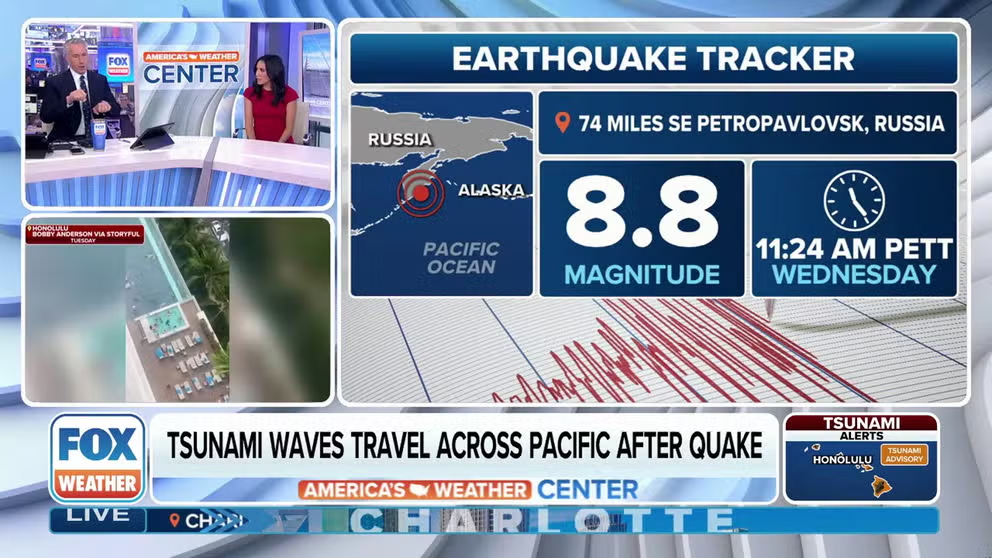
- Magnitude 8.8 earthquake struck off Russia's Kamchatka Peninsula on Wednesday at 11:25 local time.
- More than 2 million people across the Pacific were ordered to evacuate.
- Tsunami alerts were issued for Japan, Hawaii, US West Coast, China, Philippines, Indonesia, New Zealand, Peru, Chile, and Mexico.
- Waves of up to 3 meters (10 feet) were forecast for some coastal areas.
- by the Russian government.
- A separate 7.4 magnitude quake off Japan's northern coast prompted a temporary tsunami alert on Monday.
- Japan issued a 'megaquake' advisory with a 1% chance of a larger quake within a week.
- The 2011 Fukushima earthquake and tsunami killed over 22,000 people and displaced half a million.
A Historic Earthquake Strikes the Pacific Rim
At 11:25 local time on Wednesday, the sixth most severe earthquake in recorded history ruptured the seafloor off Russia's far eastern coast. The magnitude 8.8 temblor near the Kamchatka Peninsula unleashed a Pacific-wide tsunami that sent walls of water racing toward Japan, Hawaii, and the west coast of the United States. Within hours, more than two million people across the Pacific basin were ordered to evacuate coastal zones. Alerts cascaded from Japan to Chile, encompassing China, the Philippines, Indonesia, New Zealand, Peru, and Mexico. The scale of the warning reflected the earthquake's place among the strongest ever measured.
Waves Reach Hawaii and the US West Coast
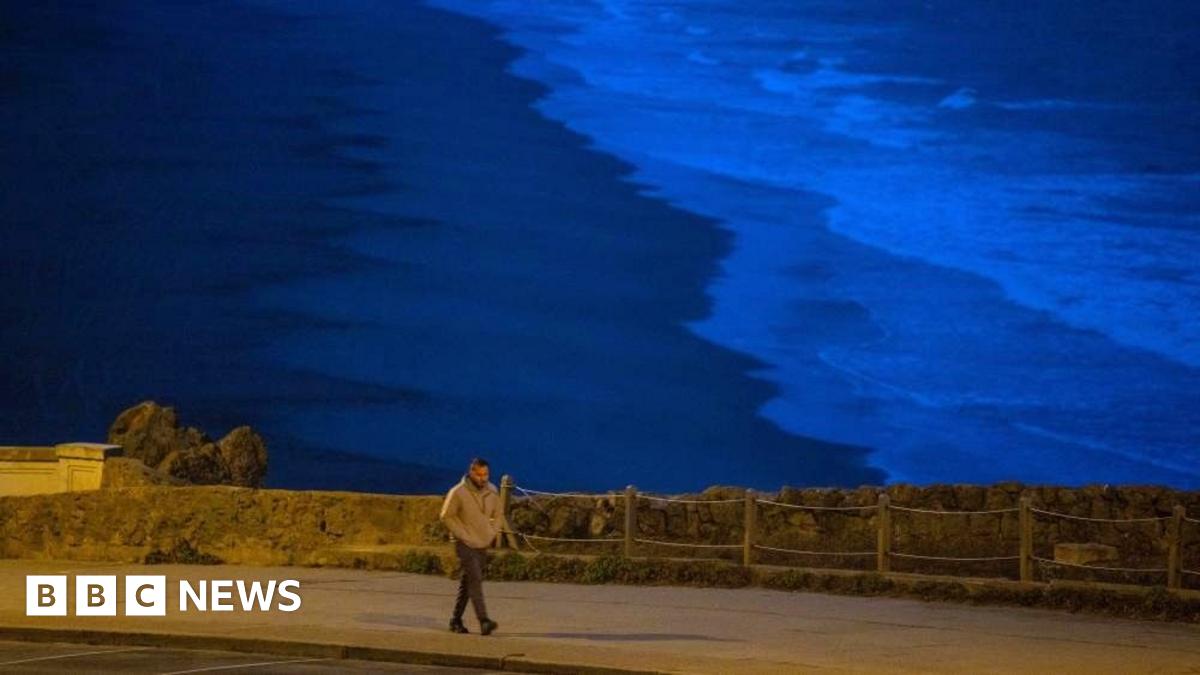
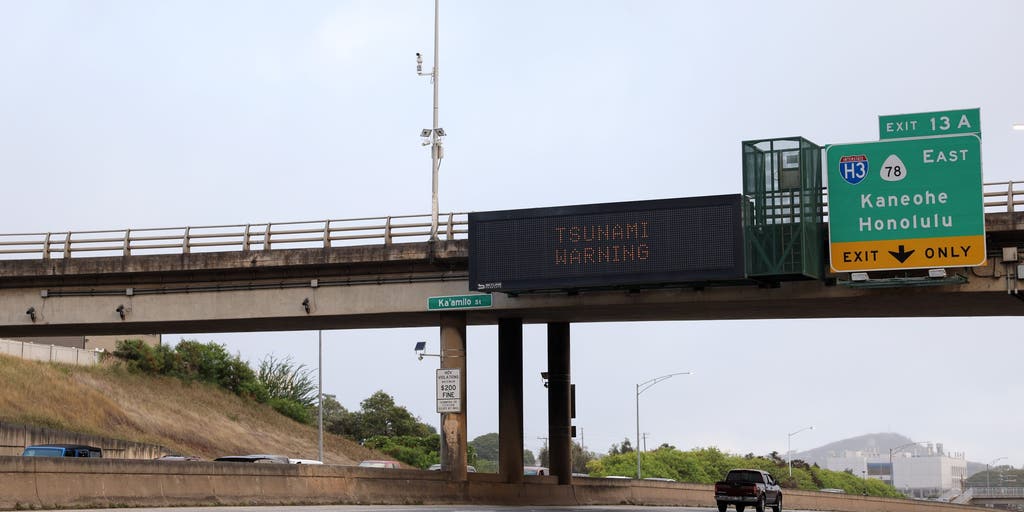
Tsunami waves impacted coastal communities in Hawaii and Alaska, as well as California, Washington, and Oregon. In Honolulu, freeway signs flashed 'Tsunami Warning' as residents and visitors fled low-lying areas. Traffic backed up along the Ala Wai Harbor in Waikiki as people sought higher ground. In Los Angeles, lifeguard trucks patrolled Venice Beach pier and police officers drove along Santa Monica Pier, warning the public of the closure. The alerts remained in effect for hours as the Pacific Tsunami Warning Center monitored the wave progression.
Japan on Alert After Separate Quake
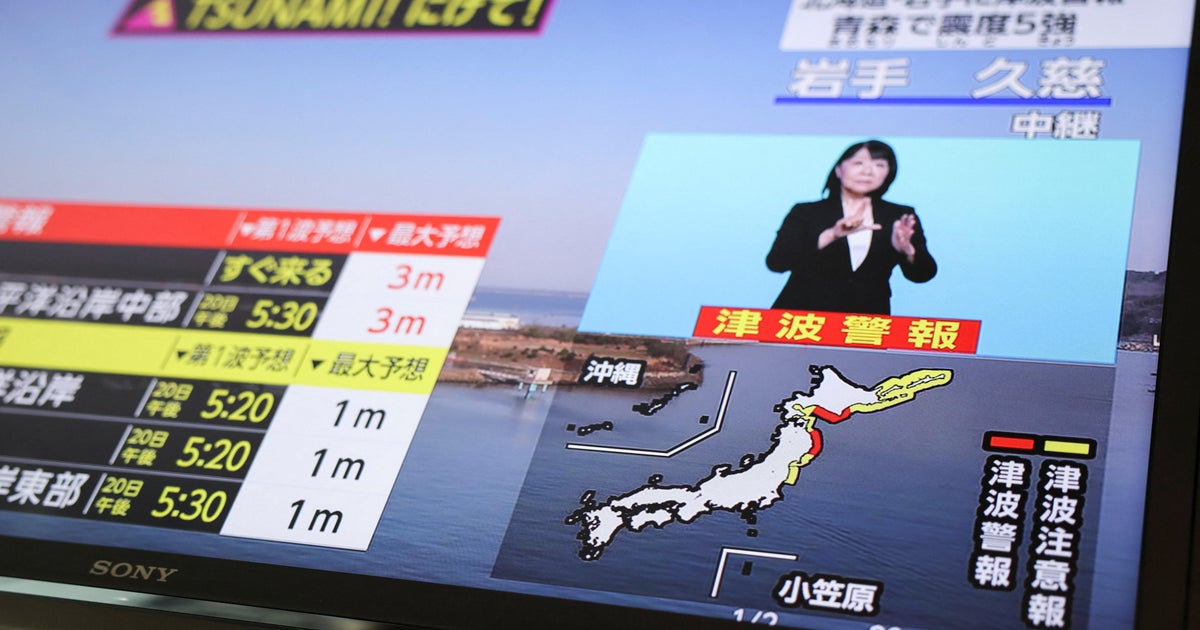
Days earlier, on Monday, a powerful earthquake of magnitude 7.4 struck off Japan's northern coast near Sanriku at a depth of about 6 miles. The Japan Meteorological Agency initially warned of waves up to 10 feet, but observed waves reached only 2.6 feet at Kuji port in Iwate prefecture and 1.3 feet at another port. The tsunami alert was later downgraded to an advisory, and the U.S. Pacific Tsunami Warning Center declared the threat had passed. Non-binding evacuation advisories were issued to more than 128,000 residents across Iwate and three other northern prefectures.
No Damage Reported, Nuclear Facilities Intact
no damage or injuries from the Monday quake, including at power stations and other critical infrastructure. The Nuclear Regulation Authority confirmed that nuclear power plants and related facilities in the region were intact with no abnormalities detected. Prime Minister Sanae Takaichi announced the establishment of an emergency task force, and television screens flashed evacuation warnings for Iwate, Aomori, and Hokkaido prefectures. The government later issued an advisory for northern coastal areas warning of a small chance—about 1%—that the temblor could trigger a mega-quake within the next week.
A Region Haunted by the 2011 Disaster
The advisories come 15 years after the magnitude 9.0 earthquake and tsunami on March 11, 2011, which killed more than 22,000 people and forced nearly half a million to flee their homes. The Fukushima Daiichi nuclear disaster compounded the tragedy, with some 160,000 people evacuating due to radiation; about 26,000 have not returned. Officials stressed that the current advisory is not a prediction but urged residents to raise preparedness—stocking emergency food and preparing grab bags—while continuing daily life. A similar advisory was issued after a major quake in December, with no subsequent mega-quake occurring.
The Worst Threat Appears to Have Passed
About 17 hours after the initial 8.8 quake, the worst of the tsunami threat appeared to have passed. 'The disaster we were expecting did not come,' a tourist in no casualties from the earthquake or tsunami. As international alerts were gradually lifted, the Pacific Tsunami Warning Center continued to monitor for any further developments. The event, while producing no widespread destruction, served as a stark reminder of the region's vulnerability to seismic and oceanic forces.
The bottom line
- The magnitude 8.8 earthquake off Russia's Kamchatka Peninsula is the sixth most powerful ever recorded and triggered a Pacific-wide tsunami warning.
- More than 2 million people evacuated coastal areas across the Pacific, but no casualties have been reported.
- A separate magnitude 7.4 quake off Japan's northern coast prompted a temporary tsunami alert and a 'megaquake' advisory with a 1% risk within a week.
- Japan's nuclear facilities were undamaged, and no injuries or damage were reported from the Monday quake.
- The event echoes the 2011 Fukushima disaster, which killed over 22,000 and displaced half a million, underscoring the ongoing threat of mega-quakes in the region.
- Despite the scale of the warnings, the tsunami impact was minimal, and the threat has largely passed.




India Face Chinese Taipei in Thomas Cup Quarterfinals, Seek Second Title

White House Declares Iran War 'Terminated' as Ceasefire Holds, Sidestepping Congressional Deadline

News Today, in context