Merz backs Palestinian state but rules out recognition in foreseeable future during first Israel visit
German chancellor's stance puts Berlin at odds with France, Spain and the UK, while Netanyahu rejects two-state solution and hints at West Bank annexation.

IRAQ —
Key facts
- Friedrich Merz was elected German chancellor in May 2025, becoming the 10th chancellor since WWII.
- Merz affirmed support for a Palestinian state alongside Israel but said recognition would come only at the end of peace negotiations.
- Netanyahu claimed a Palestinian state would 'destroy the Jewish state' and said the Israeli public opposes a two-state solution.
- Germany does not consider Israel's war on Gaza a genocide, despite international court rulings.
- The US plans to withdraw 5,000 troops from Germany after Merz said the US was 'humiliated' by Iran's leadership.
- Germany set new naturalization records in 2024, with the CDU demanding suspension of procedures on suspicion of fraud.
- Merz's visit took place under the shadow of Israel's genocidal war on Gaza, which he does not label as such.
Merz walks tightrope between Palestinian statehood and Israeli security
German Chancellor Friedrich Merz, on his inaugural visit to Israel, declared support for the eventual creation of a Palestinian state but insisted that formal recognition must come only at the conclusion of peace negotiations. Speaking at a joint press conference in Jerusalem on Sunday, Merz said Germany, one of Israel's staunchest allies, envisions a new Middle East that includes a Palestinian state alongside Israel. 'Our conviction is that the prospective establishment of a Palestinian state alongside Israel presumably offers the best prospect for this future,' he stated. However, Merz quickly added that his government has no intention of recognizing a Palestinian state 'in the foreseeable future.' He argued that recognition should be the endpoint of a peace process, not a starting point. This position puts Germany at odds with several key European nations, including France, Spain, and the United Kingdom, which have all confirmed formal recognition of a Palestinian state.
Netanyahu rejects two-state solution, hints at West Bank annexation
Israeli Prime Minister Benjamin Netanyahu flatly rejected the two-state solution, claiming that the Israeli public opposes it and that a Palestinian state would 'destroy the Jewish state.' He did not elaborate on the claim. Netanyahu also raised the possibility of annexing the occupied West Bank, a move that Merz and the Trump administration have both opposed. Netanyahu said the status quo in the West Bank was expected to remain for the foreseeable future, but that annexation remains a subject of discussion. Netanyahu also noted that the first phase of Trump's Gaza plan was nearly complete, and that he would hold 'very important conversations' at the end of December to ensure the second phase is achieved. The comments came amid Israel's genocidal war on Gaza, a characterization Merz does not share.
Germany's naturalization surge sparks CDU fraud concerns
Germany recorded a new record in naturalizations in 2024, with the number of people obtaining German citizenship reaching an all-time high. The surge has ignited political debate, with the Christian Democratic Union (CDU) demanding that naturalization procedures be suspended whenever fraud is suspected. The CDU's call reflects growing tensions over immigration and integration policies in Germany. The record naturalization figures come as Merz's government faces multiple foreign policy challenges, including strained relations with the United States and the ongoing war in Gaza.
US troop withdrawal looms after Merz's Iran remarks
The United States has announced plans to withdraw 5,000 troops from Germany, fulfilling a threat made by President Donald Trump. The move follows comments by Chancellor Merz that the US was being 'humiliated' by Iran's leadership. Merz's remarks drew Trump's ire, escalating tensions between the two allies. The troop withdrawal is part of a broader re-evaluation of US military posture in Europe. Trump has also criticized NATO, saying he received an offer from the alliance to help secure the Strait of Hormuz but told it to 'STAY AWAY.' Meanwhile, France and the UK are leading a 'defensive' force for the strategic waterway.
Iran's exiled crown prince targeted in Berlin protest
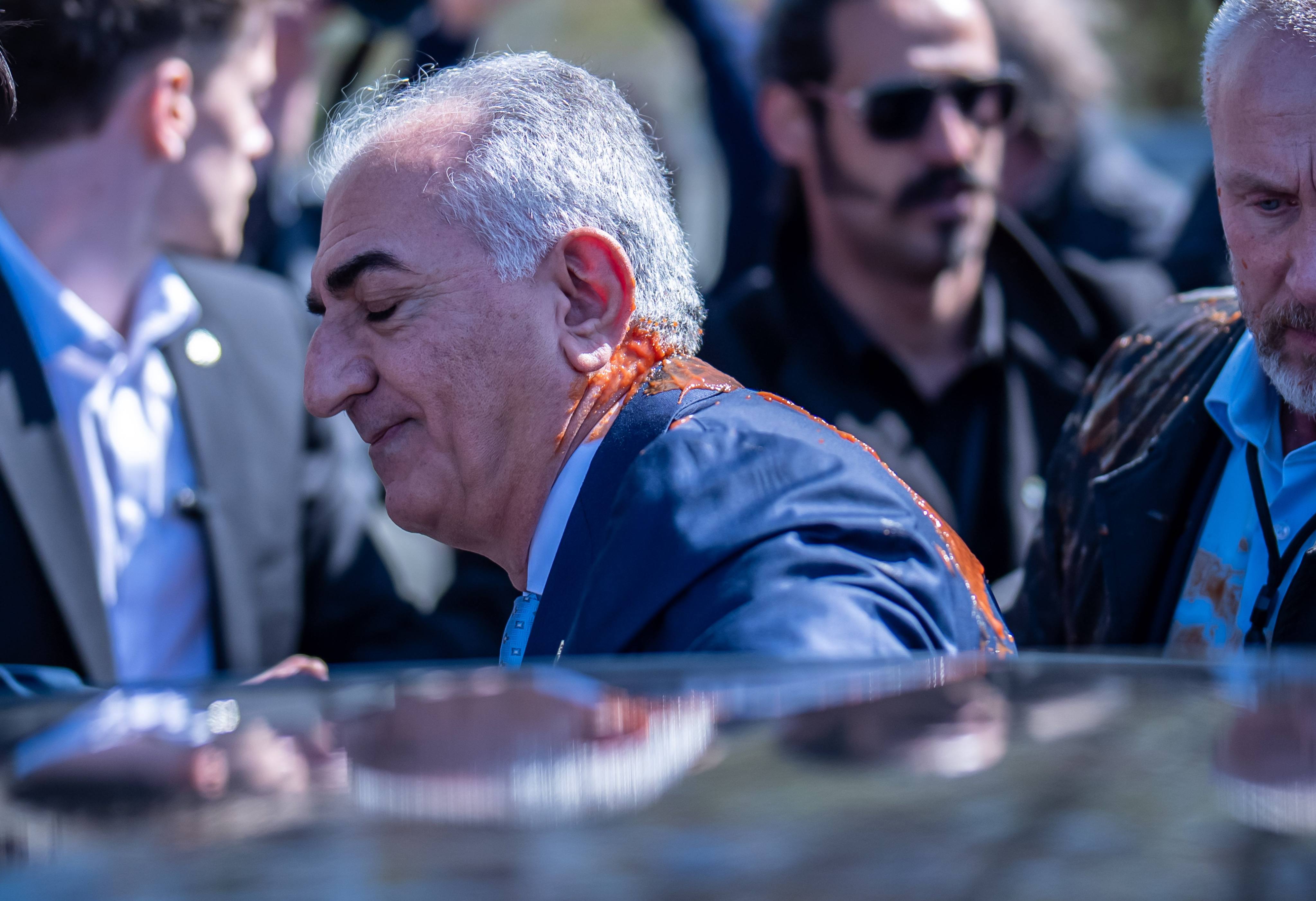
Reza Pahlavi, Iran's exiled crown prince, was splashed with a red substance in Berlin as he left a press conference. Pahlavi had stated that diplomacy with Iran 'has been given enough chance.' The incident highlights the volatile atmosphere surrounding Iranian opposition figures in Europe. Iran has said it does not consider the war to be over, while the UAE has pulled out of OPEC. The US has extended its blockade of Iran, and Trump has warned of 'wartime' conditions.
Merz rules out fast-track EU membership for Ukraine
Chancellor Merz has stated that there is no 'immediate' path to EU membership for Ukraine, dampening Kyiv's hopes for rapid integration. There is little appetite among EU member states to fast-track Ukraine's accession, leading some to propose interim benefits instead. The decision comes as the war in Ukraine continues, with US and European allies providing military and economic support.
The bottom line
- Merz supports a Palestinian state in principle but refuses recognition until after peace negotiations, diverging from France, Spain, and the UK.
- Netanyahu rejects a two-state solution and hints at West Bank annexation, while claiming a Palestinian state would destroy Israel.
- Germany set new naturalization records in 2024, prompting the CDU to demand fraud checks on all procedures.
- The US will withdraw 5,000 troops from Germany after Merz criticized US handling of Iran.
- Iran's exiled crown prince was attacked in Berlin, underscoring tensions around Iranian opposition figures.
- Merz has ruled out fast-track EU membership for Ukraine, offering only interim benefits.



Iran Hangs Protester Sasan Azadvar as Execution Toll Reaches 22 Since War Began

الأهلي يهزم الزمالك بثلاثية نظيفة ويشعل صراع الدوري المصري في الأمتار الأخيرة

مدرب الزوراء لؤي صلاح: الجولات المتبقية استثنائية ومرهقة ونحتاج مطاولة ذهنية عالية