OPEC: the story explained
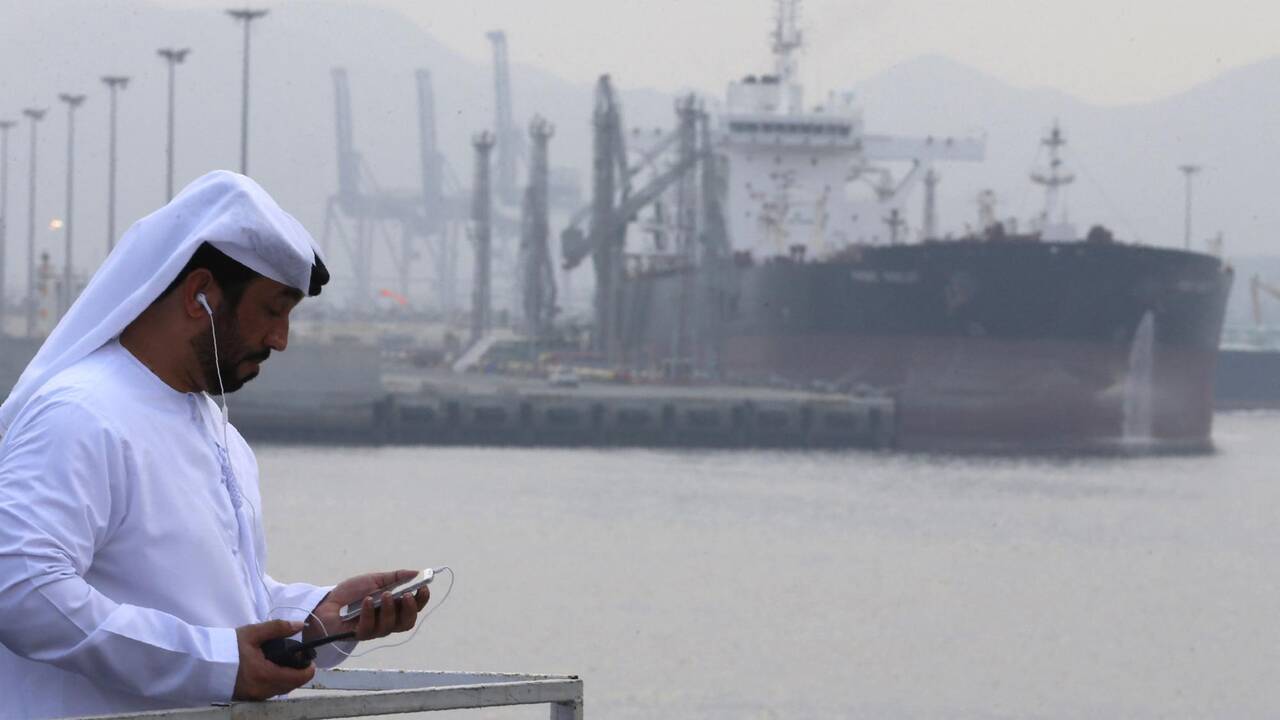
The withdrawal of the United Arab Emirates (UAE) from the Organization of the Petroleum Exporting Countries (OPEC), formalized in April 2026, marks a strategic.

IRAQ —
The withdrawal of the United Arab Emirates (UAE) from the Organization of the Petroleum Exporting Countries (OPEC), formalized in April 2026, marks a strategic. OPEC has emerged this Friday as one of the stories drawing attention in Iraq.
Key facts
- The withdrawal of the United Arab Emirates (UAE) from the Organization of the Petroleum Exporting Countries (OPEC), formalized in April 2026, marks a strategic.
- Abu Dhabi, which joined the organization in 1967, will officially leave on May 1, 2026, along with OPEC+, which includes Russia.
- The UAE’s decision to leave OPEC+ is not just another Gulf oil story.
- The 2014 to 2016 price collapse showed that OPEC strategy and shale growth could produce a different kind of shock, one that damaged producer revenues rather than consumer budgets.
- The current Strait of Hormuz shock is not a replay of the 1973 to 1974 OPEC embargo, but it rhymes with it in important ways.
What we know
Going deeper, Abu Dhabi, which joined the organization in 1967, will officially leave on May 1, 2026, along with OPEC+, which includes Russia.
On the substance, the UAE’s decision to leave OPEC+ is not just another Gulf oil story.
Beyond the headlines, the 2014 to 2016 price collapse showed that OPEC strategy and shale growth could produce a different kind of shock, one that damaged producer revenues rather than consumer budgets.
More precisely, the current Strait of Hormuz shock is not a replay of the 1973 to 1974 OPEC embargo, but it rhymes with it in important ways.
It is worth noting that If OPEC+ supports $90 or $100 oil, it makes EVs, electric trucks, heat pumps, rail, remote work, and efficiency more attractive.
By the numbers
At this stage, the 1973 to 1974 Arab oil embargo is still the defining image of modern oil vulnerability.
On a related note, Federal Reserve historical material notes that the embargo helped push oil from roughly $2.90/bbl before the embargo to $11.65/bbl by January 1974.
Going deeper, the 1979 Iranian Revolution and the 1980 Iran-Iraq War showed that oil markets are vulnerable not only to producer policy, but to the internal stability of producer states and the security of the regions around them.
On the substance, the 1990 to 1991 Gulf War was a chokepoint and regional-security shock.
The wider context
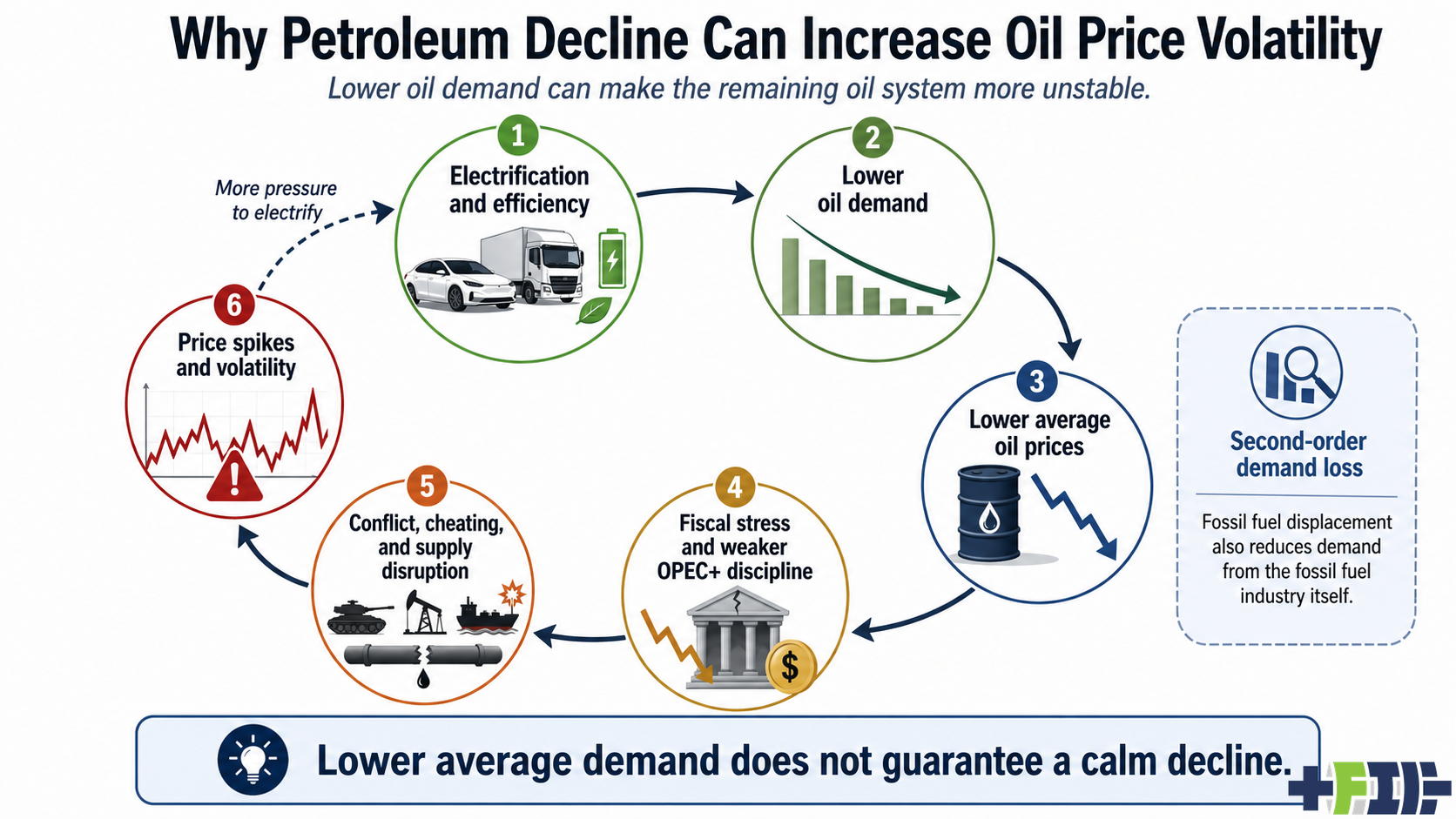
On a related note, In a declining oil market, fiscal stress and fragile producer states will mean much more volatile oil prices.
Going deeper, it is an early signal of what happens when a producer with low-cost barrels, spare capacity ambitions, and a long view of electrification decides that flexibility may be worth more than cartel discipline.
On the substance, Oil demand is beginning to bend under the weight of EVs, electric trucks, efficiency, remote work, substitution, and changing logistics.
Beyond the headlines, that should suggest a calmer oil market, with lower prices as the world uses less petroleum.
More precisely, But the more interesting possibility is the opposite.
The bottom line
- The UAE’s decision to leave OPEC+ is not just another Gulf oil story.
- The 2014 to 2016 price collapse showed that OPEC strategy and shale growth could produce a different kind of shock, one that damaged producer revenues rather than consumer budgets.
- The current Strait of Hormuz shock is not a replay of the 1973 to 1974 OPEC embargo, but it rhymes with it in important ways.
- Searches spiking right now: أوبك وكيف أثر إعلان انسحاب الإمارات على أسعار النفط؟, فيتش: خروج الإمارات من أوبك قد يزيد إيراداتها من النفط على المدى الأطول, ما تبعات قرار انسحاب الإمارات من أوبك على علاقتها مع السعودية وأسواق النفط؟, الإمارات تعلن قرار الخروج من «أوبك» و«أوبك+».