UAE to Exit OPEC in April 2026, Signaling Fracture in Global Oil Alliance
Abu Dhabi's departure from the cartel it joined in 1967 marks a strategic shift as low-cost producers weigh the value of discipline against flexibility in a changing energy landscape.

IRAQ —
Key facts
- UAE will formally leave OPEC on May 1, 2026, ending 59 years of membership.
- The withdrawal also applies to OPEC+, the broader alliance that includes Russia.
- The decision comes amid rising global adoption of EVs, heat pumps, and efficiency measures.
- OPEC+ support for $90–$100 oil could accelerate electrification and reduce petroleum demand.
- The 1973 Arab oil embargo pushed oil from $2.90/bbl to $11.65/bbl by January 1974.
- The 1979 Iranian Revolution and 1980 Iran-Iraq War highlighted producer-state instability risks.
- The 1990–1991 Gulf War demonstrated chokepoint and regional-security vulnerabilities.
A Gulf Producer Breaks Ranks
The United Arab Emirates will withdraw from the Organization of the Petroleum Exporting Countries on May 1, 2026, a decision formalized in April that ends nearly six decades of membership. Abu Dhabi, which joined OPEC in 1967, is also leaving the broader OPEC+ alliance that includes Russia. The move, which emerged as a major story in Iraq this Friday, signals a fracture within the world's most influential oil producers' group. The UAE's exit is not merely another Gulf oil story. It represents an early signal of what happens when a producer with low-cost barrels, spare capacity ambitions, and a long view of electrification decides that flexibility may be worth more than cartel discipline.
Why Now? The Calculus of a Low-Cost Producer
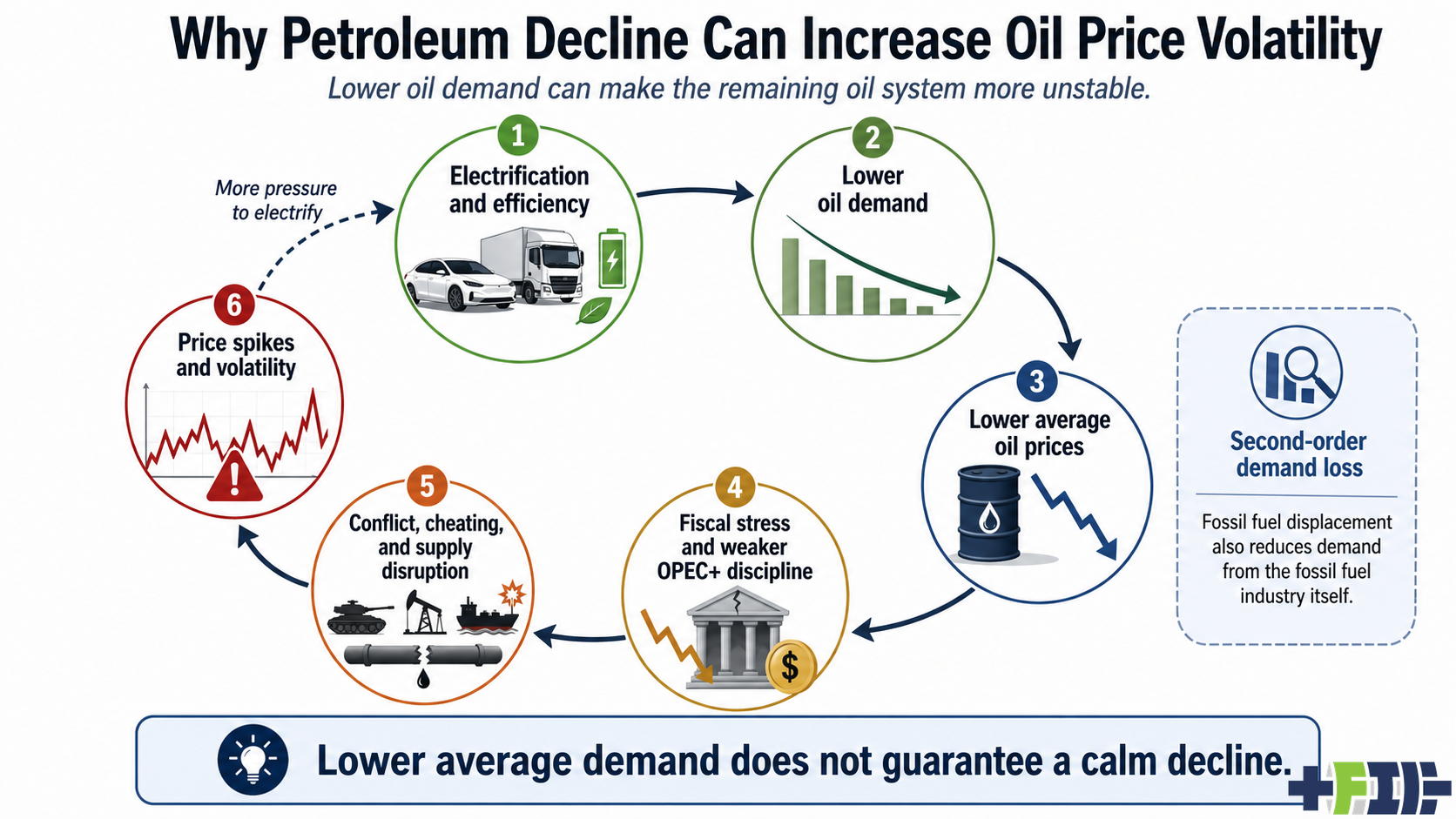
The UAE possesses some of the world's cheapest oil to extract and has invested heavily in expanding production capacity. As oil demand begins to bend under the weight of electric vehicles, electric trucks, heat pumps, remote work, substitution, and changing logistics, the cartel's strategy of supporting higher prices may no longer serve Abu Dhabi's interests. If OPEC+ props up oil at $90 or $100 per barrel, it makes alternatives more attractive, accelerating the very transition that threatens long-term demand. For a producer with spare capacity and a diversified economy, the calculus shifts: leaving the cartel allows the UAE to pump more oil at lower prices, capturing market share while rivals constrained by quotas lose out. The decision reflects a strategic bet that the future belongs to those who can produce and sell the most, not those who restrict supply to prop up prices.
Historical Echoes: From Embargo to Instability
The current Strait of Hormuz shock is not a replay of the 1973–1974 Arab oil embargo, but it rhymes with it in important ways. That embargo, which followed the Yom Kippur War, pushed oil from roughly $2.90 per barrel to $11.65 by January 1974.1979 Iranian Revolution and the 1980 Iran-Iraq War demonstrated that oil markets are vulnerable not only to producer policy but to the internal stability of producer states and the security of the regions around them. The 1990–1991 Gulf War was a chokepoint and regional-security shock. The 2014–2016 price collapse showed that OPEC strategy and shale growth could produce a different kind of shock, one that damaged producer revenues rather than consumer budgets. Each episode reshaped the cartel's role and the assumptions of its members.
The Stakes for OPEC and the Global Oil Market
The UAE's departure weakens OPEC's cohesion at a time when the alliance already faces internal tensions. If other low-cost producers follow, the cartel's ability to influence prices through coordinated production cuts could erode. In a declining oil market, fiscal stress and fragile producer states will mean much more volatile oil prices, not the calmer market that lower demand might suggest. The more interesting possibility is the opposite: that the exit of a major producer could lead to a more disciplined core, with Saudi Arabia and others tightening quotas to compensate. But that scenario assumes the remaining members can agree on burden-sharing, a tall order when each faces its own fiscal pressures.
What Comes Next: Flexibility Over Discipline
The UAE's move is a bet that the energy transition will reshape oil markets faster than the cartel can adapt. By leaving OPEC+, Abu Dhabi gains the freedom to set its own production levels and pursue bilateral deals with consuming countries. It also positions itself to benefit from any price wars that might accelerate the shift away from oil. For Iraq, where the story has drawn particular attention, the implications are direct: as a fellow OPEC member with ambitious production targets, Iraq must now navigate a landscape where the alliance's discipline is fraying. The decision from Abu Dhabi may force other producers to reconsider their own commitments to the cartel.
A New Chapter in Oil Geopolitics
The UAE's withdrawal from OPEC marks the end of an era in which the cartel could rely on near-unanimous solidarity among its Gulf members. It is a reminder that the oil market is shaped not only by supply and demand but by the strategic calculations of individual states. As the world uses less petroleum, the value of flexibility may indeed outweigh the value of discipline. The 1973 embargo remains the defining image of modern oil vulnerability, but the UAE's exit suggests that the next shock may come not from a coordinated cutoff but from a producer choosing to go its own way.
The bottom line
- The UAE will leave OPEC and OPEC+ on May 1, 2026, ending 59 years of membership.
- The decision reflects a strategic shift by a low-cost producer prioritizing flexibility over cartel discipline.
- Rising adoption of EVs and efficiency measures is reshaping demand, making high-price strategies less attractive.
- Historical oil shocks—1973 embargo, 1979 revolution, 1990 Gulf War—show markets are vulnerable to both policy and instability.
- The exit could weaken OPEC's cohesion and lead to more volatile prices in a declining market.
- Other producers, including Iraq, face pressure to reassess their own commitments to the cartel.




باول يعلن البقاء في الاحتياطي الفدرالي بعد انتهاء ولايته في خطوة استثنائية

السيسي يعلن منحة 1500 جنيه للعمالة غير المنتظمة لمدة 3 أشهر في عيد العمال
ارتفاع قياسي لأسعار البيض في العراق: 8 آلاف دينار للطبقة وغرفة ديالى تحدد ثلاثة عوامل