Google Unveils Screen-less Fitbit Air for $99.99
The minimalist tracker, launching May 26, integrates with the rebranded Google Health app and offers advanced health monitoring.

JAPAN —
Key facts
- Google announced the Fitbit Air, a screen-less fitness tracker.
- The Fitbit Air is priced at $99.99 and launches on May 26.
- It features 24/7 heart rate tracking and AFib notifications.
- The tracker offers 7-day battery life with quick charging capabilities.
- The Fitbit app is rebranding to Google Health on May 19.
- Google is sunsetting the Google Fit app by the end of the year.
- A Stephen Curry edition Fitbit Air is available for $129.99.
A Minimalist Approach to Fitness Tracking
Google has introduced the Fitbit Air, a new fitness tracker designed with a minimalist aesthetic and a screen-less interface. Priced at an accessible $99.99, the device aims to offer a discreet and comfortable wearable experience for users who prioritize essential health metrics over detailed on-device data. The tracker's technology is housed within a small, plastic, pill-shaped pebble that detaches easily from its band. Google emphasizes "all-day focus and all-night comfort," suggesting it surpasses competitor wearables in user comfort during extensive testing. This design caters to individuals seeking a subtle, unobtrusive device for continuous wear. The Fitbit Air is engineered for those who want to monitor their health without the constant distraction of a display. Its core functionality focuses on delivering key health insights and notifications directly to the user's paired smartphone.
Advanced Health Monitoring Features
Despite its screen-less design, the Fitbit Air is equipped with a suite of advanced health tracking capabilities. It provides continuous 24/7 heart rate monitoring, alongside notifications for heart rate falling above or below set ranges. Crucially, it includes irregular heart rhythm notifications, specifically designed to detect potential signs of atrial fibrillation (AFib), and monitors heart rate variability (HRV). Activity tracking is automated, meaning the device logs workouts without manual input. For specific exercise sessions, users can initiate tracking via their phone or manually log activities after completion within the new Google Health app. The device also incorporates Bluetooth 5.0 and a vibration motor for silent alarms and notifications, such as Smart Wake. Its water resistance up to 50 meters ensures it can withstand swimming and other water-based activities.
Integration with Google's Evolving Health Ecosystem
The Fitbit Air operates in conjunction with the newly rebranded Google Health app, which was formerly the Fitbit app. This transition sees the Fitbit app updated to Google Health on May 19, marking a significant shift in Google's health and fitness strategy. Concurrently, Google plans to retire the 12-year-old Google Fit app by the end of this year, with details on user data migration to follow. Rishi Chandra, Google's vice president for health and home, highlighted that the company's recent investments were specifically timed for this integration. "The tying together of this wearable technology with the coaching experience is what's been missing for the longest time," he stated, indicating that new hardware releases were contingent on the readiness of their AI-powered Health Coach. The Google Health app is positioned as a comprehensive platform, supporting Health Connect and Apple's HealthKit. This allows users with Apple Watches to integrate their data, and Google plans to enable Fitbit Air data viewing in Apple Health post-launch.
Design, Battery Life, and Customization Options
The Fitbit Air pebble weighs a mere 5.2 grams, with the entire device tipping the scales at 12 grams, contributing to its lightweight and comfortable feel. The device boasts a 7-day battery life, powered by a lithium-polymer cell. Quick charging is a key feature, providing a full day of use from just a 5-minute charge, and a complete 0-100% charge in approximately 90 minutes. Charging is facilitated by a new bidirectional magnetic charger that utilizes USB-C on the other end. A red status light and vibration alert users to low battery levels. The band mechanism allows for easy insertion and removal of the pebble. Google offers the Fitbit Air with a standard micro-adjustable Performance Loop band made of textile, included in the box. Additional band options include the sweat-proof silicone Active Sport band ($34.99) and the more fashion-oriented Elevated Modern band ($49.99) made of polyurethane, available in Moonstone, Obsidian, and Porcelain. A special Stephen Curry edition, featuring "elegant rye brown and a pop of game-day orange," is also available for $129.99.
The Role of the Health Coach and Data Sharing
A central component of the Google Health app is its AI-powered Health Coach chatbot. This feature, built on Google's Gemini models, aims to provide guidance on health and fitness, and can even parse medical records. The data used to train the model is described as "grounded in science," with input from a Consumer Health Advisory Panel. However, the Health Coach is not immune to the issue of "hallucinations," where AI models generate inaccurate information. Google acknowledges this challenge, with some users reporting such instances during public previews. Chandra stated that addressing this is a "long-term thing" Google will tackle with consumers to ensure the tool remains scientifically based and safe. The app is designed for shareability, allowing users to share health data with family, friends, or physicians. It also restores some social features previously removed from Fitbit, such as challenges where users can compete with connected friends on metrics like step count or cardio load, with plans to expand these capabilities.
Future Outlook for Google's Health Strategy
The launch of the Fitbit Air and the rebranding of the Fitbit app to Google Health signal a significant consolidation and evolution of Google's health and fitness offerings. By sunsetting Google Fit and integrating Fitbit's established capabilities into a unified platform, Google aims to streamline its approach and leverage its AI advancements. The emphasis on a screen-less, comfortable tracker paired with a robust app ecosystem, including an AI coach, suggests a strategy focused on passive monitoring and actionable insights delivered via smartphone. The ability to integrate with third-party health platforms like Apple Health further broadens its potential reach. Google's commitment to developing more hardware, as indicated by Chandra, combined with the ongoing refinement of its AI coaching capabilities, points to a sustained effort to become a dominant player in the digital health and wellness market. The success of this strategy will likely hinge on user trust, the accuracy of its AI, and the seamless integration of its diverse hardware and software components.
The bottom line
- Google's new Fitbit Air tracker eliminates a screen, focusing on comfort and essential health metrics at $99.99.
- The device offers advanced features like AFib detection and 7-day battery life, charging quickly via USB-C.
- Fitbit's app is becoming Google Health on May 19, while the older Google Fit app will be discontinued by year's end.
- The Google Health app includes an AI-powered Health Coach, though accuracy concerns remain.
- Google plans to expand its hardware offerings and enhance the integration of its health platforms.
- The Fitbit Air aims to provide a discreet, long-wear fitness tracking experience with deep app integration.


Snow Man Single Sales Top 932,000 Units, Claiming Chart Lead
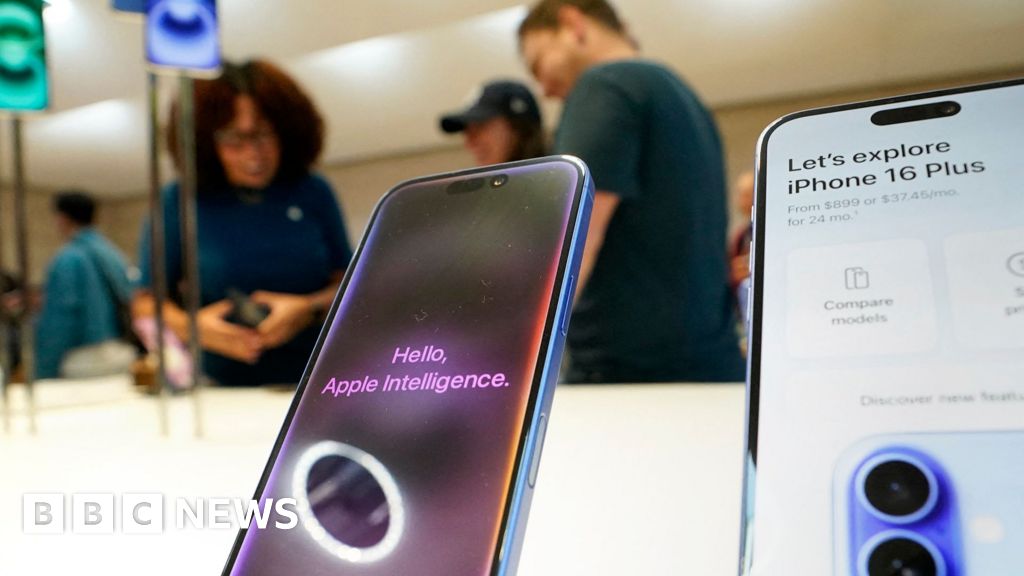
Apple to Pay $250M to Settle Lawsuit Over Misleading Siri AI Claims

ソフトバンクグループ株、5,424円で引け、1年で193%超上昇