Turkana Rift Crust Thinned to 13 km, Signaling Imminent Continental Breakup
New seismic data reveal the East African Rift System in northern Kenya has entered a critical necking phase, accelerating the region's split and reshaping understanding of hominin fossil preservation.
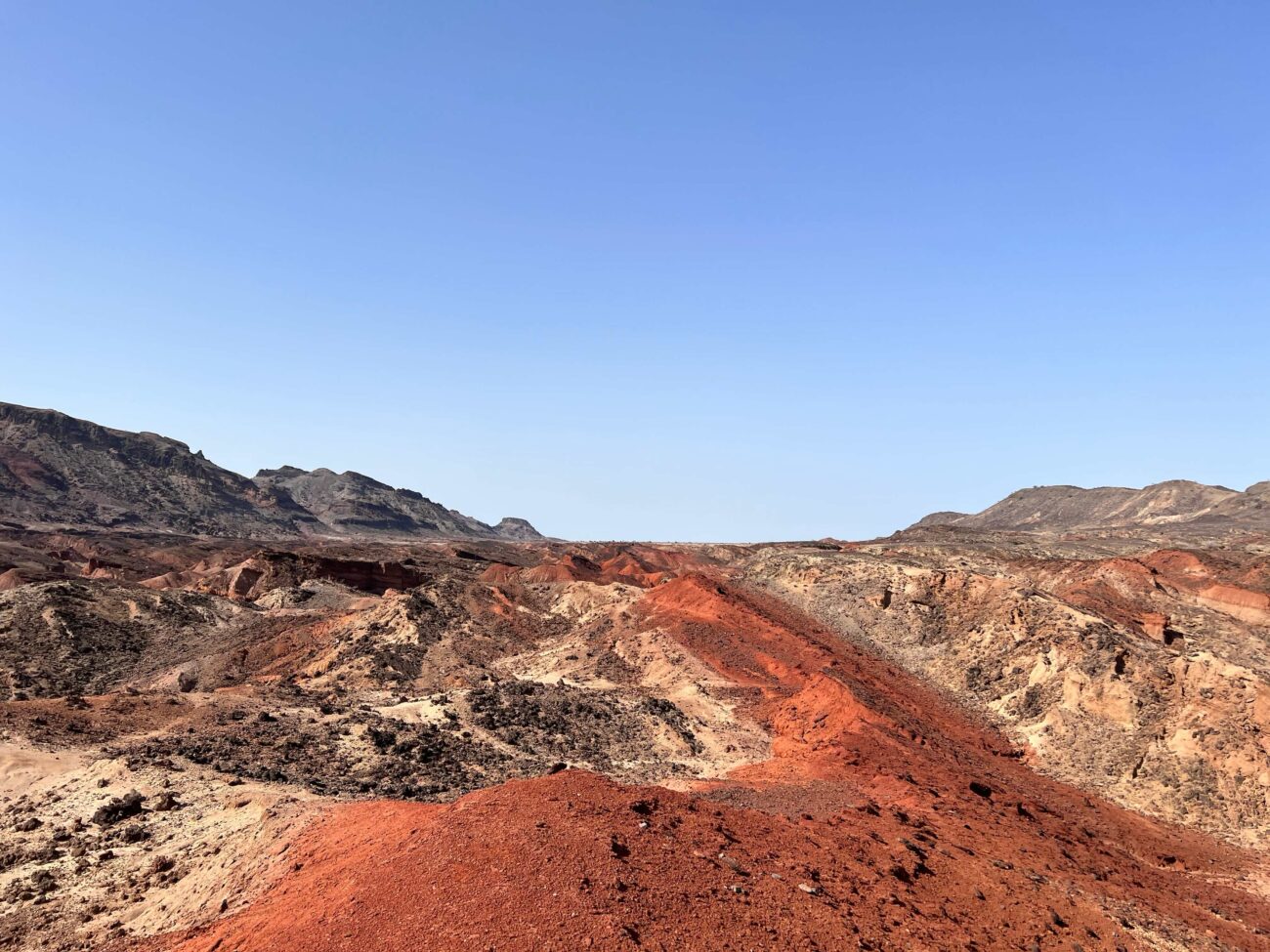
KENYA —
Key facts
- Crust beneath Turkana Rift axis is ~13 km thick, down from >35 km at rift flanks.
- Necking phase began ~4 million years ago after widespread volcanic eruptions.
- African and Somali plates diverge at ~4.7 mm per year in the Turkana Rift.
- Rift spans 500 km across Kenya and Ethiopia, part of the East African Rift System.
- Study published in Nature Communications by Christian Rowan and Anne Bécel of Columbia University.
- Seismic data from industry partners and Turkana Basin Institute used for subsurface imaging.
- Two rifting episodes: Mesozoic CARS (~57-45 Ma) and Cenozoic EARS (since ~45 Ma).
A Continent on the Brink of Splitting
The African continent is tearing apart faster than geologists had realized. New high-resolution seismic data from the Turkana Rift Zone in northern Kenya reveal that the crust beneath the rift axis has thinned to just 13 kilometers, a critical threshold that signals the onset of continental breakup. "We found that rifting in this zone is more advanced, and the crust is thinner, than anyone had recognized," said Christian Rowan, a PhD student at Columbia University's Lamont-Doherty Earth Observatory and lead author of the study published in Nature Communications. "Eastern Africa has progressed further in the rifting process than previously thought." The thinning places the Turkana Rift in a phase known as "necking," where localized deformation concentrates along the rift axis, making breakup all but inevitable.
How Necking Paves the Way for a New Ocean
Continental rifting progresses through three phases: stretching, necking, and oceanization. During stretching, strain is distributed across broad fault networks with minimal crustal thinning. Necking occurs when deformation localizes, thinning the crystalline crust to between 10 and 15 kilometers. Oceanization follows, as magma surges through cracks to create new seafloor. Rowan likens the process to pulling a piece of saltwater taffy: the middle thins and elongates while the ends remain unchanged. "The thinner the crust gets, the weaker it becomes, which helps promote continued rifting," he explained. The Turkana Rift is the only active rift on Earth known to be undergoing necking, challenging existing tectonic models that assumed most active rifts worldwide remain in the stretching phase.
A Geological History of Two Rifting Episodes
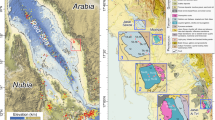
The Turkana Rift Zone sits at the intersection of two major rift systems: the northwest-southeast Mesozoic to early Cenozoic Central African Rift System (CARS) and the north-south Cenozoic East African Rift System (EARS). CARS rifting, largely amagmatic, persisted until roughly 57 to 45 million years ago. EARS-related faulting began around 45 to 40 million years ago, marking the earliest documented EARS activity in eastern Africa. Volcanism followed at about 37 million years ago, emplacing some 47,000 cubic kilometers of extrusive rocks. The researchers found evidence that CARS rifting left the crust weakened and thinned, priming it for the more recent EARS extension. "It challenges some of the more traditional ideas of how continents break apart," Rowan said.
Seismic Imaging Reveals Crustal Architecture
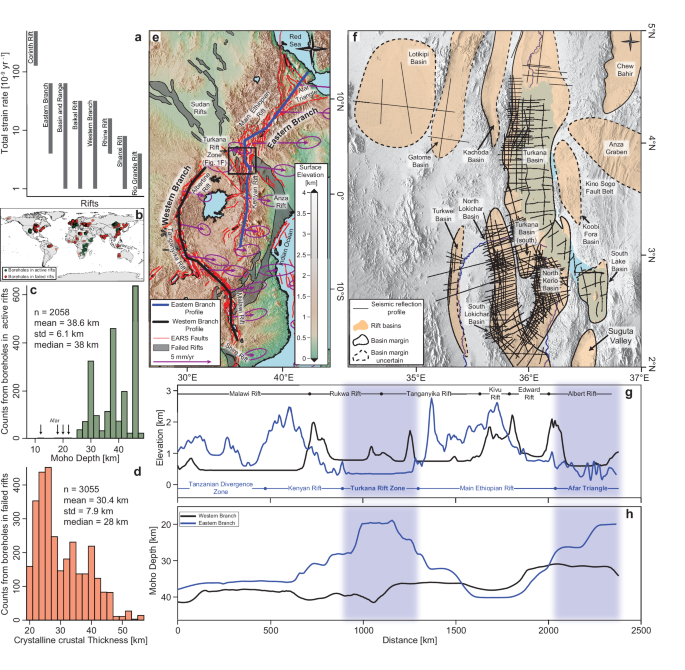
The team used high-quality seismic reflection data collected by industry partners in collaboration with the Turkana Basin Institute, founded by the late paleoanthropologist Richard Leakey. By analyzing how acoustic waves reflected off subsurface layers, they mapped sediment structures and the depth of the crustal top. Along the rift axis, the Mohorovičić discontinuity—the boundary between crust and mantle—lies at about 13 kilometers depth, compared to more than 35 kilometers at the rift flanks. The stretching factor, or β, ranges from 1.9 to 3.1 along the axis, well above the 1.5 threshold that defines the necking domain. High β-values coincide with modern seismicity, indicating that present-day deformation is concentrated in the necked zone.
Implications for Human Evolution and Fossil Preservation
The Turkana region is world-famous for its rich deposits of early hominin fossils, including key specimens of Australopithecus and early Homo. The new findings suggest that the same tectonic forces that are tearing Africa apart may have created ideal conditions for fossilization. Necking facilitated the accumulation of sediments in rapidly subsiding basins, preserving remains that might otherwise have been destroyed. "The region may not necessarily have been more important to our ancestors than anywhere else in Africa—instead, it may just be that these geologic processes created very favorable conditions for fossilization," the researchers noted.
What Comes Next: Oceanization in a Few Million Years
The Turkana Rift began pulling apart about 45 million years ago. Necking started after a phase of widespread volcanic eruptions roughly 4 million years ago, known as the Stratoid Phase. The researchers estimate that it will take a few million more years for necking to give way to oceanization, when magma will surge through the cracks and create a new seafloor. Water from the Indian Ocean will eventually pour into the new basin, forming a sea that separates the Nubian plate to the west from the Somali plate to the east. "We've reached that critical threshold" of crustal breakdown, said Anne Bécel, a geophysicist at Lamont and co-author of the study. "We think this is why it is more prone to separate."
Challenging Traditional Views of Rift Maturation
Conventional geodynamic models hold that rift zones farther from the rotation pole mature earlier due to higher plate velocities. The Turkana Rift, closer to the Nubia-Somalia Euler pole, experiences slower plate velocities than the Main Ethiopian Rift. Yet the new data show it is further along in the rifting process. The researchers propose that inherited lithospheric structure from the earlier CARS rifting, combined with weakening from late Cenozoic magmatism, has driven premature necking. This decouples the Turkana Rift's development from the overall northward maturation trend of the East African Rift System, highlighting the role of local geological history over simple plate kinematics.
The bottom line
- The Turkana Rift's crust has thinned to ~13 km, entering the necking phase that precedes continental breakup.
- Necking began ~4 million years ago and will lead to oceanization within a few million years.
- The region's hominin fossil record may owe its richness to tectonic processes that enhanced fossil preservation.
- Two episodes of rifting—Mesozoic CARS and Cenozoic EARS—weakened the crust, accelerating the current breakup.
- The Turkana Rift challenges traditional models that link rift maturation primarily to plate velocity.


Kenya's Labour Day: Unions Demand 23% Pay Rise as Inflation Hits 5.6%

Kenya's Labor Day Protests Echo Global Struggle Over May Day's Marxist Roots

US Sanctions Joseph Kabila for Backing M23 Rebels in Eastern Congo