Kenya tribunal upholds cancellation of $3.2bn Nairobi-Mombasa expressway deal with US firm
The Public Private Partnership Petition Committee ruled that Everstrong Capital failed to prove financial capacity after its Portuguese partner, partly owned by a Chinese firm, withdrew.

KENYA —
Key facts
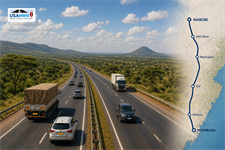
- Everstrong Capital proposed a 419-kilometre toll highway between Nairobi and Mombasa, the Usahihi Nairobi-Mombasa Expressway, valued at Sh468 billion ($3.2 billion).
- The Public Private Partnership Petition Committee dismissed Everstrong's petition to overturn the cancellation of the project.
- The project collapsed after Mota-Engil, the Portuguese construction company, exited the deal, stripping the proposal of its cornerstone investor.
- Mota-Engil is 40% owned by the Mota family and 32.41% by China Communications Construction Company (CCCC), parent of China Road and Bridge Corporation.
- American lenders backing Everstrong refused to fund the highway due to Mota-Engil's Chinese links.
- The tribunal ruled the project failed to meet financial, technical, and viability thresholds under the Public Private Partnerships Act.
- Successive Kenyan governments have sought a bigger highway to ease congestion on the Mombasa-Nairobi road, a key route to the country's main port.
Tribunal dismisses Everstrong Capital's bid to revive expressway
An American firm has lost its legal battle to salvage the proposed Sh468 billion Nairobi-Mombasa toll expressway after a Kenyan tribunal upheld the government's decision to cancel the project. The Public Private Partnership Petition Committee dismissed Everstrong Capital's petition, ruling that the privately initiated proposal failed to meet key thresholds on financial capacity, technical feasibility, and overall viability under the Public Private Partnerships Act. The decision marks the end of a protracted legal fight that highlighted the intersection of infrastructure ambitions and geopolitical rivalries. The project, dubbed the Usahihi Nairobi-Mombasa Expressway, would have built a 419-kilometre highway to ease chronic congestion on the route linking Nairobi to Kenya's principal port in Mombasa.
Mota-Engil's exit and the Chinese connection
At the centre of the collapse was the withdrawal of Mota-Engil, the Portuguese construction company, from the deal. Mota-Engil had been expected to provide both equity financing and technical expertise, and its exit stripped the project of a cornerstone investor, raising red flags about the project's bankability, according to filings at the tribunal. Mota-Engil is 40 percent owned by the Mota family and 32.41 percent by China Communications Construction Company (CCCC), the parent of China Road and Bridge Corporation, which built Kenya's standard gauge railway. American lenders backing Everstrong opted not to fund the mega highway because of these Chinese links, a factor that contributed to the project's demise.
Failed financial and technical thresholds
The tribunal found that Everstrong Capital could not demonstrate adequate financial muscle after Mota-Engil's departure. The investor's inability to secure alternative financing or prove the project's bankability led to the rejection. Filings showed that Everstrong's proposal had initially advanced to the project development phase on the strength of its partnership with Mota-Engil, but once that partnership dissolved, the proposal's viability collapsed. The committee's ruling underscored the strict requirements of the Public Private Partnerships Act, which demands that private investors show clear financial capacity and technical feasibility before proceeding. Everstrong's petition sought to overturn the government's cancellation, but the tribunal sided with the state.
Geopolitical undertones in a mega infrastructure project
The legal battle exposed the China–US rivalry playing out in Kenya's infrastructure sector. Kenyan officials cited the American firm's reluctance to work with a Beijing-backed firm as a reason for terminating the mega deal. The Chinese stake in Mota-Engil made it impossible for Everstrong to secure American financing, creating a deadlock that ultimately doomed the project. This is not the first time geopolitical tensions have affected infrastructure deals in East Africa. The standard gauge railway, built by China Road and Bridge Corporation, has been a symbol of China's growing influence in the region, and the expressway project became entangled in the broader competition between Washington and Beijing for economic footholds.
A long-sought highway remains a dream
A bigger highway between Mombasa and Nairobi has been on the wish list of successive Kenyan governments, each aiming to ease congestion on the busy road that serves the country's major port. The existing road is heavily trafficked by trucks carrying goods to and from Mombasa, and delays cost the economy millions of dollars annually. The cancellation of the Usahihi Expressway leaves a gap in Kenya's infrastructure plans. While the government has not announced an alternative, the need for a modern highway remains acute. The project's failure also raises questions about the viability of privately initiated proposals that rely on complex international partnerships.
What next for the Nairobi-Mombasa corridor?
With the tribunal's decision, the Kenyan government is free to seek other investors or pursue a different model for the expressway. The Public Private Partnerships framework remains in place, but the Everstrong case may deter other private investors wary of political and financial risks. Everstrong Capital has reaffirmed its commitment to the project despite the setback, but the legal avenue is now closed. The company would need to submit a new proposal or partner with different entities to revive the plan. For now, the dream of a high-speed toll road between Nairobi and Mombasa remains deferred, and the congestion on the existing route continues to mount.
The bottom line
- The Kenyan tribunal definitively rejected Everstrong Capital's petition, upholding the cancellation of the $3.2 billion expressway project.
- The project failed because Mota-Engil's withdrawal left Everstrong unable to prove financial capacity, and American lenders refused to fund due to Chinese ownership in Mota-Engil.
- The case highlighted the impact of US-China rivalry on infrastructure deals in Africa, with Kenya caught between competing geopolitical interests.
- Successive Kenyan governments have long sought a bigger highway on the Mombasa-Nairobi corridor, but the latest attempt has collapsed.
- The Public Private Partnerships Act's strict requirements on financial and technical viability were central to the tribunal's decision.
- The Nairobi-Mombasa expressway remains an unmet need, and the government may need to explore alternative funding or partnership models.



Kenya Holds First Labour Day Outside Capital as Atwoli Denies Favouritism

Great White Draws Into Kentucky Derby Field After Scratches of Silent Tactic and Fulleffort

Besiktas Sets €60 Million Price Tag for Man United Target Orkun Kokcu Amid Transfer Turmoil
