Corpus Christi Water Crisis Deepens as Reservoirs Fall to 7.8% Capacity
With two key reservoirs nearly empty, the Texas coastal city faces a potential water shortage by early 2027, while smaller towns issue disaster declarations and scramble for alternatives.
KENYA —
Key facts
- Lake Corpus Christi and Choke Canyon reservoirs at 7.8% combined capacity as of April 28.
- Corpus Christi City Manager Peter Zanoni expects a level one water emergency declaration in September.
- Aransas Pass extended its water shortage emergency on April 30, requesting state aid from Gov. Greg Abbott.
- At least six small towns in the Coastal Bend region issued disaster declarations in the last two weeks.
- Alice opened a groundwater desalination plant last July, operated by private firm Seven Seas.
- Beeville issued $35 million in municipal debt for an emergency desalination project.
- Corpus Christi supplies water to 20 other municipalities across seven counties.
- Lawn watering is banned; a local water park closed earlier this year.
A Region on the Brink
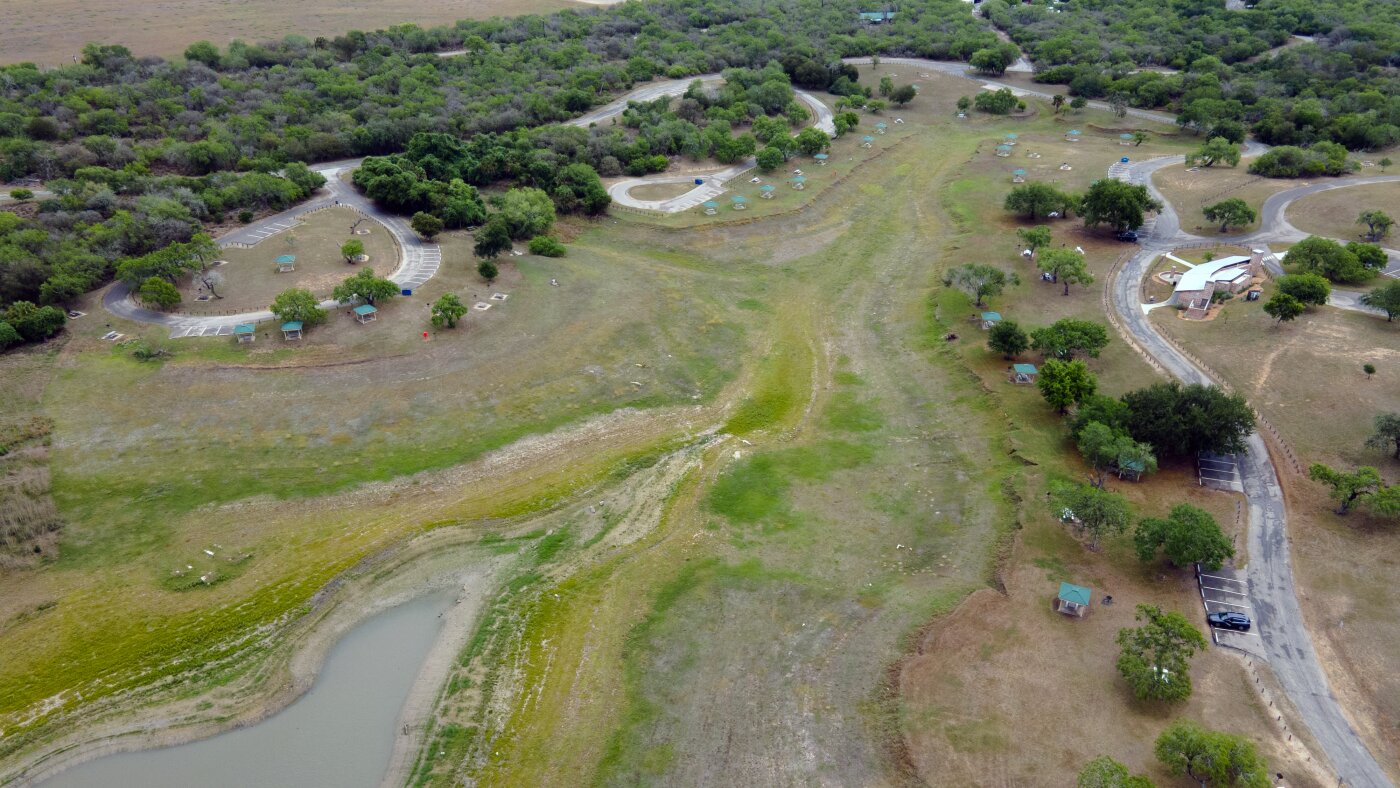
Ashley Ortiz spends her days surrounded by water at the laundromat where she works in Corpus Christi, but at home, water has become a resource to hoard. 'It's hard to learn how to conserve and not use,' she said, 'or remind your kids, like, don't let the water run.' For Ortiz and her three boys, cutting back has been a daily adjustment — one now shared by more than half a million people across the region. Corpus Christi, a Gulf Coast city that anchors a sprawling petrochemical complex and the nation's top crude oil export hub, is facing an unprecedented water shortage after years of drought worsened by climate change. Two of the reservoirs the region depends on — Lake Corpus Christi and Choke Canyon — were at just 7.8% of their combined capacity as of April 28. The city has already restricted water use for more than a year, banning lawn watering and limiting car washing and plant watering to a single designated day per week.
Emergency Declarations Spread Across Small Towns
At least six small cities and towns in the Coastal Bend region have issued disaster declarations in the last two weeks, pleading not to be forgotten as the crisis spirals. Corpus Christi, the eighth-largest city in Texas, supplies water not only to its own industries and residents but to the entire seven-county region, including 20 other municipalities. 'Everyone is like, “What the heck is going on and what do we do?”' said Elida Castillo, mayor of Taft, a town of 3,000 that issued a disaster declaration on April 21. Castillo organized a town hall meeting on the water crisis, but officials from Corpus Christi did not attend. She has heard little from county or state officials either. 'I’m just trying to figure out what we could do,' she said.
Aransas Pass Extends Emergency, Seeks State Help
The City of Aransas Pass extended its Water Shortage Emergency on April 30, effective until conditions improve enough to lift it. The declaration, posted on the city’s social media, will be submitted to the office of Texas Gov. Greg Abbott to request state-level assistance and resource coordination. The declaration activates the city’s Emergency Management Plan and authorizes the furnishing of aid and assistance. 'The City Council of the City of Aransas Pass, Texas, has determined that immediate and extraordinary measures must be taken to ensure the protection of the health, safety, and welfare of city residents,' the declaration states. Up the coast, Ingleside and Aransas Pass, with a combined 19,000 residents, issued disaster declarations on April 22.
Smaller Towns Seek Alternative Water Supplies
The towns of Three Rivers, Orange Grove and Alice also issued disaster declarations in the week prior. Alice, population 17,000, expects to fare better than others thanks to a groundwater desalination plant that opened last July, a decade in the making. The plant is owned and operated by Seven Seas, an investor-backed water treatment company. 'They have a profit margin,' said Alice City Manager Michael Esparza. 'We are paying a private company to do something for us. It’s no different than we do with a lot of things. Although, this one is pretty big because it’s our water.' Esparza noted that little Alice lacks the technical expertise to maintain and operate such an advanced facility. Fifty miles away, Beeville declared a disaster in October and issued $35 million in municipal debt — about $2,600 per resident — to fund its own emergency groundwater desalination project.
Corpus Christi Weighs Mandatory Cuts for All Users
Corpus Christi City Manager Peter Zanoni said officials are considering requiring all users — including industry — to cut water use by up to 25% if drought conditions worsen. The city expects to declare a 'level one water emergency' in September, meaning the city’s water supply could fall short of demand by early 2027. Dead grass is visible everywhere. A local water park closed earlier this year. For residents like Ashley Ortiz, the adjustments are constant. 'It’s just something that you never think you would have a problem with — like one day we might be out of water,' she said.
A Regional Crisis With National Implications
Amy Hardberger, director of the Center for Water Law and Policy at the Texas Tech School of Law, said most Americans cannot grasp the grave implications of empty reservoirs. Those who can feel deeply unsettled by what is happening in Corpus Christi. 'It’s not my goal for other people to be panicked,' she said. 'But many of us are very scared.' If Corpus Christi becomes the first modern American city to run out of water, it would take most surrounding communities with it. 'There should be some type of legislation that will assist us now, rather than in the future,' said Ingleside City Manager Brenton Lewis. 'All these small cities that have declared disasters are looking at alternate water supplies.' The April 14 declaration from Alice stated plainly: 'Regional water demand is exceeding available supply. Continued drought conditions threaten public health, safety and welfare, as well as essential public services.'
Uncertainty and the Search for Solutions
As the region’s water reserves dwindle, the gap between those with resources and those without grows stark. Alice’s desalination plant offers a lifeline, but at a cost — and with reliance on a private company. Beeville’s municipal debt underscores the financial strain on small communities. Meanwhile, Corpus Christi’s potential emergency declaration looms, and smaller towns like Taft feel left in the dark. Castillo, the Taft mayor, summed up the mood: 'I’m just trying to figure out what we could do.' The coming months will test whether the region can coordinate a response before the taps run dry.
The bottom line
- Corpus Christi’s reservoirs are at 7.8% capacity, with a level one water emergency expected in September and possible shortages by early 2027.
- At least six small towns have issued disaster declarations, seeking state aid and alternative water supplies.
- Alice’s desalination plant, operated by private firm Seven Seas, offers a model but raises concerns about cost and expertise.
- Beeville issued $35 million in debt for its own desalination project, highlighting the financial burden on small communities.
- The crisis threatens not only Corpus Christi but 20 other municipalities across seven counties that depend on its water system.
- Residents and officials express fear and uncertainty, with many feeling abandoned by state and regional authorities.




Ismaila Sarr Scores After 21 Seconds as Crystal Palace Beat Shakhtar Donetsk 3-1 in Conference League Semi-Final First Leg

Kenya Confirms Civil Service Pay Rise from July 2026 as New CBA Nears Completion

Alemao's Header Gives Rayo Vallecano Slim Lead Over Strasbourg in Europa Conference League Semi-Final