USS George H.W. Bush Carrier Deploys to Gulf of Oman Amid Tensions
The US Navy's CVN 77 is operating in the Arabian Sea, supporting 'Project Freedom' and enforcing a blockade on Iran.
SOUTH KOREA —
Key facts
- USS George H.W. Bush (CVN 77) is operating in the Arabian Sea.
- The carrier is supporting 'Project Freedom'.
- It is enforcing a naval blockade on Iran.
- The deployment is from the Gulf of Oman.
- The carrier has more than 60 aircraft on board.
- The operation falls within the U.S. 5th Fleet area of operations.
- The carrier's presence supports maritime security and stability in the Middle East.
Carrier Group Enters Strategic Waterway
The US aircraft carrier USS George H.W. Bush (CVN 77) has transited the Arabian Sea as part of ongoing operations linked to the vital Strait of Hormuz. U.S. Central Command confirmed the vessel's movement on Tuesday, releasing an image of the carrier underway. Its presence signals a heightened state of naval activity in a region frequently at the center of international geopolitical currents. The deployment places the carrier within the U.S. 5th Fleet's area of operations, a vast theater encompassing critical maritime routes in the Middle East. The stated mission includes supporting maritime security and stability, a delicate balancing act in waters that have seen increasing friction. This strategic positioning underscores the ongoing commitment to projecting naval power in a region where freedom of navigation is paramount. The carrier's operations are designed to influence regional dynamics and ensure the unimpeded flow of commerce.
Enforcing Blockade and Supporting 'Project Freedom'
The George H.W. Bush is actively engaged in enforcing a naval blockade against Iran. This action is part of a broader initiative designated as 'Project Freedom.' The carrier's operational posture is aimed at restricting Iran's maritime activities and enforcing international sanctions. This enforcement effort is conducted from the Gulf of Oman, a crucial chokepoint that connects the Arabian Sea to the Strait of Hormuz. The carrier's role is central to maintaining pressure on Iran through maritime means. The specific objectives of 'Project Freedom' are tied to broader U.S. foreign policy goals in the region, focusing on deterring hostile actions and ensuring compliance with international norms.
A Floating Air Base in the Gulf
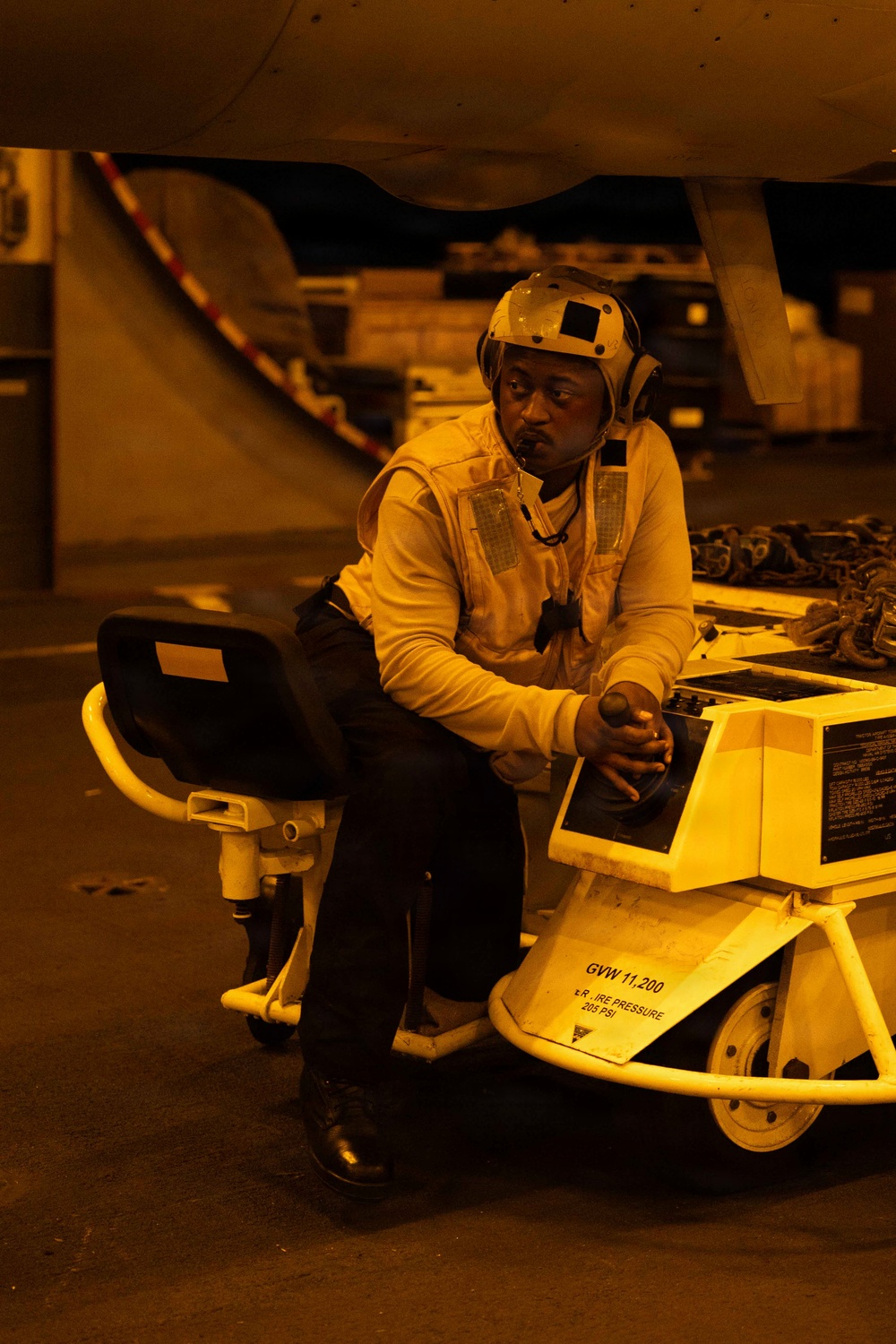
Aboard the Nimitz-class carrier, a formidable air wing is ready for deployment. The USS George H.W. Bush hosts more than 60 aircraft, transforming it into a mobile airbase capable of projecting significant power across the region. These aircraft include advanced fighter jets, such as the F/A-18E Super Hornet, ready for various operational missions. The carrier's elevators and flight deck are stages for complex, round-the-clock operations. Sailors meticulously prepare aircraft for sortie generation, a demanding process that ensures the air wing's constant readiness. This capability allows for rapid response to developing situations and sustained air operations over vast distances. The sheer scale of the air wing signifies the carrier's importance as a strategic asset, capable of conducting a wide range of missions from air-to-air combat to intelligence, surveillance, and reconnaissance.
Naval Operations in a Volatile Theater
The carrier's deployment to the 5th Fleet area of operations highlights the persistent security challenges in the Middle East. This region is characterized by complex geopolitical rivalries and the presence of various state and non-state actors. The U.S. Navy's presence, particularly through carrier strike groups, serves as a visible deterrent and a means to reassure allies. The operations are designed to maintain stability and prevent escalation in a volatile environment. Maritime security operations are crucial for safeguarding international shipping lanes, which are vital arteries for global trade. The USS George H.W. Bush's mission directly contributes to this objective, ensuring the safe passage of vessels through contested waters.
Context of Regional Tensions
The presence of the USS George H.W. Bush in the Arabian Sea occurs against a backdrop of heightened tensions involving Iran and international powers. Recent events, including reports of naval engagements and diplomatic maneuvering, underscore the precarious security situation. Discussions around potential diplomatic solutions, such as a ceasefire, have been juxtaposed with military posturing. The deployment of multiple U.S. aircraft carriers in the region suggests a deliberate strategy to increase pressure and deter potential adversaries. This dynamic interplay between diplomacy and military presence defines the current strategic landscape. The actions taken by naval forces in this theater have significant implications for regional stability and international relations.
The bottom line
- The USS George H.W. Bush (CVN 77) is actively engaged in the Arabian Sea, operating within the U.S. 5th Fleet's area of responsibility.
- The carrier is enforcing a naval blockade on Iran as part of 'Project Freedom' from the Gulf of Oman.
- With over 60 aircraft on board, the carrier serves as a significant projection of air power.
- Its mission aims to bolster maritime security and stability in the Middle East.
- The deployment occurs amidst heightened regional tensions and complex geopolitical dynamics.
- The carrier's operations are designed to deter conflict and ensure freedom of navigation in strategic waterways.

KIA 김도영, 홈런 단독 선두 질주... "더 좋아지는 중"

LAFC Eliminated from Concacaf Champions Cup After Crushing Semifinal Defeat

Lakers' Jarred Vanderbilt Runs Secret 'Finsta' Account That Roasts LeBron and Teammates